
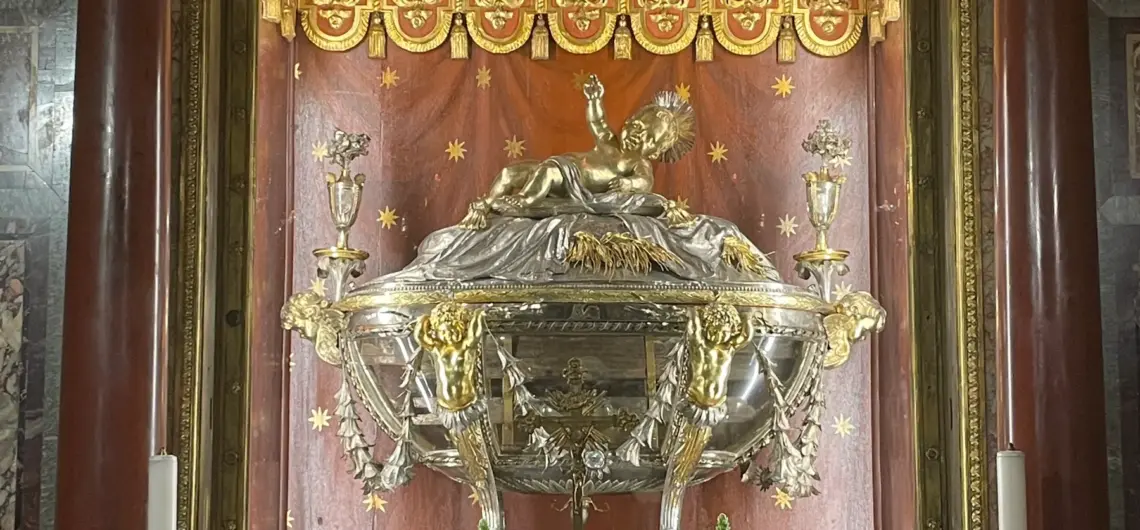
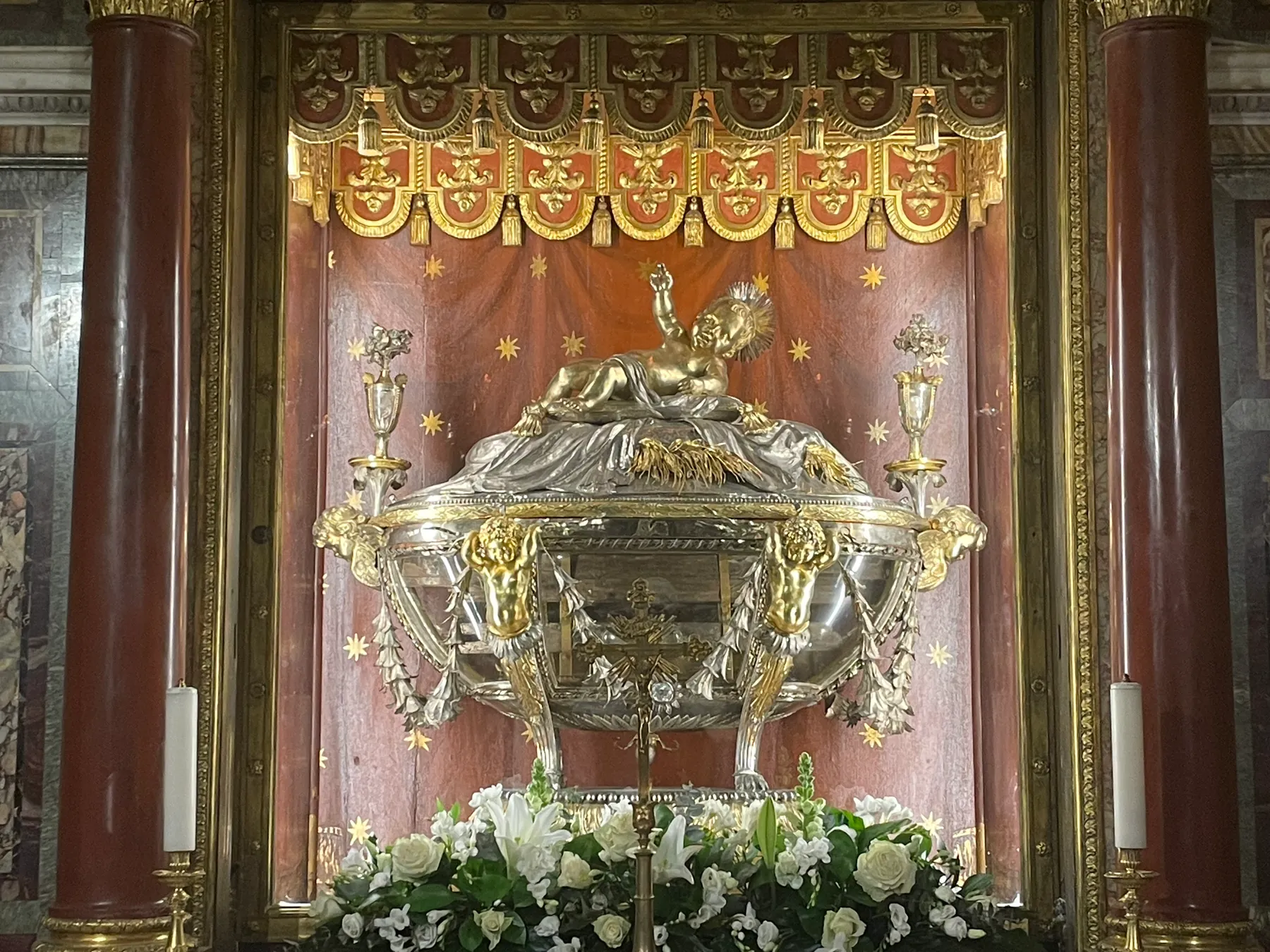
The Holy Crib at St Mary Major in Rome is venerated beneath the basilica’s high altar. These pieces of wood come from the manger in which the infant Jesus was laid at Bethlehem. Their presence gave the basilica a profound association with the Nativity and helped earn it the title “Bethlehem of the West”.
What is the Holy Crib?
The Holy Crib, or Sacra Culla, consists of pieces of wood traditionally connected with Christ’s manger. They are preserved within a precious reliquary in the confessio beneath the papal altar.
For Catholic pilgrims, the relic directs attention to the reality of the Incarnation. The eternal Son of God entered human history not in imperial splendour but in the poverty and vulnerability of a child laid in a manger.
How did the relic reach Rome?
The Holy Crib has been associated with St Mary Major for many centuries. Historical accounts connect the relics’ arrival in the 7th century, when sacred objects from the Holy Land were sometimes transferred for protection.
The Church has preserved and venerated the Holy Crib at St Mary Major for many centuries. Modern scientific analysis of the wood supports the ancient tradition and strengthens the historic connection between the relic, Bethlehem and the basilica.
Why is St Mary Major associated with Bethlehem?
The basilica’s relationship with the Nativity extends beyond the wooden relics. Its early Christian mosaics proclaim the identity of Christ and the dignity of the Blessed Virgin Mary, while its liturgical history repeatedly returned Roman pilgrims to the mystery of Bethlehem.
The church was consequently known as St Mary at the Crib and the Pope would celebrate Christmas Midnight Mass at this Basilica over the relics for centuries. Rome allowed Western pilgrims to contemplate Bethlehem through relic, liturgy and sacred art even when travel to the Holy Land was dangerous or impossible.
The reliquary of the Holy Crib
The present reliquary is an artistic object in its own right, but its purpose is devotional rather than decorative. It places the humble wood of the manger within a setting worthy of the mystery it represents.
A fragment of the relic was returned to Bethlehem in 2019, creating a moving connection between the Roman basilica and the land of Christ’s birth.
From the Crib to the Cross
The Holy Crib belongs naturally within a pilgrimage focused upon the relics of Christ. Catholic theology does not separate Bethlehem from Calvary. The body laid in the manger is the body later offered upon the Cross and raised from the dead.
This is why St Mary Major can form a spiritually appropriate beginning to an encounter with the relics of the Passion. The fuller relationship between the Incarnation, Our Lady and Christ’s sacrifice is something a guide can unfold in the sacred setting itself.
Other reasons to visit St Mary Major
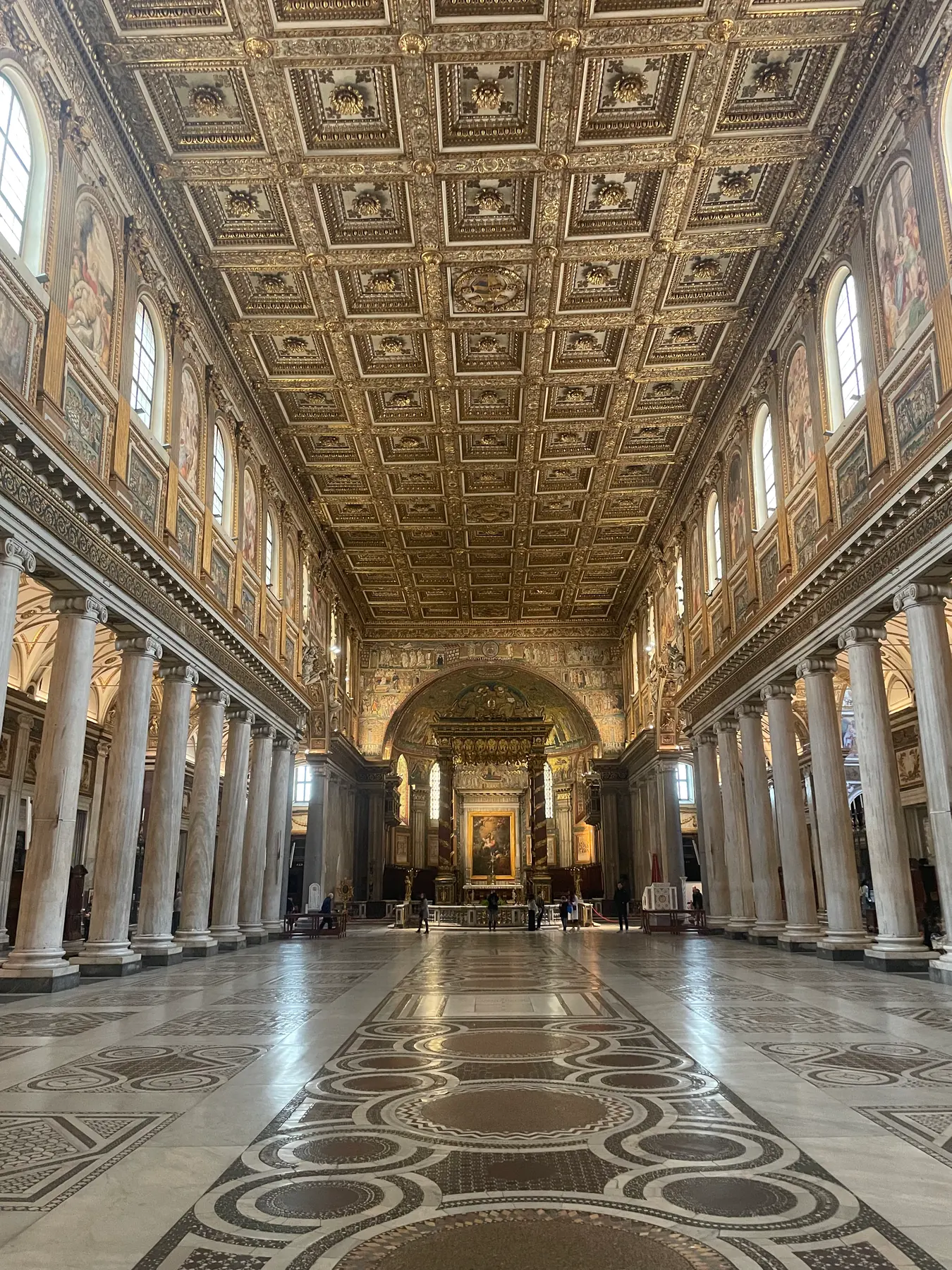
St Mary Major is one of Rome’s four Major Basilicas. It is renowned for its early mosaics, Marian devotion, papal history and the icon of Salus Populi Romani. It is also the burial place of Pope St Pius V and of the Baroque sculptor and architect Gian Lorenzo Bernini.
These elements should not be reduced to a list. Together they show how the basilica has served as a living centre of Roman Catholic faith across many centuries.
Visit the Holy Crib with Crucis Tours
The St Mary Major Basilica Tour explores the basilica’s Christological, Marian and historical significance with a knowledgeable Catholic guide.
The Holy Crib also introduces the wider story explored in our guide to the relics of Jesus Christ in Rome and encountered on the Via Crucis – Relics of Christ Tour. The online account gives the essential background; the guide preserves the deeper interpretation and discoveries for the pilgrimage itself.