

Expert Catholic Guide
Expert Catholic Guide Taxes
8 planned stops · Approx. 3 hours
The tour begins in Piazza Navona with Bernini’s Fountain of the Four Rivers and Borromini’s façade of…
Inside Sant’Agostino, encounter Caravaggio’s Madonna di Loreto, in which two travel-worn pilgrims kneel…
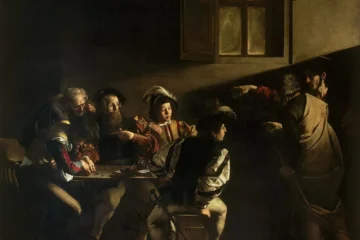
In the Contarelli Chapel, see The Calling of Saint Matthew, Saint Matthew and the Angel and The Martyrdom…
Enter the Jesuit church of Sant’Ignazio and stand beneath Andrea Pozzo’s extraordinary ceiling fresco,…
At Sant’Andrea delle Fratte, admire Bernini’s original Angel with the Crown of Thorns and Angel with the…
At the Trevi Fountain, discover how architecture, sculpture and flowing water were composed as one…
From outside, compare Bernini’s Sant’Andrea al Quirinale with Borromini’s San Carlo alle Quattro Fontane.…
The tour concludes at Santa Maria della Vittoria before Bernini’s Ecstasy of Saint Teresa. Sculpture,…
Expert Catholic Guide Taxes
Transport outside of tour time Guide gratuity
Scheduled on 9am Tuesdays, Thursdays and Saturdays. Choose a live date below.
What you see is what you’ll pay.
Comfortable clothing, covering shoulders and knees
Outside the Embassy of Brazil in Piazza Navona. See the precise
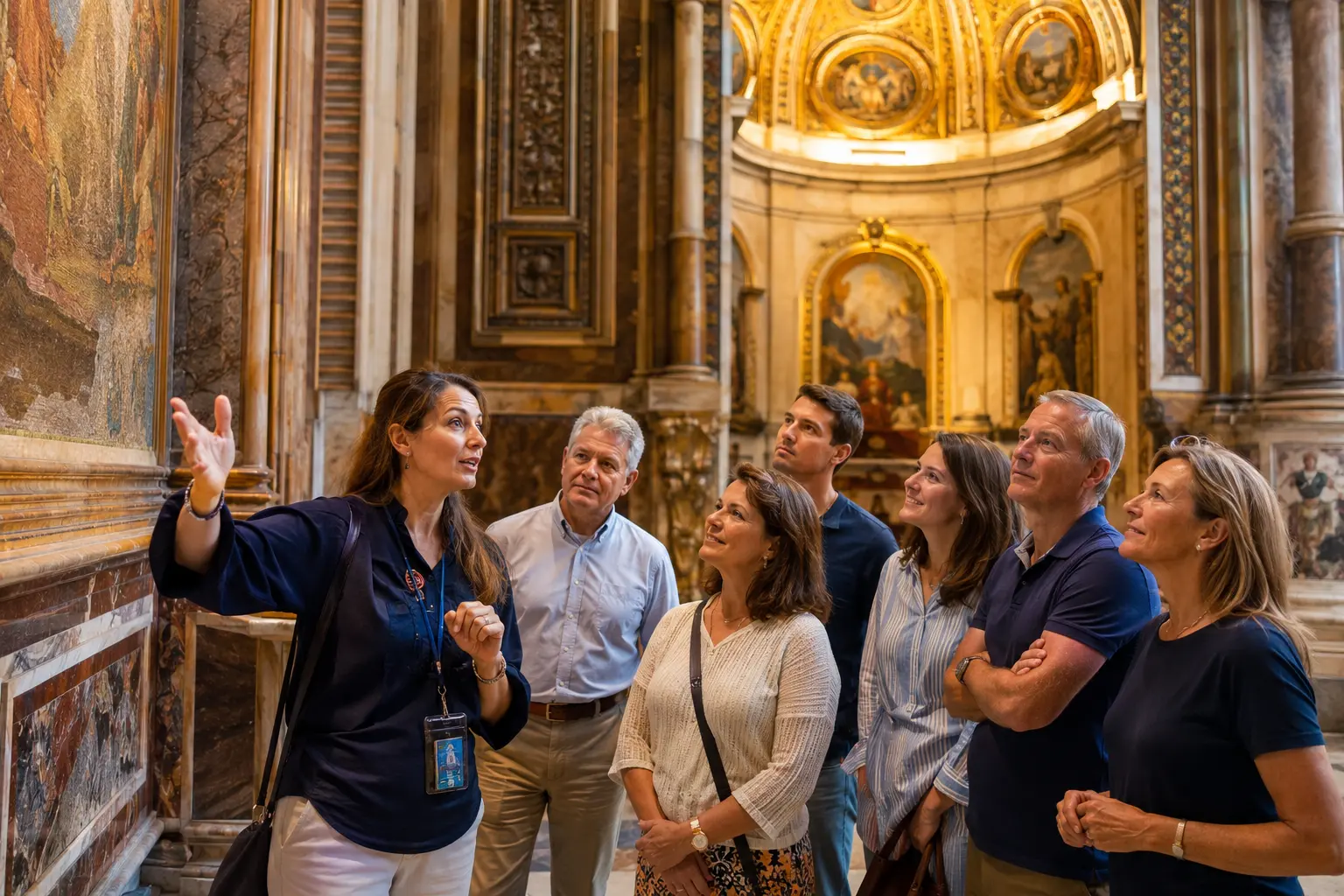
Your practising Catholic guide brings Scripture, Church history, sacred art and devotion together—helping each stop become part of one coherent pilgrimage.
5.00
Based on 1 reviews from pilgrims who experienced this tour.Read all 1 reviewsOnly seven places per small-group departure. Preferred dates can fill quickly. Check the live calendar before finalising your plans.
Check availability Free Cancellation — Subject to terms. Pay in instalmentsSpread the cost with Klarna · subject to eligibility and availability.Join a Baroque art and architecture tour through Rome, where sacred painting, sculpture and architecture remain in the churches and piazzas for which they were created. Over three hours, your Catholic guide will reveal masterpieces by Caravaggio, Bernini, Borromini and Andrea Pozzo, explaining how light, movement and theatrical design were used to communicate the truths of the Faith. From Piazza Navona and the Trevi Fountain to the Ecstasy of Saint Teresa, this walking tour explores the beauty, drama and spiritual purpose of Baroque Rome.
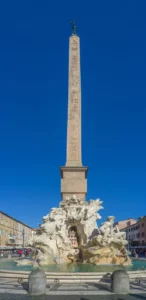
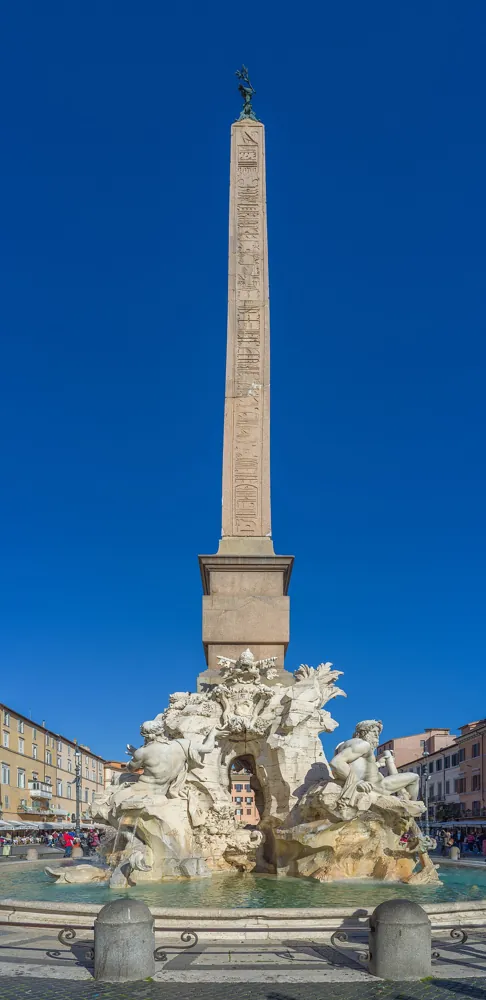
We begin at Piazza Navona, one of Rome’s most beautiful squares, bringing together the contrasting visions of two Baroque masters. At the center stands Gian Lorenzo Bernini’s Fontana dei Quattro Fiumi (Fountain of the Four Rivers), an elaborate 1651 fountain featuring giant marble river gods supporting an ancient obelisk. Surrounding the fountain’s base, you’ll spot personifications of the Nile, Danube, Ganges, and Río de la Plata – symbols of continents touched by papal influence.
Across the piazza is Sant’Agnese in Agone, a church with a façade by Francesco Borromini, whose concave design elegantly frames the square. Together, Bernini’s theatrical fountain and Borromini’s harmonious church frontage epitomize the Baroque flair for drama and movement in architecture. Your guide will explain the patronage of Pope Innocent X and show how Bernini and Borromini developed strikingly different approaches to Baroque design.
A short stroll away, we visit the Church of Sant’Agostino, an early Renaissance church with Baroque surprises inside. Here you’ll find Caravaggio’s Madonna di Loreto (Pilgrim’s Madonna) in the Cavalletti Chapel, one of Rome’s hidden artistic gems. This striking painting depicts Our Lady with the Christ Child appearing to two humble pilgrims – their feet dusty from travel – illustrating Caravaggio’s trademark realism and chiaroscuro.
As you admire the canvas in the soft chapel light, our guide will explain how Caravaggio shook the art world by using ordinary people as models for sacred figures, bringing a raw humanity to Baroque art. The church also contains Raphael’s fresco of the Prophet Isaiah, allowing you to compare the harmony of the Renaissance with Caravaggio’s more immediate and dramatic sacred realism. It’s a fitting introduction to how Baroque art blended everyday emotion with spiritual grandeur.
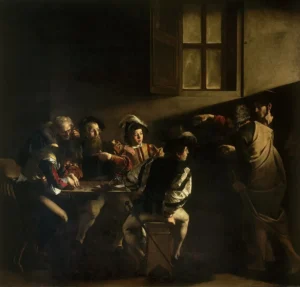
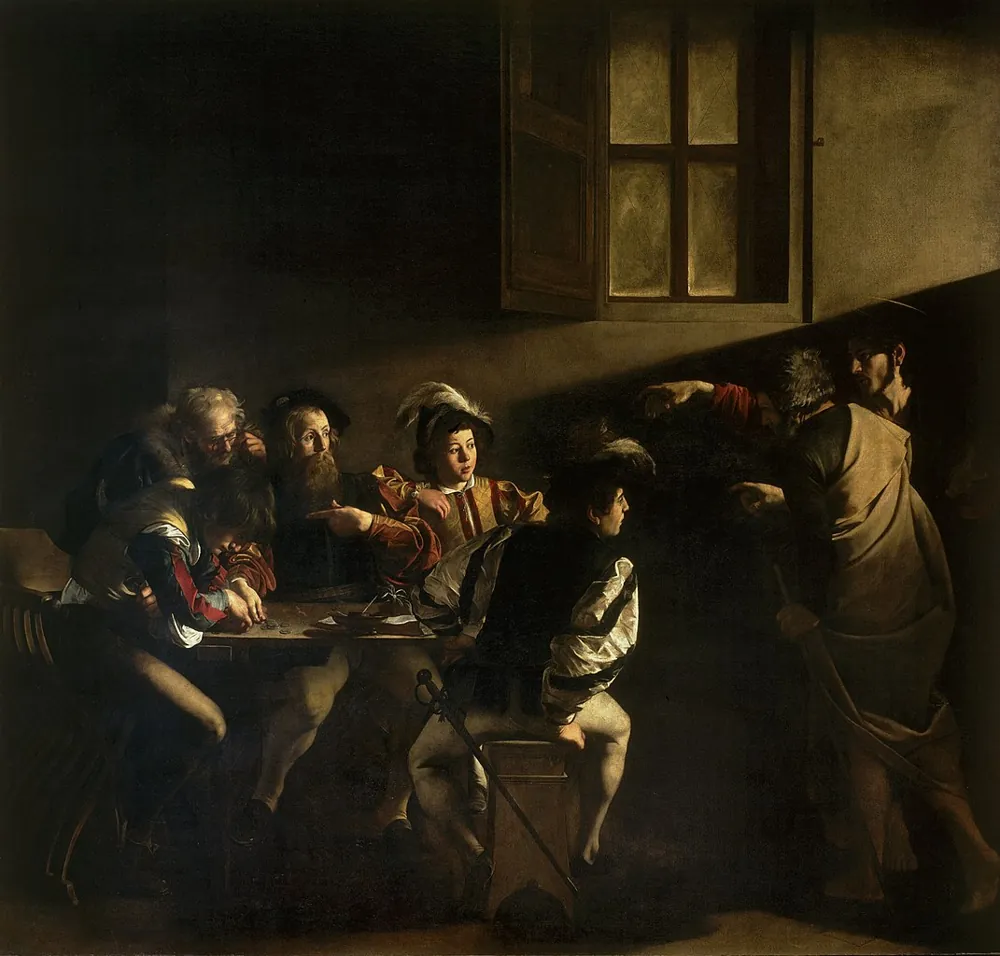
Tucked between bustling Roman lanes, the Church of San Luigi dei Francesi houses three of Caravaggio’s most famous paintings. In the Contarelli Chapel, you’ll stand before the St. Matthew cycle – The Calling of St. Matthew, The Martyrdom of St. Matthew, and St. Matthew and the Angel. These masterpieces, commissioned around 1600, demonstrate Caravaggio’s revolutionary use of light and shadow. Watch as a beam of light seems to burst from the canvas in The Calling, illuminating the astonished face of Matthew the tax collector as Christ summons him.
In these works, dark tavern settings and dramatic gestures create an almost stage-like effect, pulling you into the Biblical story. Our expert guide will help you decipher the symbolism and techniques Caravaggio used to make viewers feel like participants in the scene – a hallmark of Baroque painting’s emotional engagement. When the chapel lights are illuminated, the paintings’ extraordinary contrasts of darkness and divine light become especially vivid.
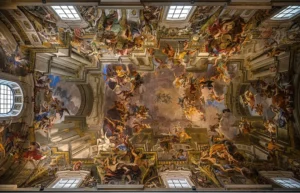
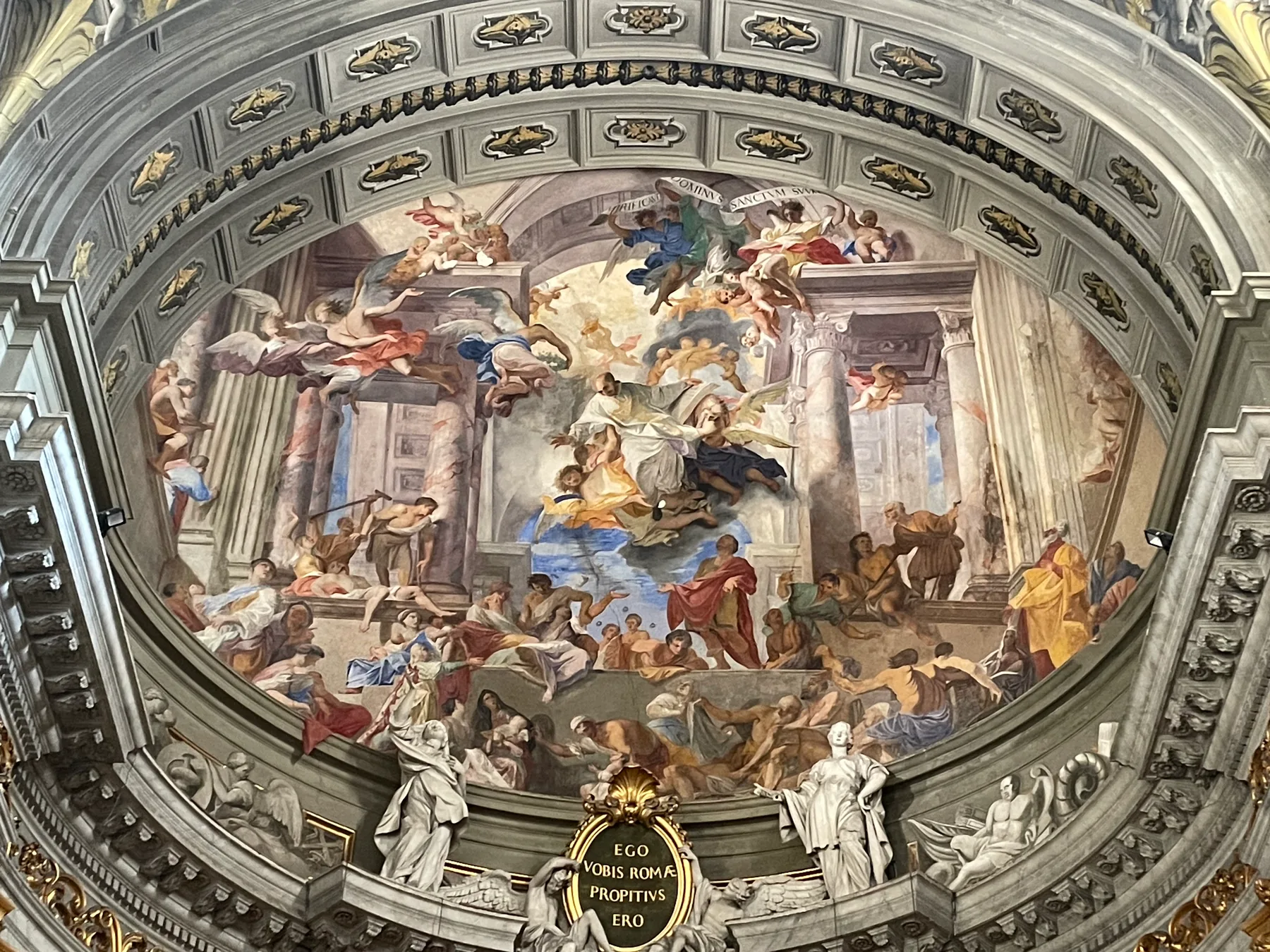
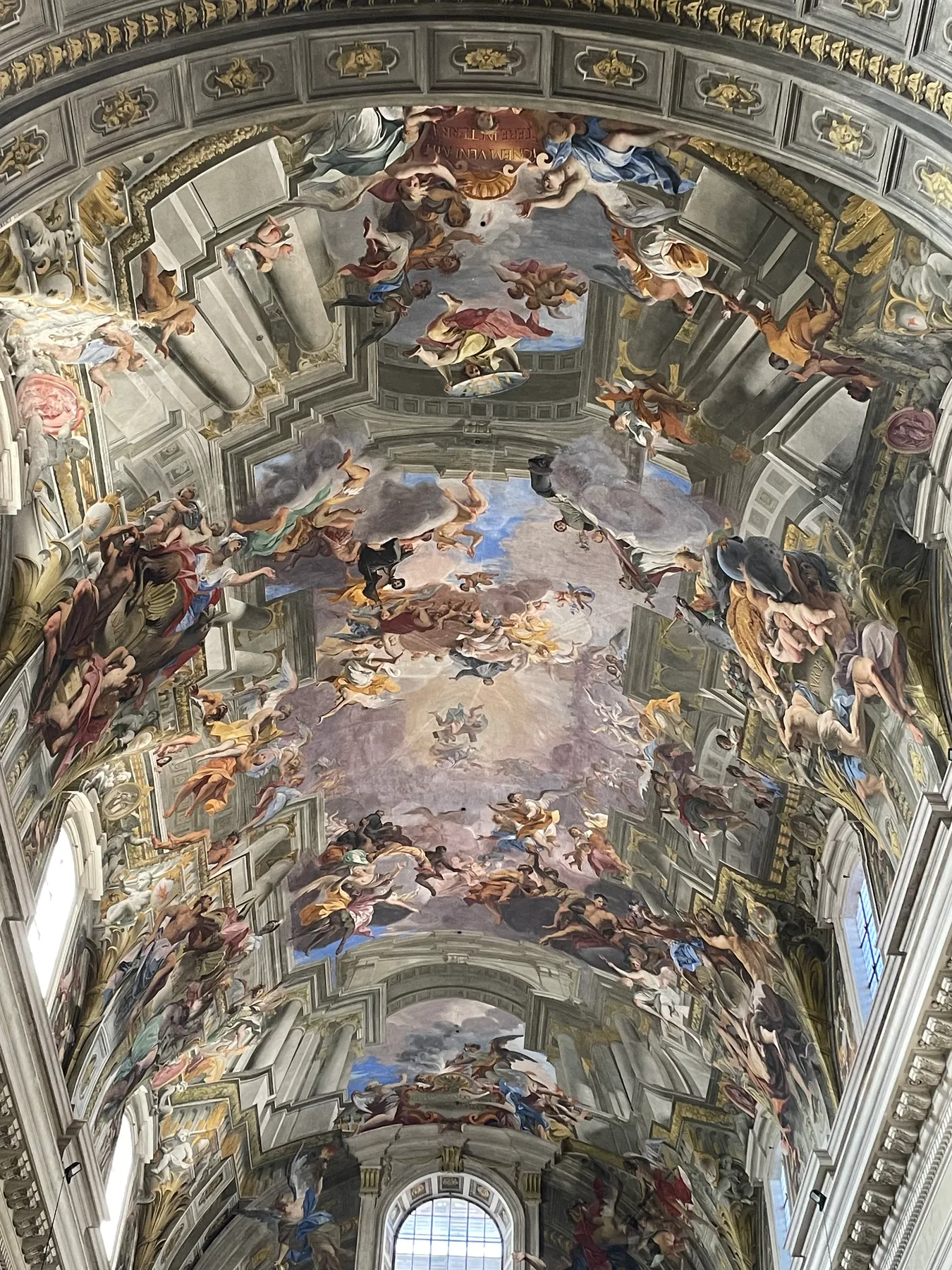
Next, we step into Sant’Ignazio di Loyola, a grand Jesuit church where Baroque art literally soars to new heights. Look up at Andrea Pozzo’s illusionistic fresco on the nave ceiling – a tour-de-force of trompe-l’œil perspective. At first glance, the ceiling seems to open up into the sky, with St. Ignatius and missionary figures ascending heavenward amidst architectural columns and clouds. In reality, the “dome” above is completely flat – a painted optical illusion that has fooled many an eye.
Pozzo spent years (1685–1694) crafting this Glory of Saint Ignatius fresco, using stretched perspectives so precise that the church interior appears to dissolve into a glorious vision of heaven. As you move to the marked spot on the floor, the 3D effect is at its most powerful. Our guide will unveil how this Baroque masterpiece celebrates the Jesuit spirit and achieves its magic through geometry and imagination. Sant’Ignazio’s awe-inspiring interior, with its marbled altars and faux dome, perfectly captures the Baroque architecture ideal – to inspire faith through wondrous spectacle.
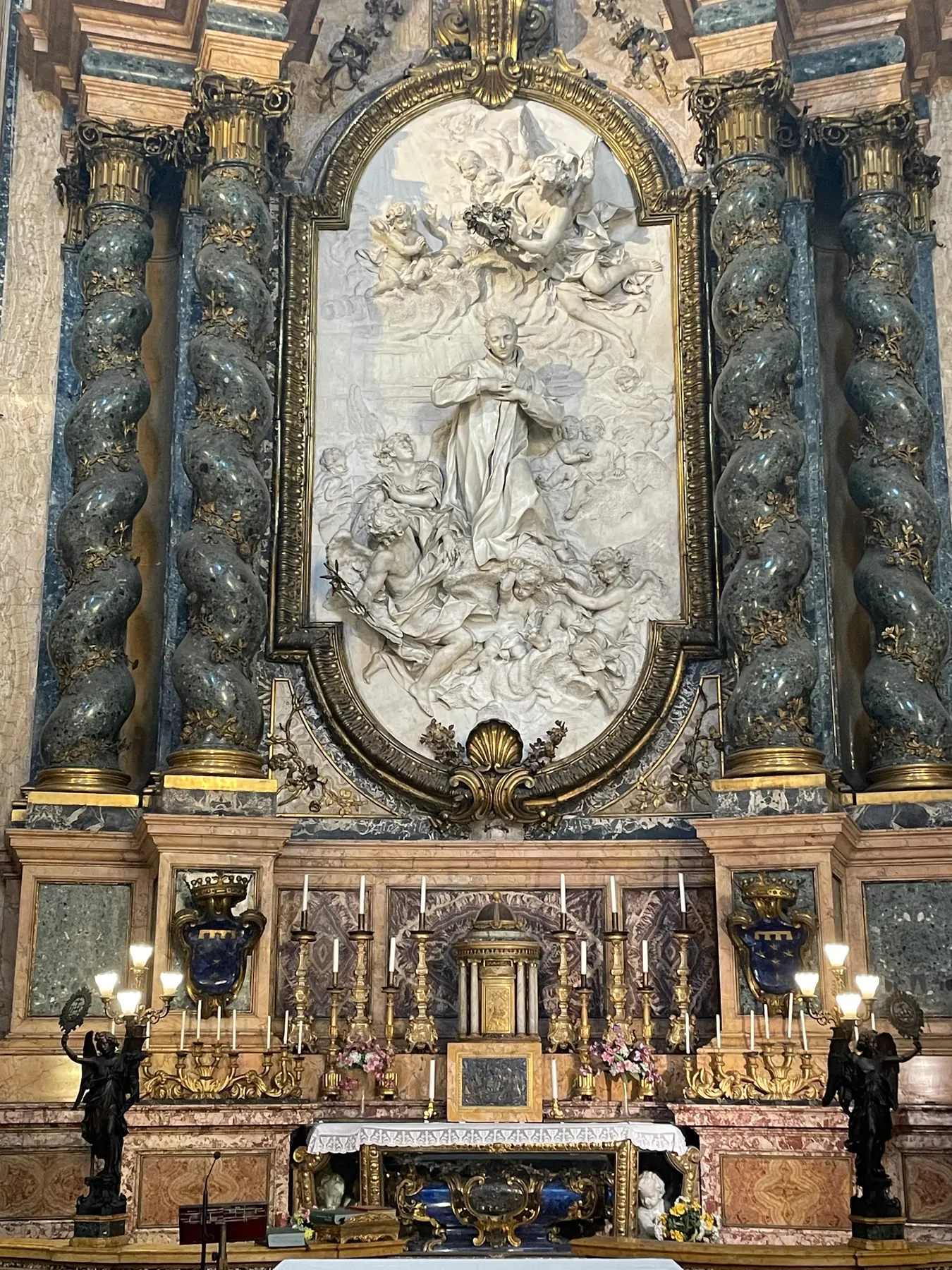
Our path leads to Sant’Andrea delle Fratte, a lesser-known 17th-century church that holds Angels by Bernini and lovely Baroque decorations. Flanking the main altar are two exquisite marble angels sculpted by Gian Lorenzo Bernini – the Angel with the Crown of Thorns and the Angel with the Superscription. These are the original angels made for the Ponte Sant’Angelo commission; later versions stand on the bridge today.
Their graceful poses and flowing robes showcase Bernini’s ability to infuse stone with life and emotion. As you admire their delicate features, notice how they seem to interact with the space – a quiet echo of the theatrical style we saw at the fountain in Piazza Navona. Sant’Andrea delle Fratte also reveals Borromini’s distinctive architectural hand in its dome and bell tower. This stop offers a peaceful pause and an up-close encounter with Baroque sculpture in an intimate setting.
At the Trevi Fountain, discover how architecture, sculpture and flowing water were composed as one immense Baroque spectacle. Designed principally by Nicola Salvi and completed by Giuseppe Pannini, the fountain centres on Oceanus and marks the monumental end of the ancient Aqua Virgo aqueduct. Your guide will explain its theatrical setting against Palazzo Poli and how the surrounding piazza becomes part of the work itself. This is an outdoor stop.
At the Quirinal, compare the exteriors of two nearby masterpieces: Bernini’s Sant’Andrea al Quirinale and Borromini’s San Carlo alle Quattro Fontane. This is an exterior stop; entry to either church is not included. From the street, your guide will contrast Bernini’s classically ordered frontage with Borromini’s undulating façade and explain how each architect shaped a distinctive response to a compact urban setting.
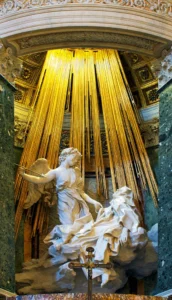
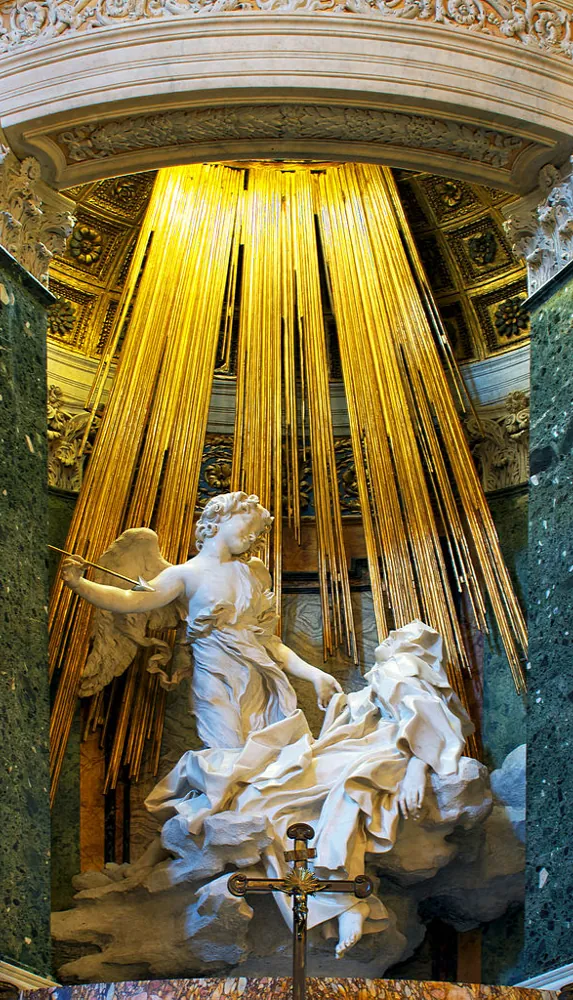
We end the tour on a breathtaking note at Santa Maria della Vittoria, home to Bernini’s Ecstasy of Saint Teresa. Tucked in the Cornaro Chapel of this small church, the sculpture is nothing short of a theatrical performance in marble. You’ll see Saint Teresa of Ávila carved in an exquisite moment of rapture, swooning on a cloud as a smiling angel aims a golden arrow – representing divine love – at her heart. Sunbeams of gilded bronze rain down behind them, illuminated by a hidden window above, as if spotlighting the climax of a stage play. Bernini, who also designed the surrounding stage-like chapel setting, achieved an emotional and sensory impact here that defines Baroque sculpture.
Bernini translates Saint Teresa’s own account of the transverberation into marble, presenting the soul pierced by divine love. Our guide will point out how the Cornaro family sculptures on the side (audience boxes in this theatre of faith) lean in as if watching the drama unfold. This masterpiece, completed in 1652, brilliantly showcases the Baroque era’s passion for combining art, architecture, and light into one immersive experience. As you gaze at Teresa’s face – a mix of agony and ecstasy – you’ll understand why Baroque art is celebrated for its beauty, emotion, and drama.
This Rome Baroque tour is an immersive walk through the 17th century, connecting you with the city’s most evocative art and architecture. From bustling piazzas to hushed chapels, each stop reveals a different facet of Baroque genius – playful fountains, illusionistic frescoes, emotive sculptures, and revolutionary paintings. Our engaging guides weave together the history and anecdotes of each location, making the tour accessible and fascinating for both seasoned art lovers and curious travellers.
You’ll come away not only with stunning photos, but with a deeper appreciation of how Rome’s Baroque masters – Bernini, Borromini, Caravaggio, and more – infused stone and paint with life, movement, and emotion. Join us on this vivid adventure into Baroque art and architecture and witness firsthand the grandeur and passion that have made Baroque Rome a must-see cultural experience.
At Crucis Tours, we believe in pilgrimage through beauty. Our Rome Baroque tour is more than a history lesson — it’s an invitation to encounter divine artistry in its most glorious form. With expert guides, sacred storytelling, and a pace designed for reflection, we offer travellers the chance to walk through living theology carved in stone and painted in light.
Whether you are a student of art, a lover of sacred architecture, or simply a seeker of truth and beauty, join us for this unforgettable journey through Baroque art in Rome.
This tour offers the broadest exploration of Baroque art and architecture across central Rome. For the Catholic history and theology behind the period, see our Counter-Reformation Baroque Rome Tour. For a shorter experience devoted to the Jesuits and their two great churches, choose the St Ignatius Church Tour.
Book your place today and encounter the glory of the Eternal City — one masterpiece at a time.
| MEETING POINT | Outside the Embassy of Brazil in Piazza Navona. See the precise location on Google Maps or What3Words. |
||||
| FINISHING LOCATION | Basilica of Our Lady of Victories (Santa Maria della Vittoria) | ||||
| DEPARTURE TIME | 9am Tuesdays, Thursdays and Saturdays | ||||
| DURATION | Approx. 3 hours | ||||
| DRESS CODE | Comfortable clothing, covering shoulders and knees | ||||
| INCLUDED |
|
||||
| NOT INCLUDED |
|
| Ticket Type | Adult (16+), Student ID, Child (under 16) |
|---|
The tour begins in Piazza Navona with Bernini’s Fountain of the Four Rivers and Borromini’s façade of Sant’Agnese in Agone. Your guide will introduce the patronage of Pope Innocent X and show how sculpture, water, architecture and the ancient obelisk were combined to create one of Baroque Rome’s greatest public spaces.
Inside Sant’Agostino, encounter Caravaggio’s Madonna di Loreto, in which two travel-worn pilgrims kneel before Our Lady and the Christ Child. Its realism, humanity and dramatic light reveal how Baroque sacred art brought the mysteries of the Faith close to ordinary worshippers. You will also see Raphael’s Prophet Isaiah and compare Renaissance harmony with Caravaggio’s new visual language.
In the Contarelli Chapel, see The Calling of Saint Matthew, Saint Matthew and the Angel and The Martyrdom of Saint Matthew. Your guide will explain Caravaggio’s revolutionary use of chiaroscuro, gesture and contemporary figures to make the Gospel narrative immediate and compelling.
Enter the Jesuit church of Sant’Ignazio and stand beneath Andrea Pozzo’s extraordinary ceiling fresco, commonly known as the Glory of Saint Ignatius. From the correct viewing point, painted architecture appears to open the roof towards heaven. You will also discover the famous illusion of a dome painted on a flat surface.
At Sant’Andrea delle Fratte, admire Bernini’s original Angel with the Crown of Thorns and Angel with the Superscription, created for the Ponte Sant’Angelo commission. Their flowing drapery and expressive movement demonstrate Bernini’s ability to make marble appear weightless and alive. The church also displays Borromini’s architectural work in its dome and bell tower.
At the Trevi Fountain, discover how architecture, sculpture and flowing water were composed as one immense Baroque spectacle. Designed principally by Nicola Salvi and completed by Giuseppe Pannini, the fountain centres on Oceanus and forms the monumental end of the ancient Aqua Virgo aqueduct. This is an outdoor stop.
From outside, compare Bernini’s Sant’Andrea al Quirinale with Borromini’s San Carlo alle Quattro Fontane. Your guide will contrast their façades and explain how each architect responded to a compact urban setting. This is an exterior stop; entry to either church is not included.
The tour concludes at Santa Maria della Vittoria before Bernini’s Ecstasy of Saint Teresa. Sculpture, architecture and concealed natural light combine in the Cornaro Chapel to present Saint Teresa of Ávila’s mystical encounter as a sacred theatre. It is one of the supreme achievements of Baroque Rome and a fitting conclusion to the tour.
Outside the Embassy of Brazil in Piazza Navona.
See the precise location on Google Maps or What3Words.
Tour Reviews
Olena gave us an amazing tour today. Her knowledge of the cathedrals, relics, history, Catholic was phenomenal. She was thoughtful to make sure we were in the shade whenever possible. Highly recommend her.
Originally posted on Google
Leave a Review