
Expert Catholic Guide
A practising Catholic guide leads this experience.
6 planned stops · 3 hours
Begin at the mother church of the Society of Jesus. Your guide will explain how its broad nave served…
At the church associated with the Jesuits’ Roman College, discover Andrea Pozzo’s Glory of Saint Ignatius…
Visit the medieval Dominican church that houses the body of St Catherine of Siena and Michelangelo’s…
Stand before Caravaggio’s Calling of Saint Matthew, Saint Matthew and the Angel and Martyrdom of Saint…
Explore Bernini’s Fountain of the Four Rivers, Borromini’s contribution to Sant’Agnese in Agone and the…
Conclude at the home of St Philip Neri and the Congregation of the Oratory. Paintings by Rubens, richly…
A practising Catholic guide leads this experience.
See the itinerary for the route and what happens at each stop.
Scheduled on Tuesday, Thursday, Saturday. Choose a live date below.
What you see is what you’ll pay.
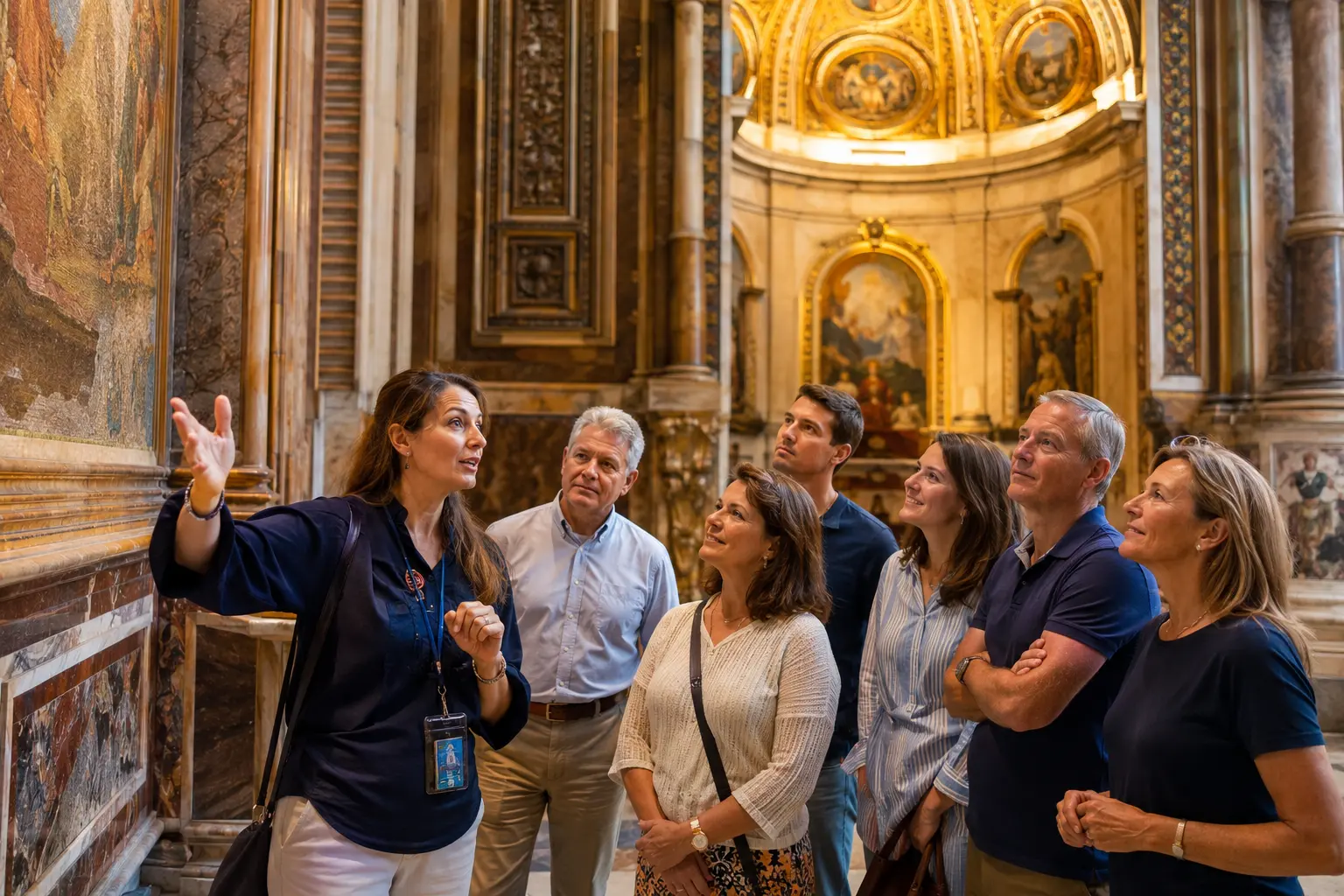
Your practising Catholic guide brings Scripture, Church history, sacred art and devotion together—helping each stop become part of one coherent pilgrimage.
5.00
Based on 1 reviews from pilgrims who experienced this tour.Read all 1 reviewsOnly seven places per small-group departure. Preferred dates can fill quickly. Check the live calendar before finalising your plans.
Check availability Free Cancellation — Subject to terms. Pay in instalmentsSpread the cost with Klarna · subject to eligibility and availability.The Counter-Reformation Baroque Rome Tour explores how the Catholic Church responded to the upheavals of the sixteenth century through doctrinal clarity, spiritual reform, new religious communities and a renewed commitment to sacred beauty. Often called the Counter-Reformation, this movement was also a Catholic renewal from within, given decisive direction by the Council of Trent and embodied by saints including St Ignatius of Loyola, St Philip Neri and St Catherine of Siena.
The Counter-Reformation Baroque Rome itinerary unfolds over three hours. Your Catholic guide will lead you through churches and public spaces where painting, sculpture and architecture made the truths of the Faith vivid and accessible. The Council did not invent or prescribe the Baroque style; rather, the reforming Church created a religious and cultural setting in which artists could speak powerfully to the intellect, the imagination and the soul.
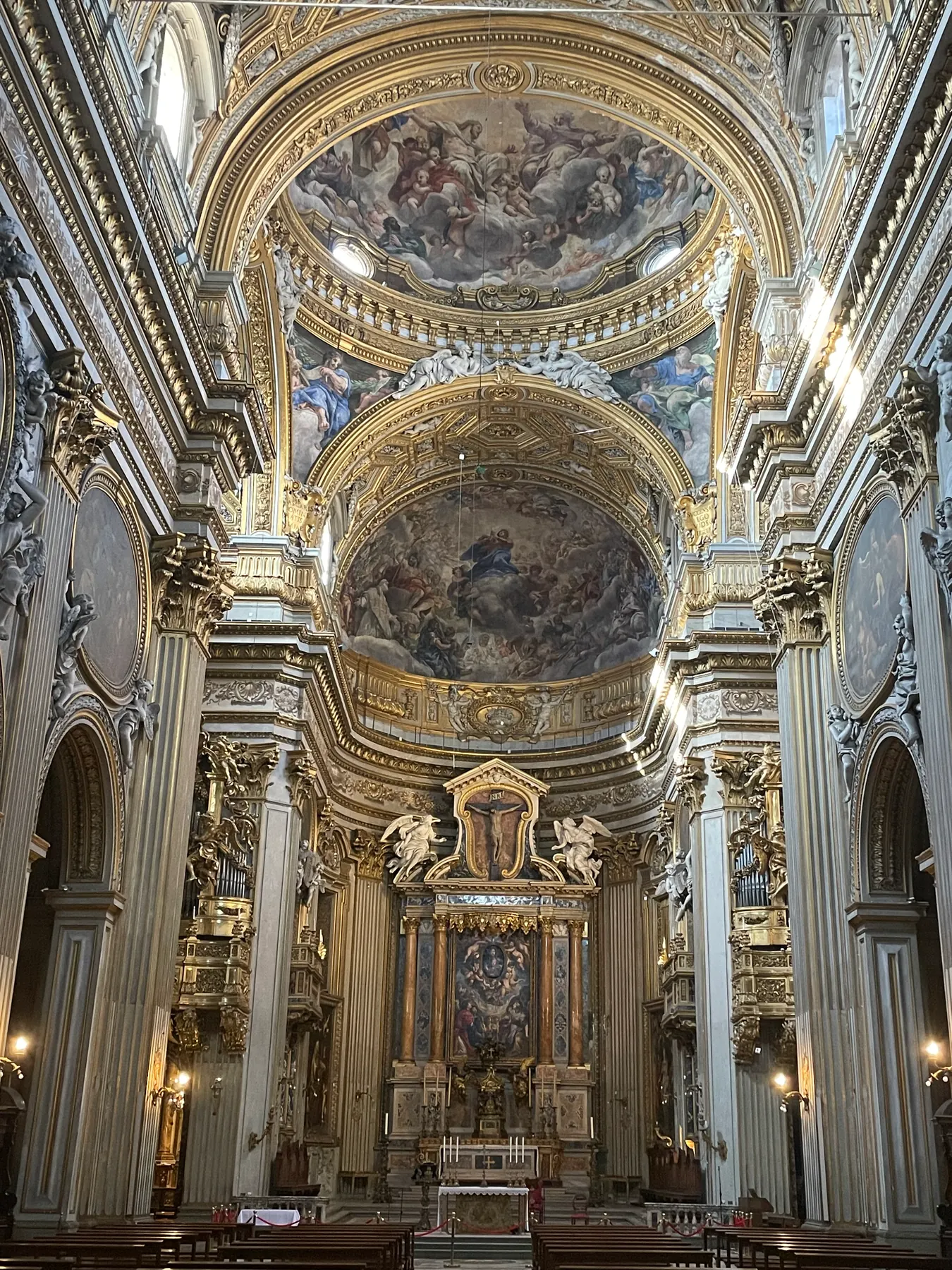
The tour begins at the Gesù, mother church of the Society of Jesus. Begun in 1568 to designs by Vignola and completed with a façade by Giacomo della Porta, its broad nave and clearly visible high altar served the Jesuits’ emphasis on preaching, the sacraments and active apostolate. The church therefore stands at the meeting point between the Catholic Reform and the later flowering of Roman Baroque.
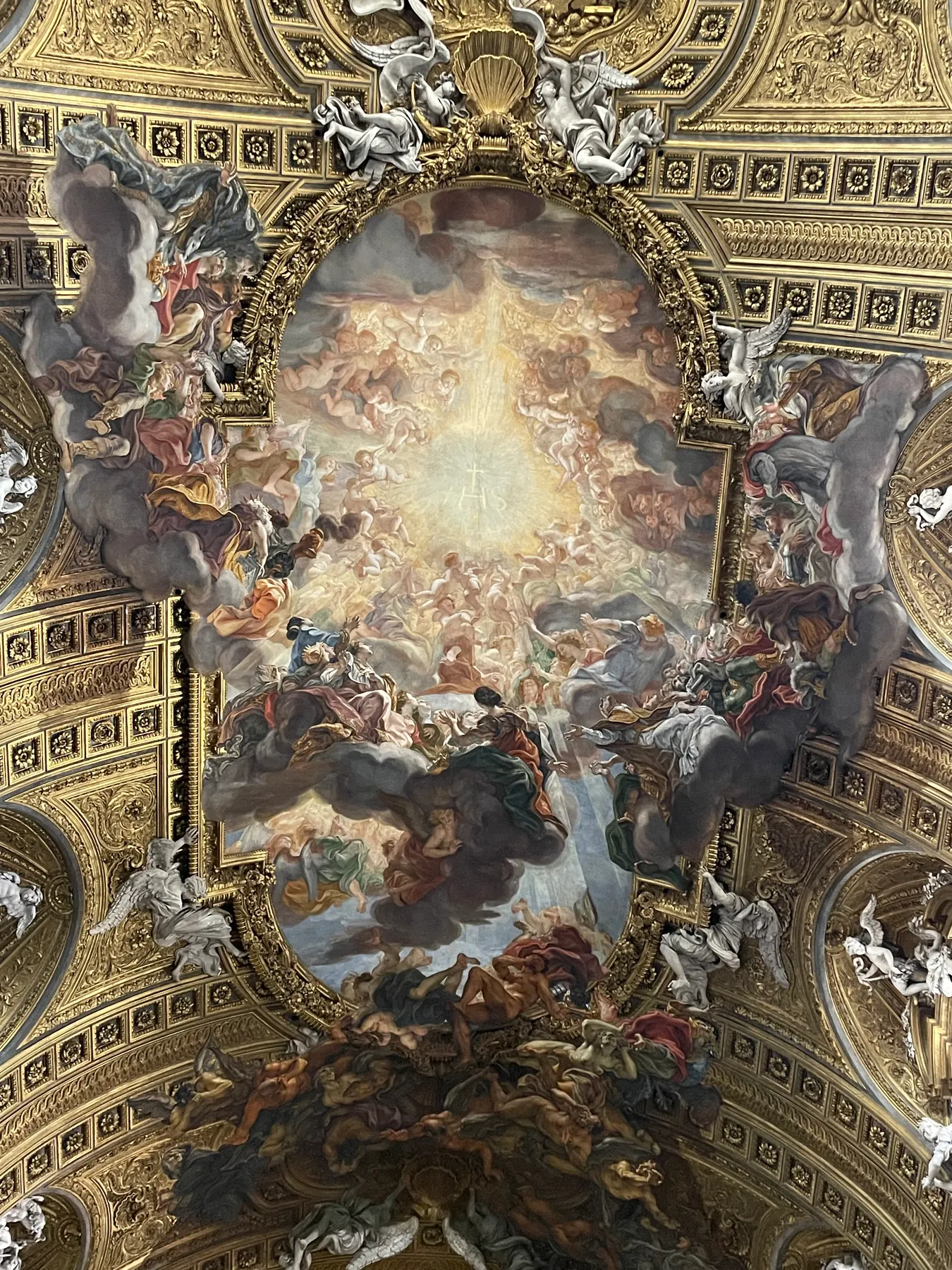
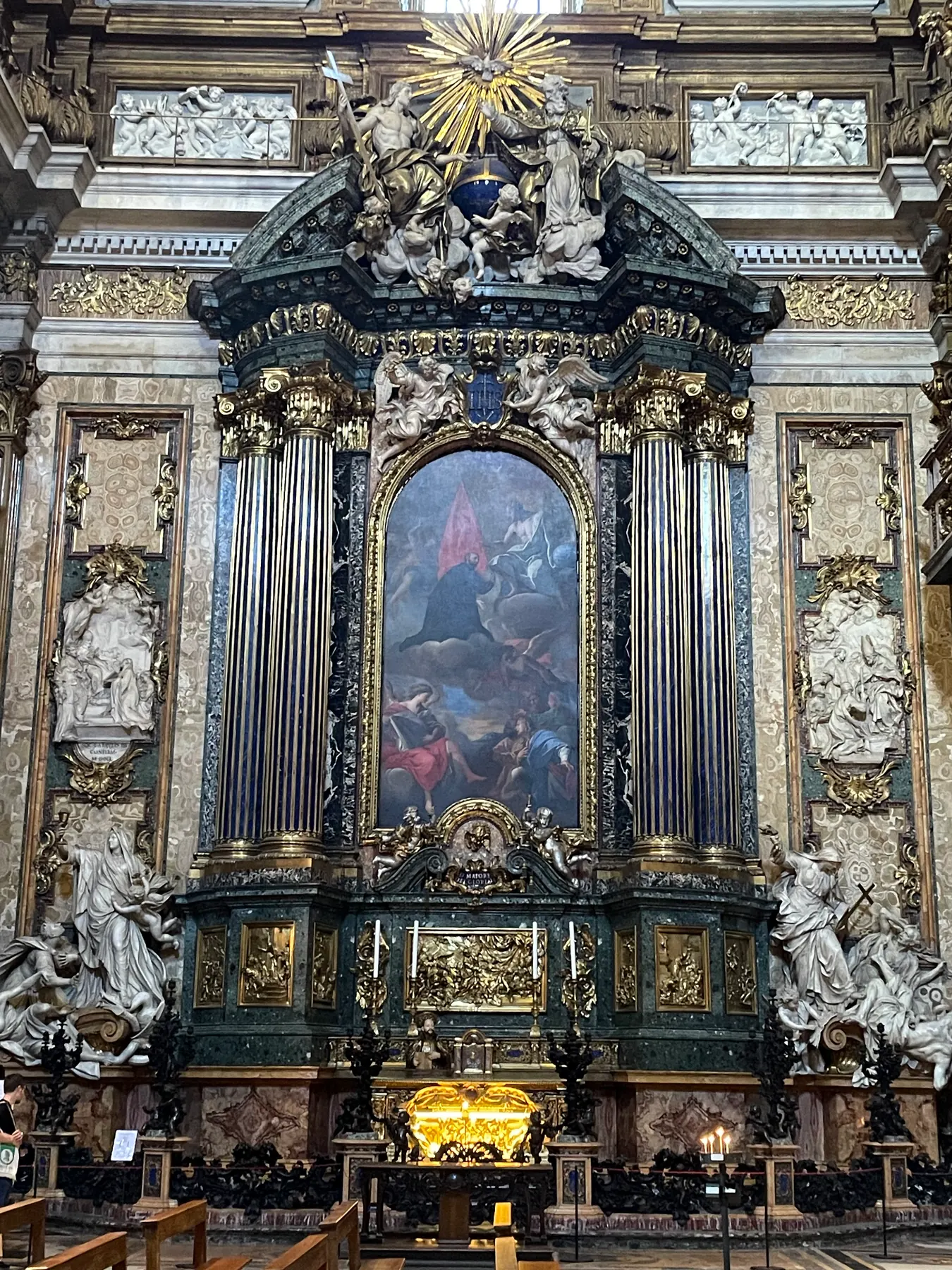
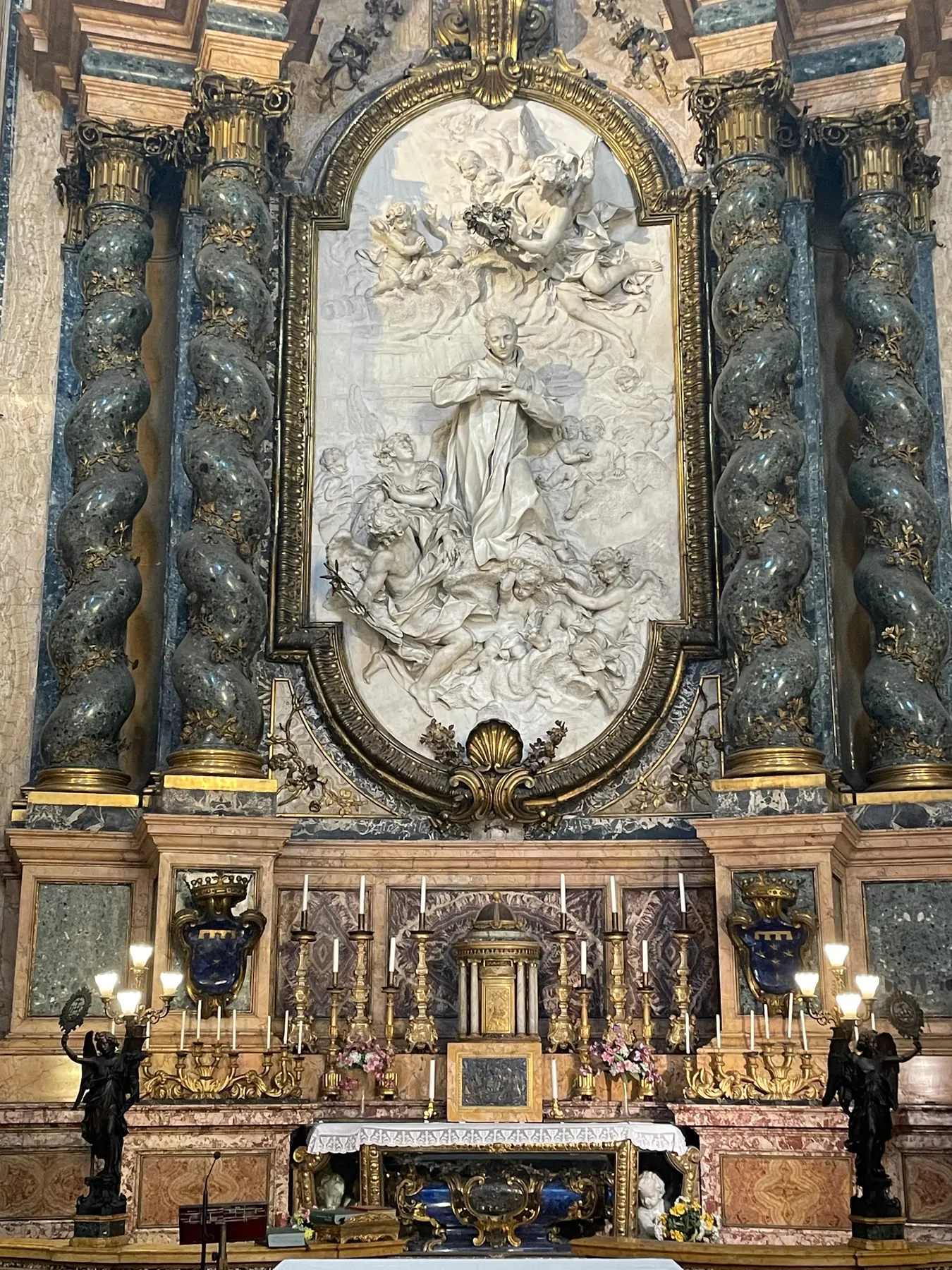
Above the nave, Giovanni Battista Gaulli’s Triumph of the Name of Jesus dissolves the boundary between painting, sculpture and architecture. In the chapel of St Ignatius, coloured marble, gilded bronze and the saint’s relics proclaim the worldwide missionary vocation of the Society he founded. Here, theological purpose and theatrical beauty work together to direct attention towards Christ.
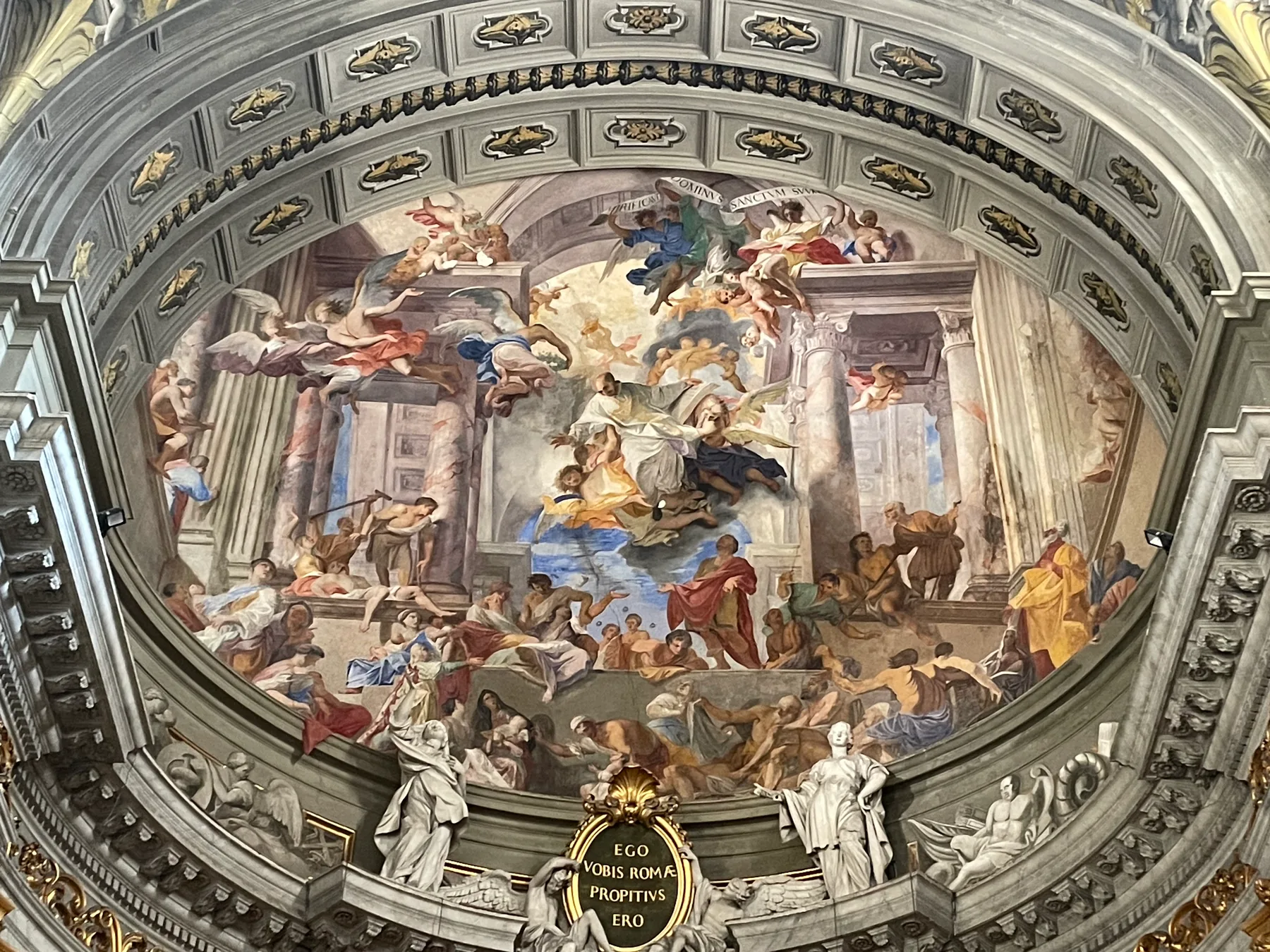
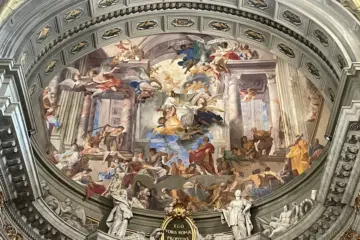
At Sant’Ignazio, the church associated with the Jesuits’ Roman College, Andrea Pozzo turns perspective into catechesis. His great ceiling fresco, commonly known as the Glory of Saint Ignatius, presents the missionary work of the Society of Jesus beneath a painted heaven that appears to open above the nave. A second illusion creates the appearance of a dome where no masonry dome was built.
Your guide will explain how these effects were constructed and why they mattered. Baroque illusion was not simply decoration: it helped worshippers imagine the communion of Heaven and earth and the Church’s mission to carry the Gospel throughout the world.
The medieval Dominican church of Santa Maria sopra Minerva reveals that Catholic renewal did not begin with a rejection of the past. Near the high altar rests the body of St Catherine of Siena, the fourteenth-century mystic and Doctor of the Church whose call for reform long preceded Luther. Michelangelo’s Renaissance Risen Christ provides another link between artistic periods.
Later chapels and monuments show how successive generations adapted an inherited sacred space. This stop places the Counter-Reformation within the Church’s longer history: reform meant recovering and renewing Catholic tradition, not inventing a new Church.
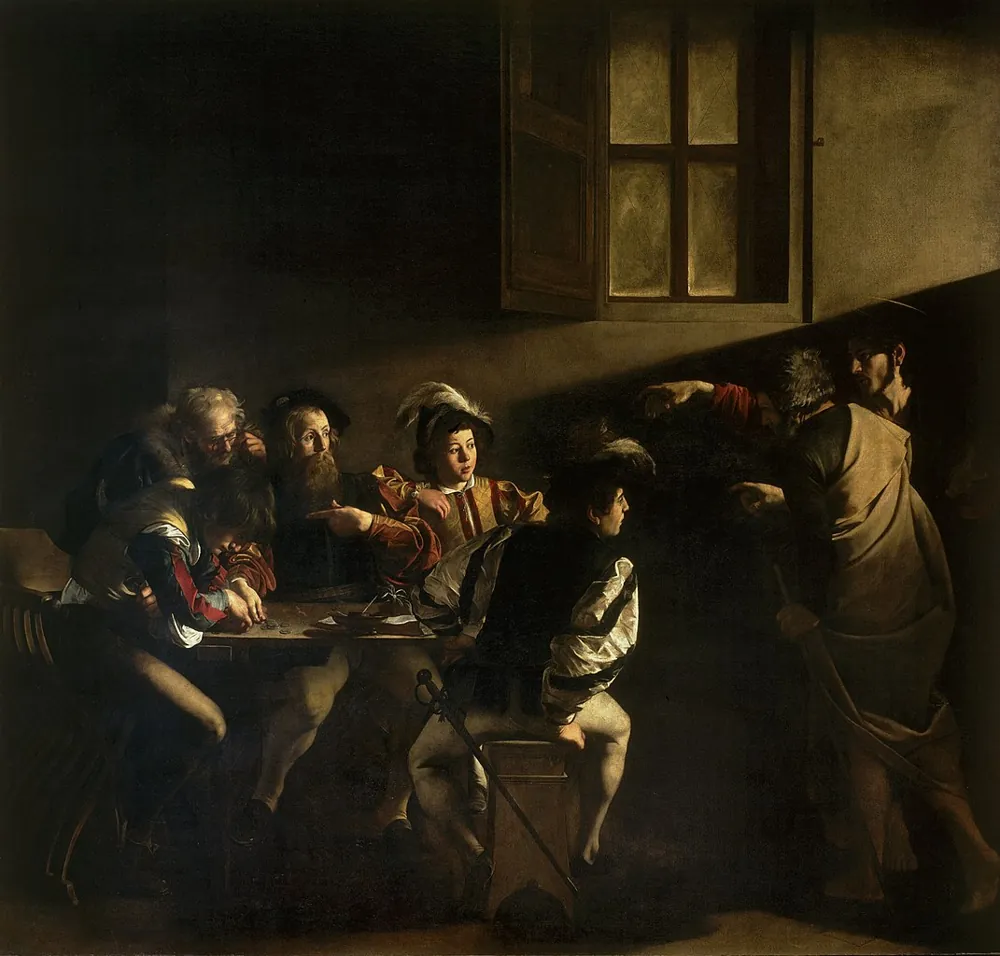
In the Contarelli Chapel of San Luigi dei Francesi, Caravaggio’s three paintings of St Matthew transform Scripture into an immediate encounter. The Calling of Saint Matthew, Saint Matthew and the Angel and The Martyrdom of Saint Matthew use dramatic light, recognisable figures and physical gesture to draw the viewer into the Gospel narrative.
The beam of light entering the darkness in The Calling makes divine grace visible in the ordinary world. Your guide will explore how this direct and emotionally compelling sacred art served the Catholic desire to teach clearly, awaken devotion and call the individual soul to conversion.
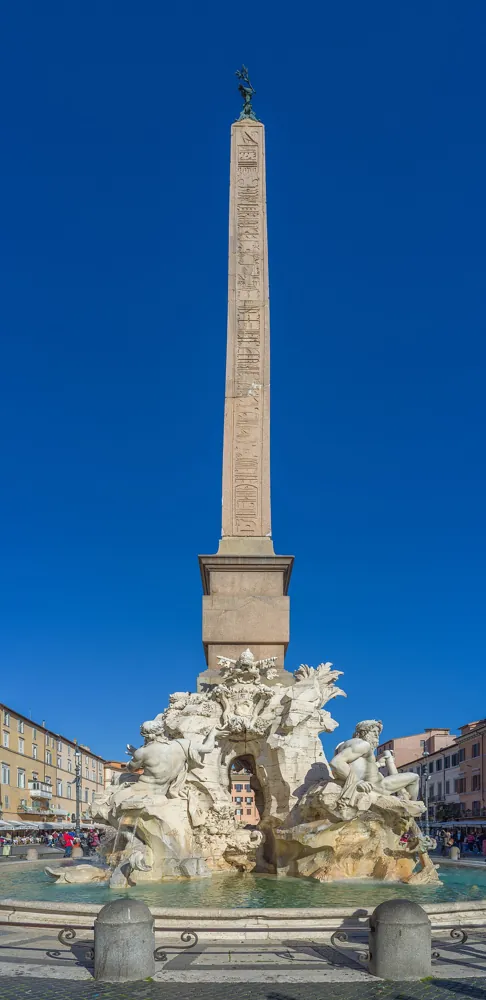
At Piazza Navona, the renewed confidence of seventeenth-century papal Rome moves into the public square. Bernini’s Fountain of the Four Rivers represents the Nile, Danube, Ganges and Río de la Plata, evoking four continents known to Europe and the global horizon of the papacy. Across the piazza, Sant’Agnese in Agone bears the architectural contribution of Francesco Borromini.
Together, fountain, church, palace and ancient obelisk transform the former Stadium of Domitian into a carefully composed Baroque setting. The square demonstrates how papal patronage shaped the civic as well as the religious face of Rome.
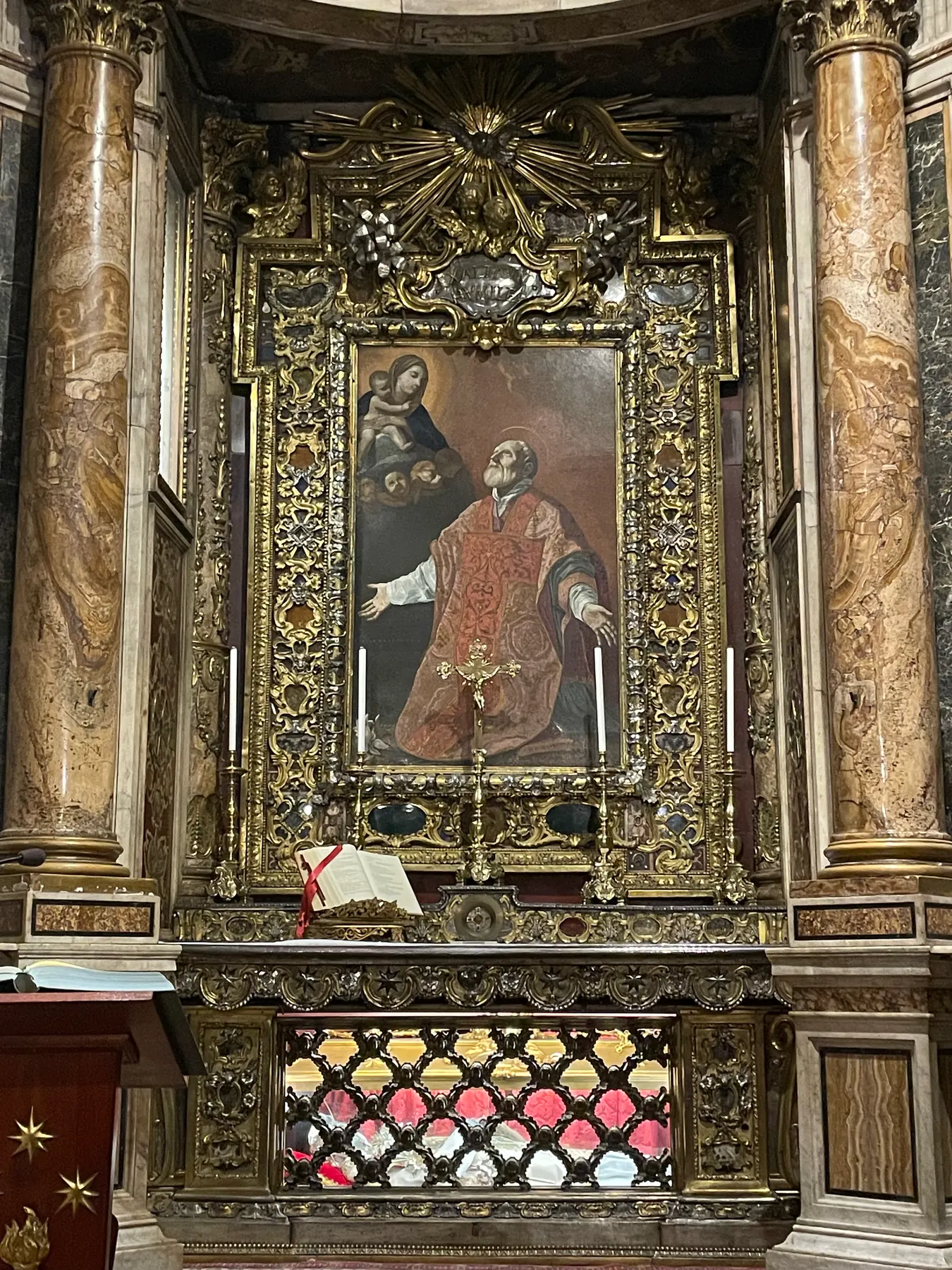
The tour concludes at Chiesa Nuova, or Santa Maria in Vallicella, the home of St Philip Neri and the Congregation of the Oratory. St Philip’s warmth, humour, personal guidance and devotion to the early Christian martyrs gave Catholic renewal a markedly different character from the disciplined missionary organisation of the Jesuits.
Inside the church, paintings by Peter Paul Rubens and the richly decorated chapels surround the rooms associated with St Philip. Chiesa Nuova shows that the Catholic Reformation was not a single method or aesthetic programme: it embraced scholarship, missionary zeal, preaching, charity, friendship and joyful holiness.
This tour presents Baroque Rome as a visual catechism, while keeping the saints and spiritual movements behind the art at its heart. You will see how the Church answered crisis through reform, continuity, evangelisation and beauty—leaving a permanent mark upon the Eternal City.
This is the best choice for travellers seeking the Catholic history and theology behind the Baroque. For a broader survey of the period’s leading artists and masterpieces, choose our Baroque Art & Architecture Tour. For a shorter one-hour introduction to the Gesù and Sant’Ignazio, see the St Ignatius Church Tour.
Counter-Reformation Baroque Rome belongs to the Church’s wider history of reform and renewal. For historical context, consult the Catholic Encyclopedia’s overview of the Counter-Reformation, which places the movement within the Church’s wider work of reform, mission and renewal.
| Ticket Type | Adult (16+), Student ID, Child (under 16) |
|---|
Begin at the mother church of the Society of Jesus. Your guide will explain how its broad nave served preaching and the sacraments before revealing Gaulli’s Triumph of the Name of Jesus, the chapel of St Ignatius and the missionary vision of the Jesuit order.
At the church associated with the Jesuits’ Roman College, discover Andrea Pozzo’s Glory of Saint Ignatius and the famous painted dome. Perspective and illusion transform architecture into catechesis, presenting the unity of Heaven, earth and the Church’s worldwide mission.
Visit the medieval Dominican church that houses the body of St Catherine of Siena and Michelangelo’s Renaissance Risen Christ. This stop places the Counter-Reformation within a much longer Catholic tradition of spiritual and institutional renewal.
Stand before Caravaggio’s Calling of Saint Matthew, Saint Matthew and the Angel and Martyrdom of Saint Matthew. Your guide will show how light, gesture and recognisable human figures make Scripture immediate and turn sacred art into a call to conversion.
Explore Bernini’s Fountain of the Four Rivers, Borromini’s contribution to Sant’Agnese in Agone and the papal patronage that transformed the ancient Stadium of Domitian into one of Baroque Rome’s greatest public spaces.
Conclude at the home of St Philip Neri and the Congregation of the Oratory. Paintings by Rubens, richly decorated chapels and the memory of St Philip reveal a Catholic renewal shaped by friendship, charity, personal guidance and joy.
Outside the church of Il Gesù.
Tour Reviews
The tour with Olena was fantastic. The pace was perfect as we walked between Baroque masterpieces in Rome. My husband and I learned so much and saw artworks in context that we would not have found on our own. We would definitely recommend Crucis tours and will take more tours in the future.
Originally posted on Google
Leave a Review