

The Instruments of the Passion are the objects associated with the suffering and Crucifixion of Jesus Christ. They include the Cross, Crown of Thorns, nails, column and scourges, Holy Lance, sponge, seamless garment, dice, ladder, pincers and the inscription placed above Christ.
In Catholic art they are also known as the Arma Christi—the “arms” or weapons of Christ. The paradox is deliberate: instruments used to humiliate and kill Him became signs of His victory over sin and death.
Which objects are Instruments of the Passion?
The precise selection varies between artworks and devotional traditions. The most frequently represented include:
- the Cross;
- the Crown of Thorns;
- the nails;
- the column and scourges of the Flagellation;
- the lance that pierced Christ’s side;
- the sponge raised to His lips;
- the seamless garment and the dice used to cast lots;
- the ladder used at the Deposition;
- the hammer and pincers;
- the Titulus bearing the charge against Him.
Other symbols may refer to the betrayal, arrest, trial, mocking or burial of Christ.
Why call them the “Arma Christi”?
The Latin expression presents the Passion as Christ’s triumph. The objects appear to belong to His enemies, but through His voluntary sacrifice they become the insignia of the victorious King.
This reversal is central to Christian faith. The Cross, once a sign of shame, becomes the sign of salvation. The wounds of the risen Christ are not erased; they reveal the identity of the One who conquered through love.
The Instruments of the Passion in Catholic art
Medieval and Baroque artists used the instruments to compress the entire Passion into a single image. A viewer who recognised them could move mentally from the betrayal and trial to Calvary and the tomb.
They appear around crucifixes, in angels’ hands, upon tombs and within scenes of the Last Judgement. Their position and combination often communicate more than a simple catalogue can explain.
Relics associated with the Instruments in Rome
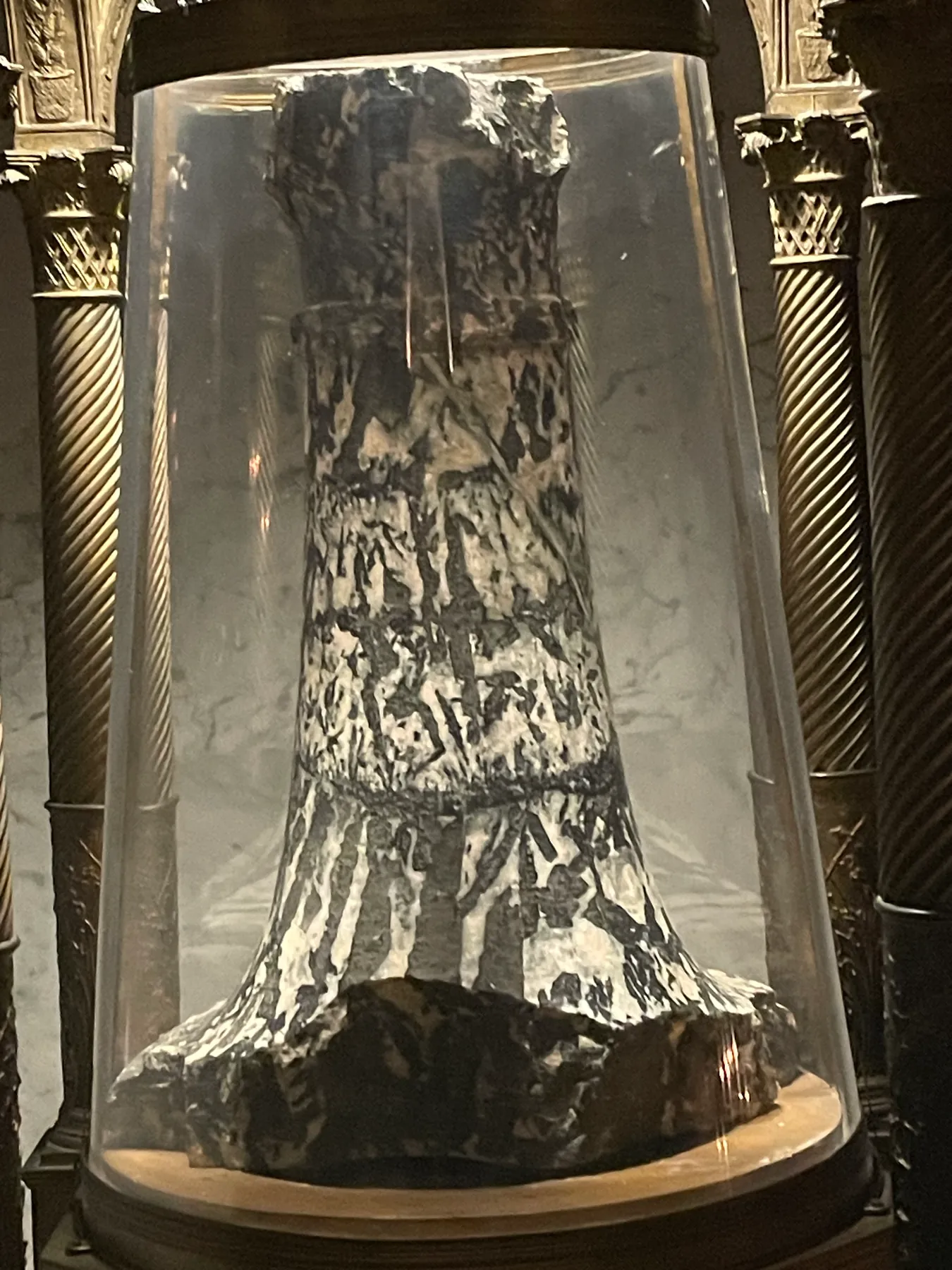
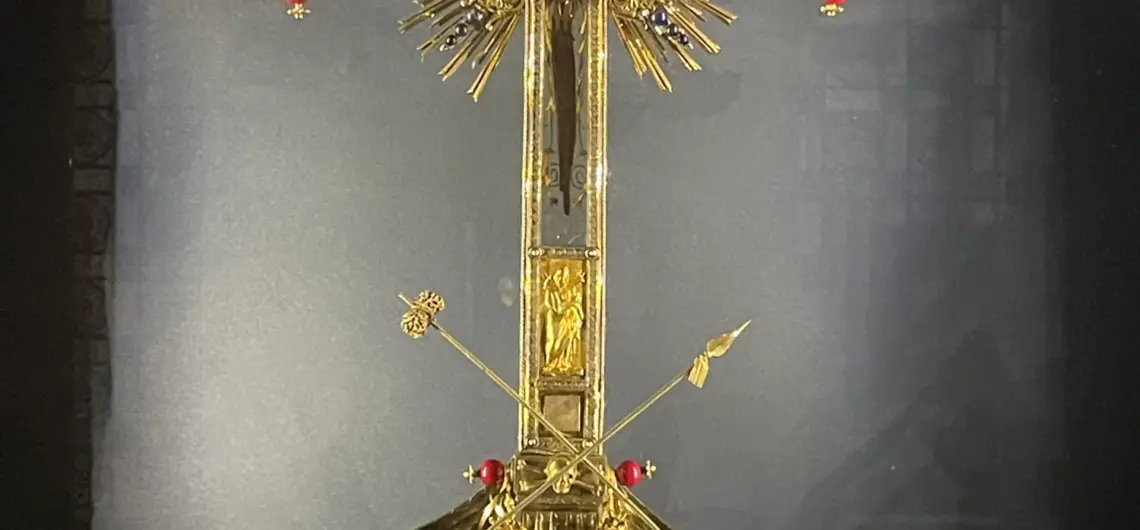
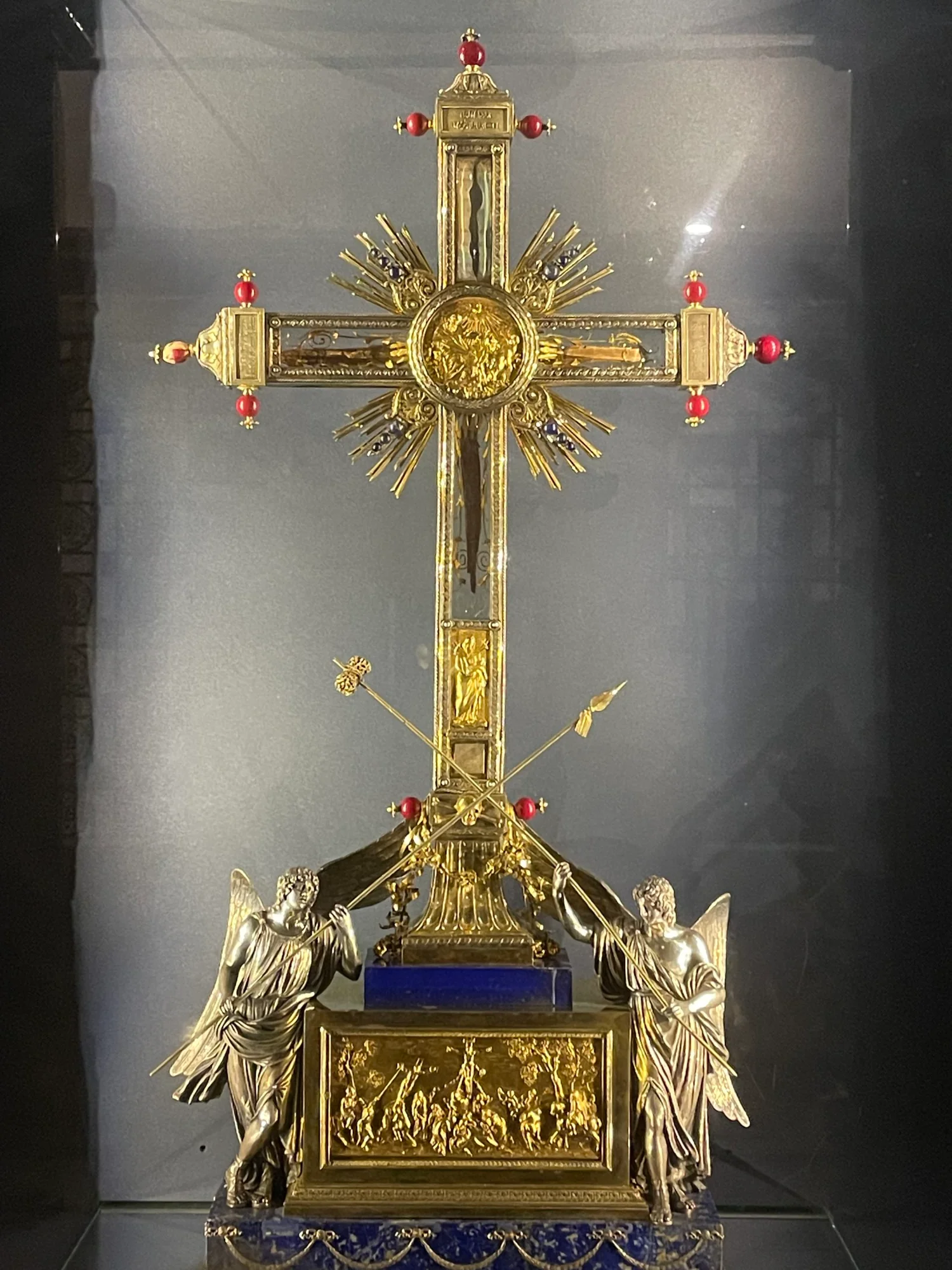
Rome preserves traditions connected with several of these objects. Santa Prassede is associated with the Column of the Flagellation. The Holy Stairs recall Christ’s trial. Santa Croce in Gerusalemme preserves relics traditionally identified with the Cross, nail, thorns and Titulus. St Peter’s safeguards traditions of the Holy Lance, Veronica’s Veil and True Cross, while Santa Maria in Trastevere is associated with a fragment of the Holy Sponge.
The Church has preserved and venerated these sacred relics because they bring the faithful into tangible contact with the saving Passion of Christ. Their presence in Rome has nourished Catholic prayer, pilgrimage and sacred art across many centuries.
How the Instruments of the Passion shape Catholic prayer
The Instruments of the Passion appear in the Stations of the Cross, the Sorrowful Mysteries of the Rosary, Holy Week liturgies and prayers before the Crucifix. Each object opens a particular moment of the Passion for meditation: the scourges recall His wounds, the thorns His kingship, and the nails His complete self-offering.
They also unite Catholic Scripture, art and devotion. A pilgrim who recognises the Instruments can read the spiritual meaning of a chapel, mosaic, reliquary or altarpiece and allow that sacred art to lead naturally into prayer.
Why the Instruments matter to pilgrims
The Instruments make the Passion concrete. They prevent Christ’s suffering from becoming a vague religious idea. The Gospel occurred in a material world and involved particular acts, objects and wounds.
At the same time, they should not become a morbid collection. Catholic devotion reads every instrument in the light of the Resurrection.
Encounter the Passion in Rome
Read our complete guide to the relics of Jesus Christ in Rome. The Via Crucis – Relics of Christ Tour introduces Rome’s principal Passion traditions within their Catholic spiritual and historical setting.
The public article supplies the essential vocabulary. The guide’s fuller explanation—how the churches, Scriptures, relics and sacred art illuminate one another—remains part of the tour itself.