

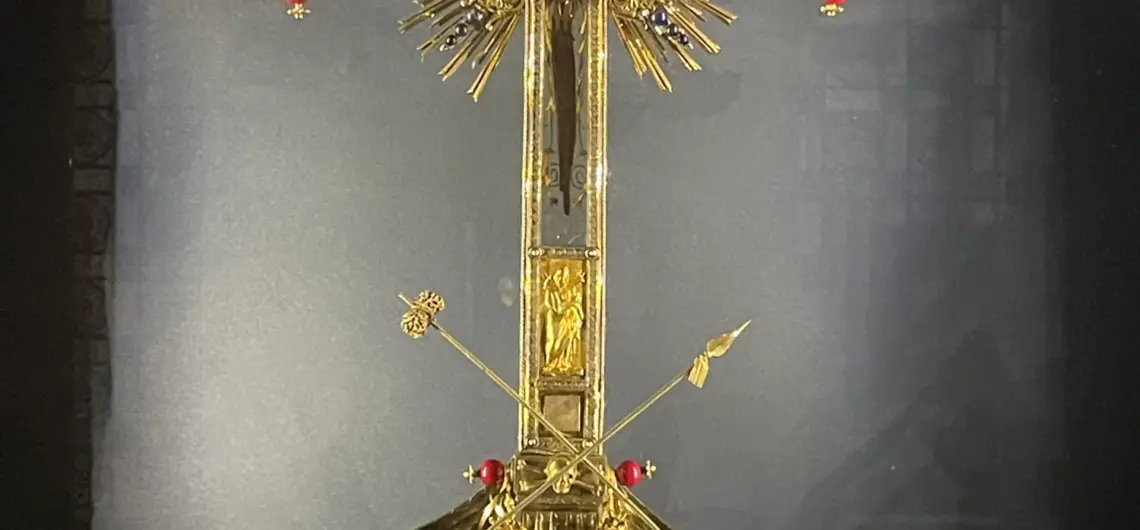
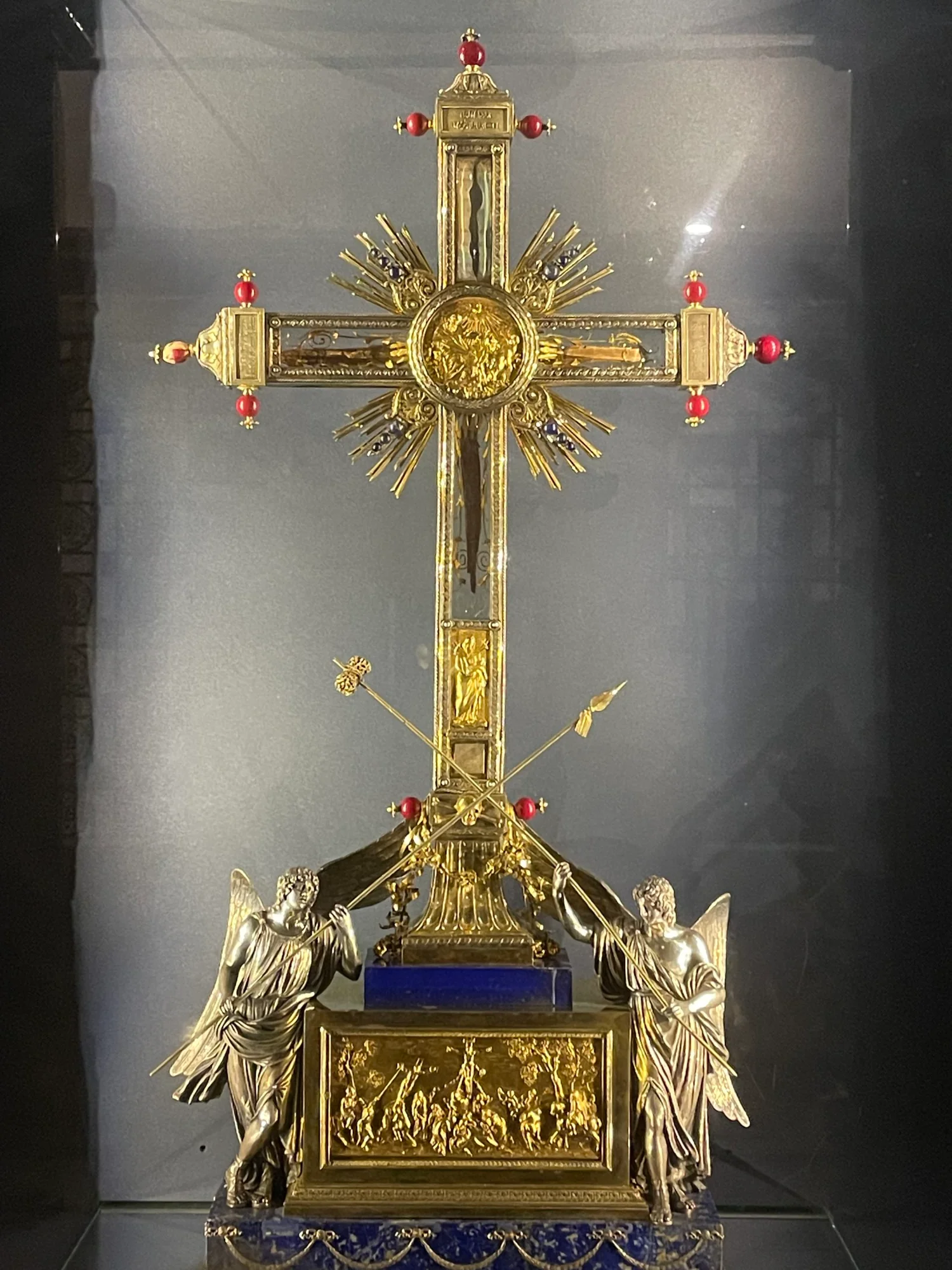
Major relics associated with Jesus Christ are preserved in Rome, Turin, Oviedo, Paris, Trier, Valencia and other historic Christian centres. They include objects traditionally connected with the Nativity, Last Supper, Passion and burial of Christ.
No single location contains every tradition. Rome is exceptional because several relics associated with different moments of Christ’s life can be encountered within one Catholic pilgrimage.
Why are there few bodily relics of Christ?
Catholics believe that Jesus rose bodily from the dead and ascended into Heaven. Relics associated with Him are therefore principally objects He touched or objects connected with His life, suffering and burial.
These are sometimes called relics of the Passion or Instruments of the Passion when they relate specifically to His suffering and Crucifixion.
Rome: relics from the Crib to the Cross
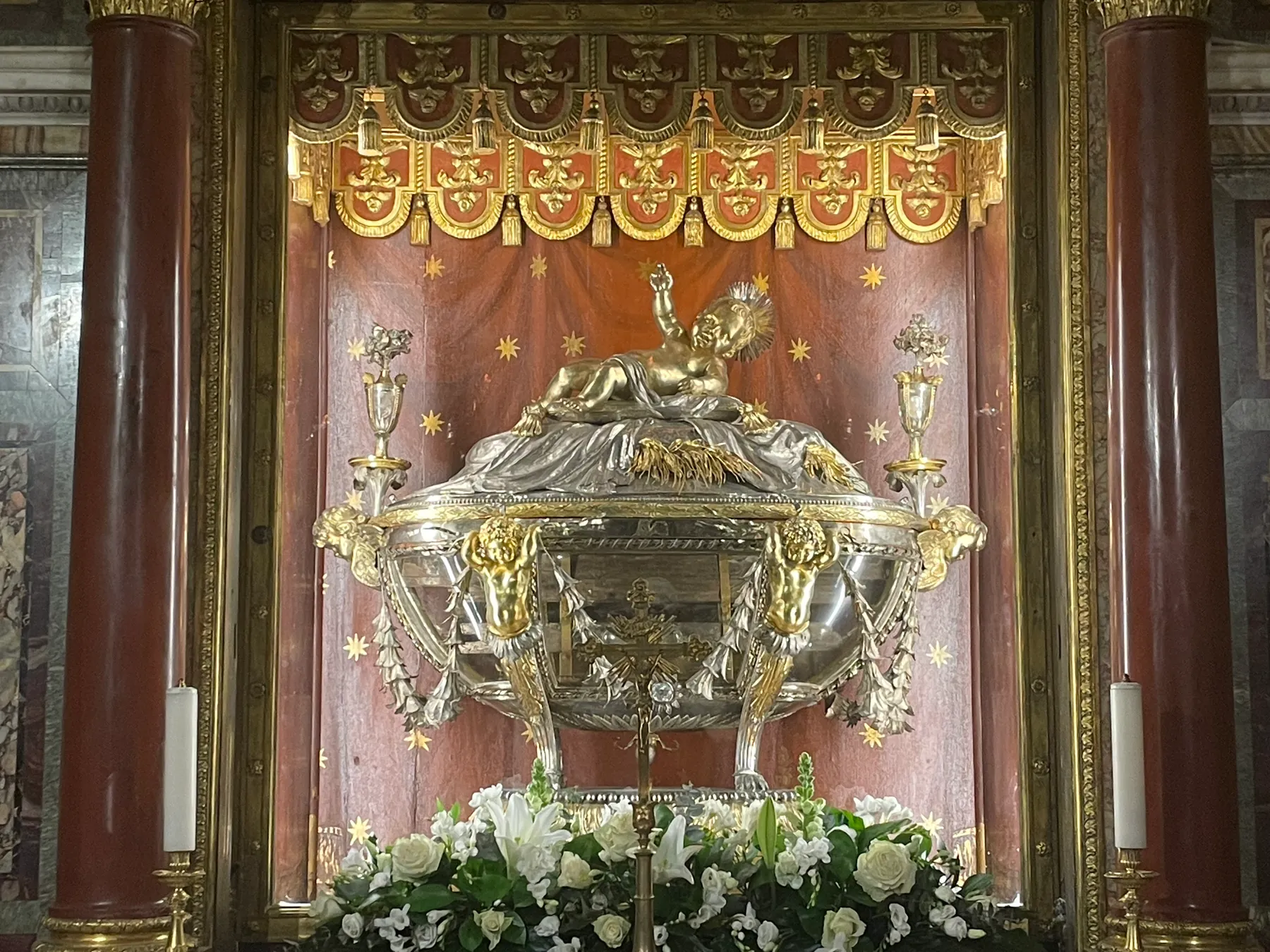
Rome preserves traditions associated with the Holy Crib at St Mary Major, the Column of the Flagellation at Santa Prassede, the Holy Stairs, the True Cross and other Passion relics at Santa Croce, the Holy Lance and Veronica’s Veil at St Peter’s, the Holy Sponge and the Quo Vadis footprints.
This concentration reflects Rome’s role as the centre of the Western Church and its long history as a destination for pilgrims. Read the complete Crucis introduction to the relics of Jesus Christ in Rome.
The Shroud of Turin
The Shroud of Turin is a linen cloth bearing the faint image of a crucified man. It is venerated as the burial shroud of Christ, and scientific examination has repeatedly drawn attention to its remarkable image and correspondence with the wounds of the Crucifixion.
The Catholic Church honours the Shroud as a powerful witness to the wounds and burial of Jesus. Its sacred image has led generations of Christians to meditate upon the price of the Passion and the mystery of the Resurrection.
The Sudarium of Oviedo
Oviedo Cathedral in Spain preserves a bloodstained cloth traditionally identified with the cloth placed around Christ’s head after His death. The tradition is connected with the cloth mentioned separately from the burial linen in St John’s account of the empty tomb.
The Crown of Thorns in Paris
The Crown of Thorns associated with Christ’s Passion was preserved for centuries at Notre-Dame Cathedral. It survived the cathedral fire of 2019 and remains one of France’s most important Christian relics.
Separate thorns associated with the Crown have historically been given to churches elsewhere, including traditions preserved in Rome.
The Holy Tunic
Several churches preserve traditions concerning the seamless garment for which the soldiers cast lots at the Crucifixion. The best-known include Trier Cathedral in Germany and Argenteuil in France.
The existence of more than one claim demonstrates why each relic must be considered according to its individual history rather than accepted or rejected as a group.
The Holy Chalice of Valencia
Valencia Cathedral preserves the ancient cup venerated as the chalice used by Christ at the Last Supper. Popes have celebrated Mass with it, honouring its place within the Church’s living Eucharistic tradition.
Relics in the Holy Land
For Christian pilgrims, the places themselves are the great physical witnesses of salvation history: Bethlehem, Nazareth, the Mount of Olives, Calvary and the Holy Sepulchre.
Buildings have changed and layers of history have accumulated, but pilgrimage to the land of Christ’s birth, ministry, death and Resurrection remains distinct from the veneration of portable relics.
How does the Church preserve the relics of Christ?
Different objects sometimes claim the same identity. Translation, division, loss, copying and contact relics further complicate the record.
The Church preserves the relics of Christ through cathedral treasuries, basilicas, reliquaries, liturgy and public veneration. Episcopal custody and the devotion of generations have carried these sacred objects through wars, pilgrimages and the passage of centuries.
Why Rome is the natural starting point
Rome offers a uniquely concentrated pilgrimage through the Incarnation, Passion and apostolic witness. The city allows Catholics to encounter sacred traditions within living basilicas rather than viewing disconnected objects in a collection.
The Via Crucis – Relics of Christ Tour is the best Crucis introduction to these Roman traditions, led by a knowledgeable, practising Catholic guide.