

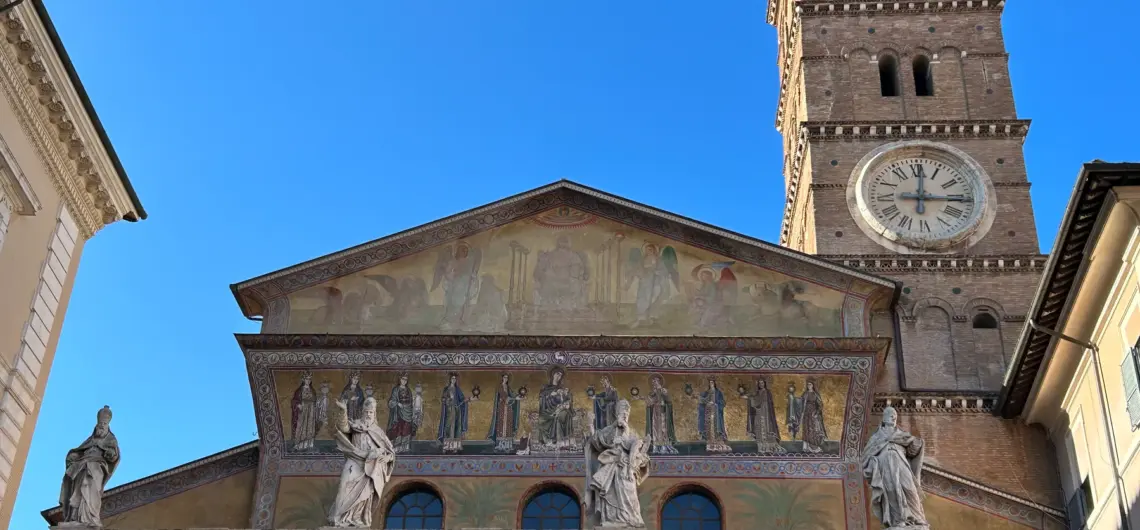
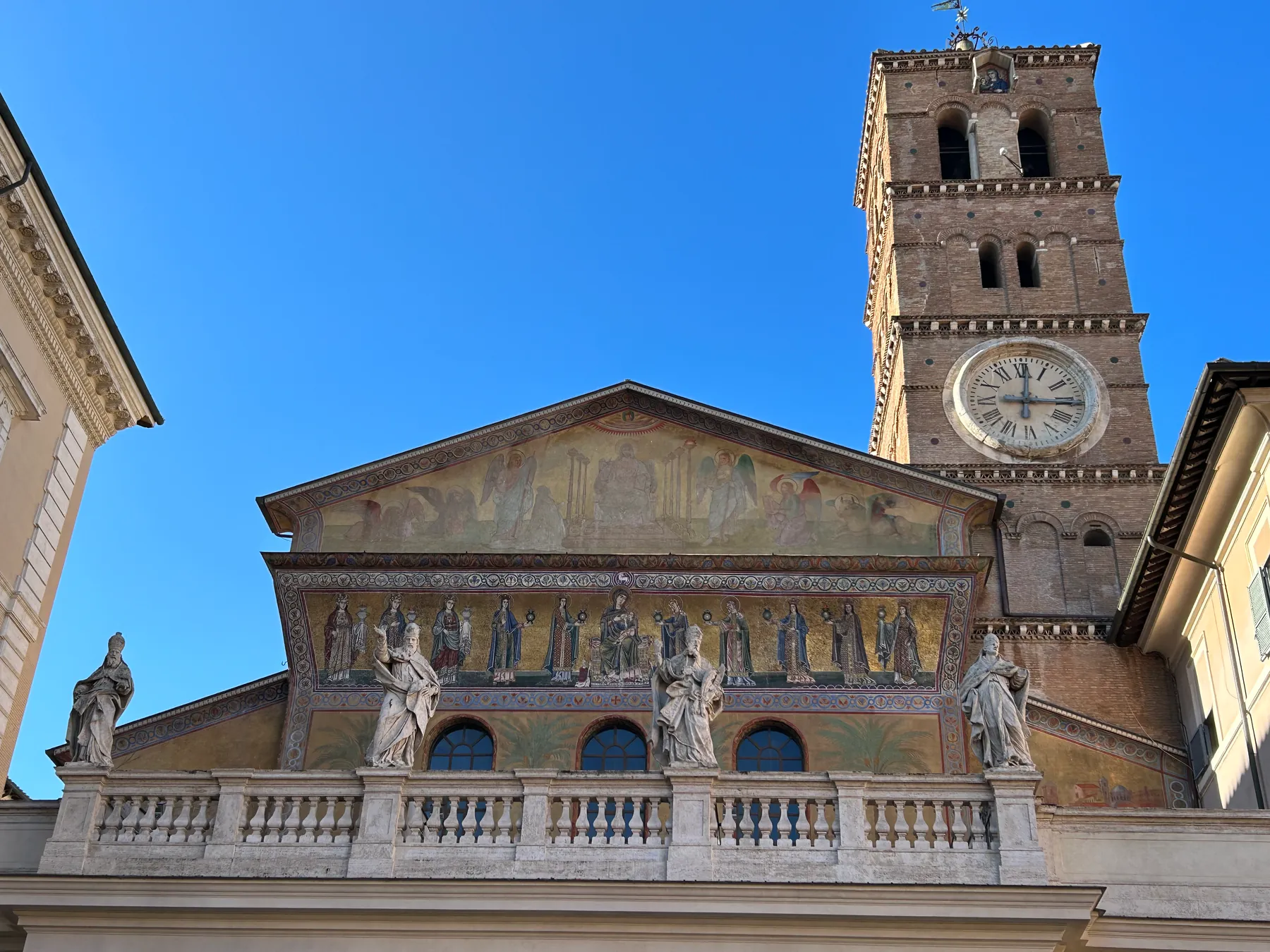
The Holy Sponge at Santa Maria in Trastevere is a sacred fragment of the sponge raised to the lips of Jesus during the Crucifixion. Preserved within one of Rome’s most ancient Marian basilicas, the relic connects this luminous church with the final moments of Christ’s Passion.
What was the Holy Sponge?
All four Gospels refer to Christ being offered wine during the Crucifixion. St John records that a sponge was filled with sour wine, placed upon hyssop and raised to His mouth.
The episode belongs to the fulfilment of Christ’s sacrifice. After receiving the wine, Jesus declared, “It is finished”, bowed His head and gave up His spirit.
Where is the Holy Sponge today?
Fragments of the Holy Sponge have been venerated in the Church for centuries. Rome preserves this sacred tradition at Santa Maria in Trastevere, where the relic bears witness to the fulfilment of the Gospel account and the physical reality of Christ’s sacrifice.
The Church’s careful preservation and veneration of the fragment carried the memory of the Holy Sponge across generations of Roman Catholics. Its devotional purpose is clear: to direct the pilgrim towards the Passion narrated in Scripture and towards the thirst endured by Christ for the salvation of souls.
Why Santa Maria in Trastevere?
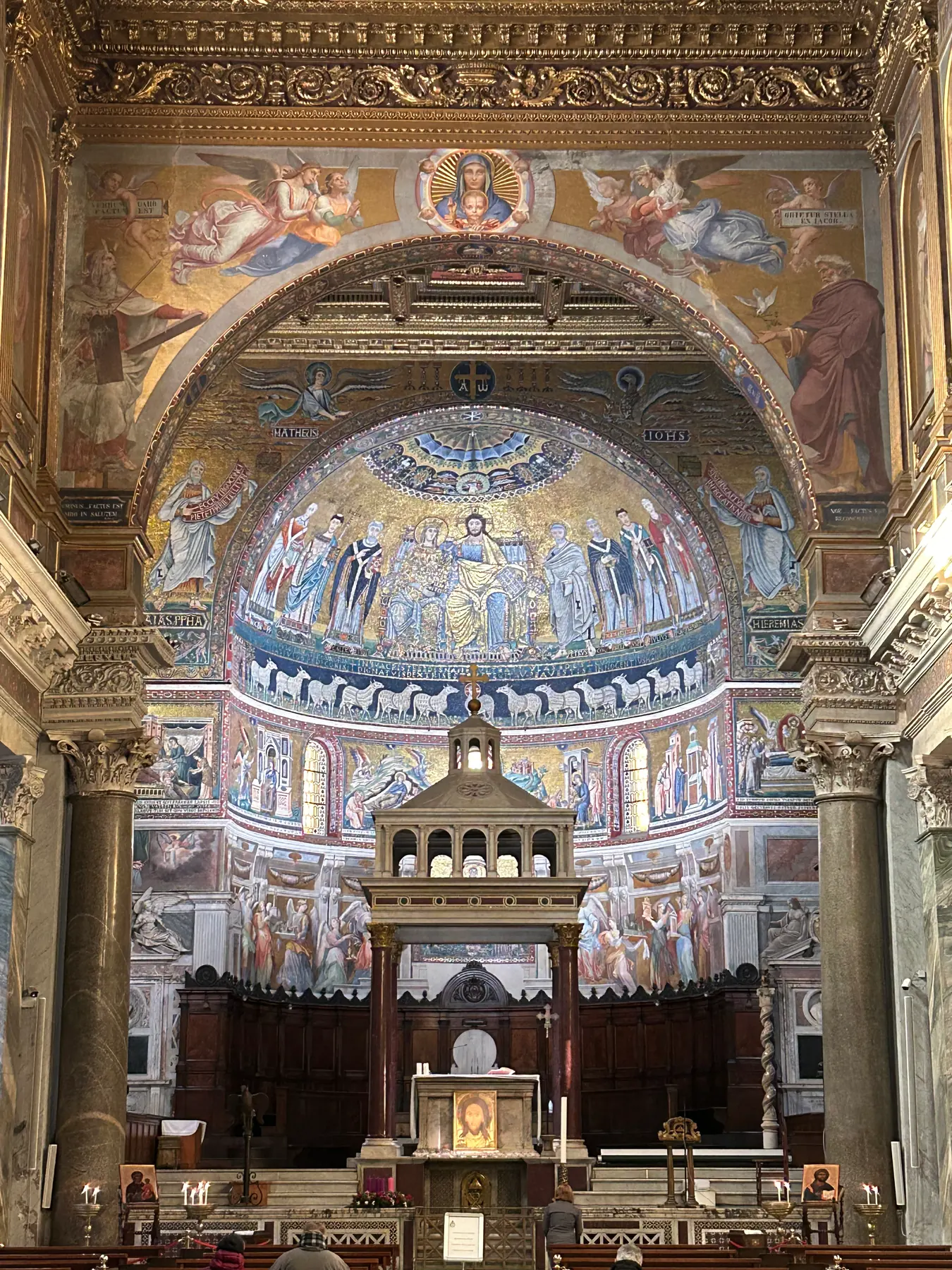
Santa Maria in Trastevere is among Rome’s oldest churches dedicated to the Blessed Virgin Mary. Its celebrated mosaics, ancient fabric and long liturgical life make it one of the most beautiful Catholic settings in the city.
The Holy Sponge tradition is easily missed amid the brilliance of the apse. Yet that contrast is spiritually suggestive: the humiliation of Calvary is contemplated within a church radiant with the glory of Christ and the honour of His Mother.
A relic rooted in the Gospel
The relic sends the pilgrim back to the biblical account. The small and apparently ordinary sponge forms part of the Gospel’s precise physical description of the Crucifixion and makes Christ’s suffering present to the Catholic imagination.
Catholic relics repeatedly emphasise this material character of the faith. Christianity proclaims that the Word became flesh and entered a world of wood, stone, cloth, blood, thirst and suffering.
What does the Holy Sponge mean for Catholic pilgrims?
The sour wine recalls the fulfilment of Scripture and the final obedience of Christ upon the Cross. Hyssop also carries biblical associations with purification and sacrifice. Together, these details draw the faithful into the unity of the Old and New Testaments and the completion of the work entrusted to the Son.
Venerating the Holy Sponge is therefore not curiosity about an unusual object. It is an invitation to contemplate the thirst, humility and saving love of Jesus. The relic helps the pilgrim remain with Christ at Calvary and hear anew His victorious words: “It is finished.”
Can visitors see the Holy Sponge at Santa Maria in Trastevere?
Relics are not always displayed like objects in a museum, and access or visibility can vary. The important task is to understand where the tradition belongs within the church and what it signifies.
This is precisely where a knowledgeable guide adds value. The visitor sees not only an object or location but the relationship between Scripture, liturgy, art and the history of the basilica.
Explore Santa Maria in Trastevere
The Medieval Rome Walking Tour – Religious Life & Vocation visits Santa Maria in Trastevere as part of a broader Catholic exploration of religious life and vocation.
Read our wider guide to the relics of Jesus Christ in Rome. Pilgrims especially interested in the Passion should also consider the Via Crucis – Relics of Christ Tour, which focuses upon Rome’s principal relic traditions associated with Christ.