

St Helena and the True Cross belong at the heart of Catholic pilgrimage history. The mother of Emperor Constantine discovered the Cross of Christ during her pilgrimage to Jerusalem in the fourth century. Her story links the Holy Land with Rome and lies behind several of the Eternal City’s most important relic traditions. For a wider overview of the sacred objects and churches, see our guide to the relics of Jesus Christ in Rome.
Who was St Helena?
Helena rose from relatively obscure origins to become the mother of Constantine the Great. After Constantine gained imperial power, she received the title Augusta and used her position to support Christian worship and charitable works.
Ancient Christian authors remembered her for her piety and for a journey to the Holy Land late in life. She is honoured as a saint in both the Catholic and Orthodox Churches.
Constantine and the transformation of Christian Rome
Constantine’s reign marked a decisive change in the public position of Christianity. After periods of persecution, Christians could worship legally and build monumental churches.
In Rome and Jerusalem, imperial patronage created basilicas at places associated with the apostles and with the life of Christ. This did not make the empire instantly or uniformly Christian, but it changed the physical visibility of the Church.
Helena’s pilgrimage to Jerusalem
Helena travelled through the Holy Land during the period in which the site of Christ’s tomb was uncovered and the Church of the Holy Sepulchre was established.
The Church’s ancient accounts honour Helena’s pilgrimage, her building of churches and her discovery of the True Cross. Fourth- and fifth-century Christian writers preserved and developed the record of these sacred events for succeeding generations.
Catholic tradition receives this testimony with gratitude. Helena’s pilgrimage joined imperial resources to the service of Christ and safeguarded the holy places and relics of the Passion for the universal Church.
How was the True Cross identified?
The ancient account relates that three crosses were found near Calvary and that a miraculous healing revealed which was the life-giving Cross of Christ.
The story proclaims a theological truth through its narrative: the Cross of Christ is life-giving. The instrument of death becomes, through the Resurrection, the sign of healing and salvation.
Which relics did St Helena bring to Rome?
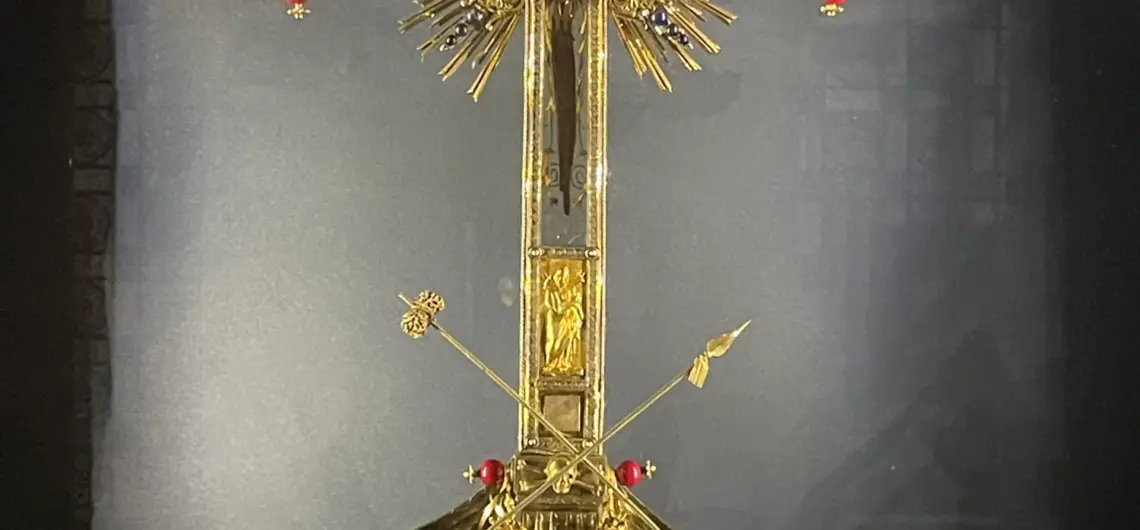
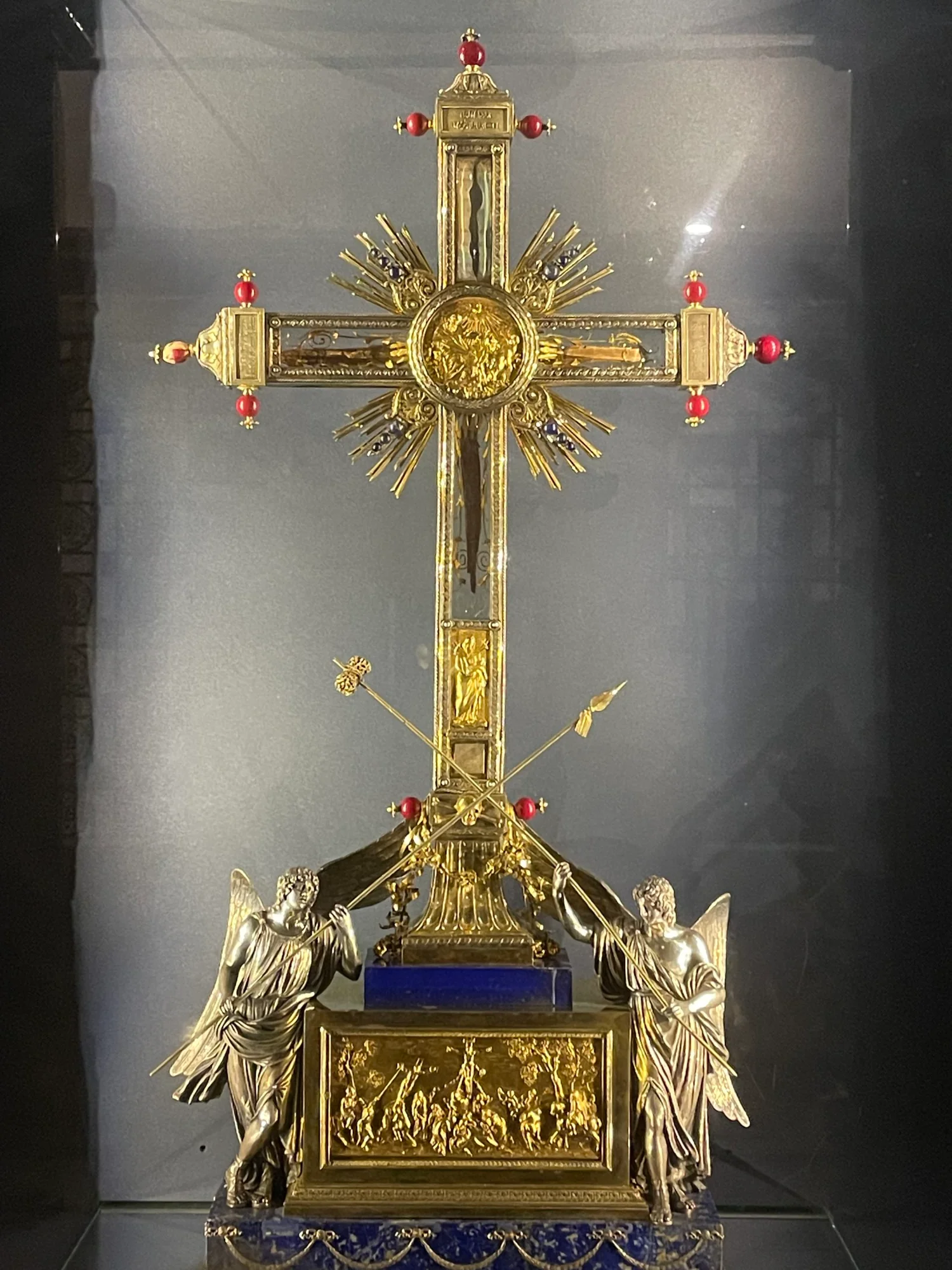
St Helena brought relics of the True Cross and other sacred objects connected with the Passion from Jerusalem. Rome’s principal collection is venerated at Santa Croce in Gerusalemme, a basilica established within the imperial Sessorian complex associated with Helena.
The relics include fragments of the Cross, a Holy Nail, thorns from the Crown of Thorns and part of the Titulus placed above Christ. St Helena also brought the Holy Stairs from the praetorium of Pontius Pilate in Jerusalem to Rome.
St Helena in Santa Croce and St Peter’s
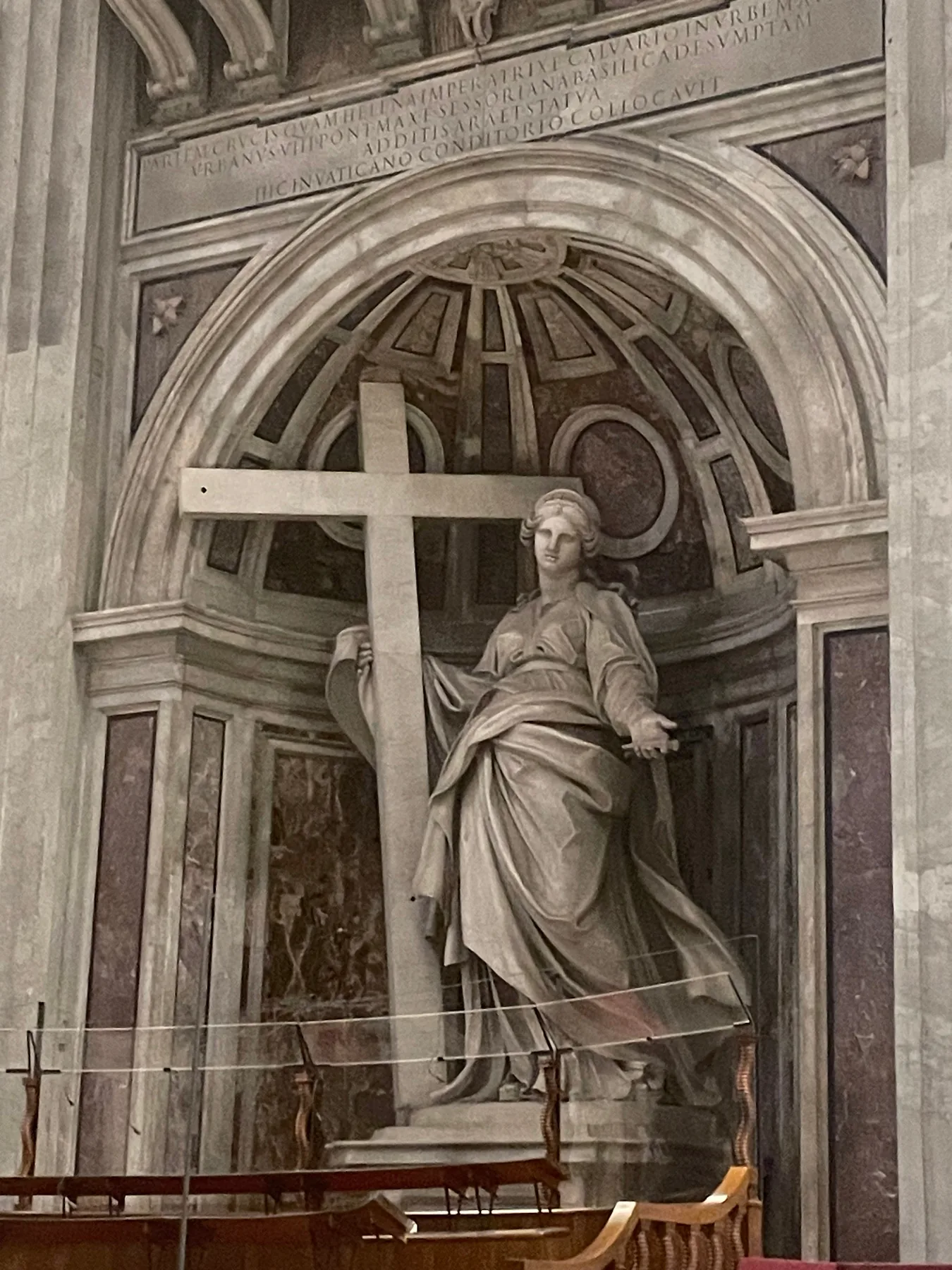
Santa Croce presents Helena as pilgrim, empress and guardian of the relics of the Passion. In St Peter’s Basilica, her colossal statue stands beneath the dome holding the Cross, corresponding to a relic safeguarded above.
The two churches express different dimensions of the same Roman memory. Santa Croce is intimately bound to the relic collection; St Peter’s places Helena within the universal pilgrimage symbolism of the papal basilica.
Why St Helena still matters
Helena’s importance is not limited to an archaeological quest. She represents the Christian pilgrim who uses position and resources in the service of sacred memory.
Her journey also helped establish a pattern familiar to Catholics ever since: travelling to holy places not simply to obtain information but to pray where salvation history is remembered.
Follow St Helena’s legacy in Rome
The Holy Cross Santa Croce Pilgrim Church Tour focuses upon the Roman sanctuary most closely associated with Helena and the True Cross.
The wider Via Crucis – Relics of Christ Tour places these traditions within a Catholic meditation upon the Incarnation and Passion. Its guide provides the deeper history and spiritual interpretation intentionally reserved from this introductory article.