

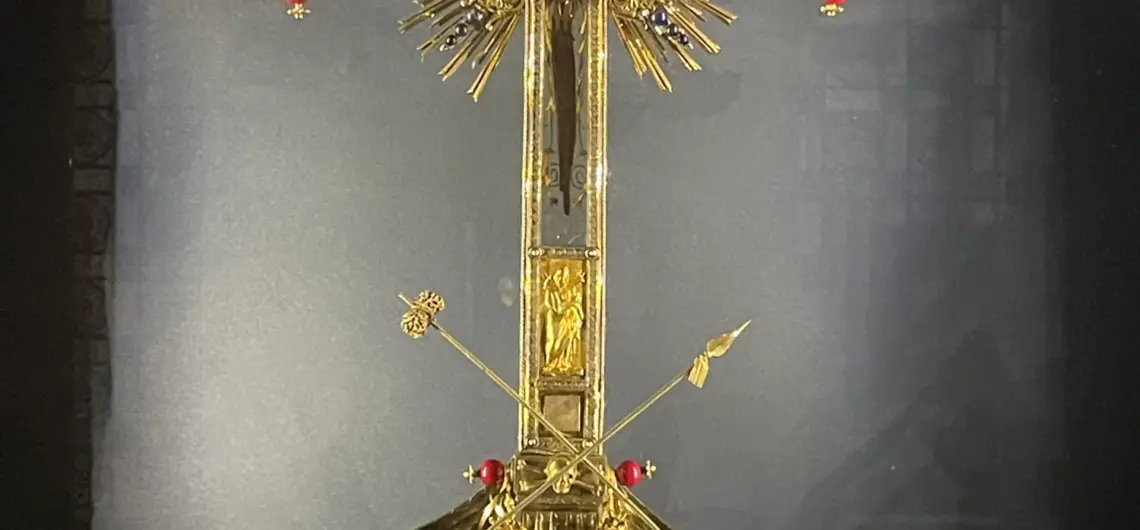
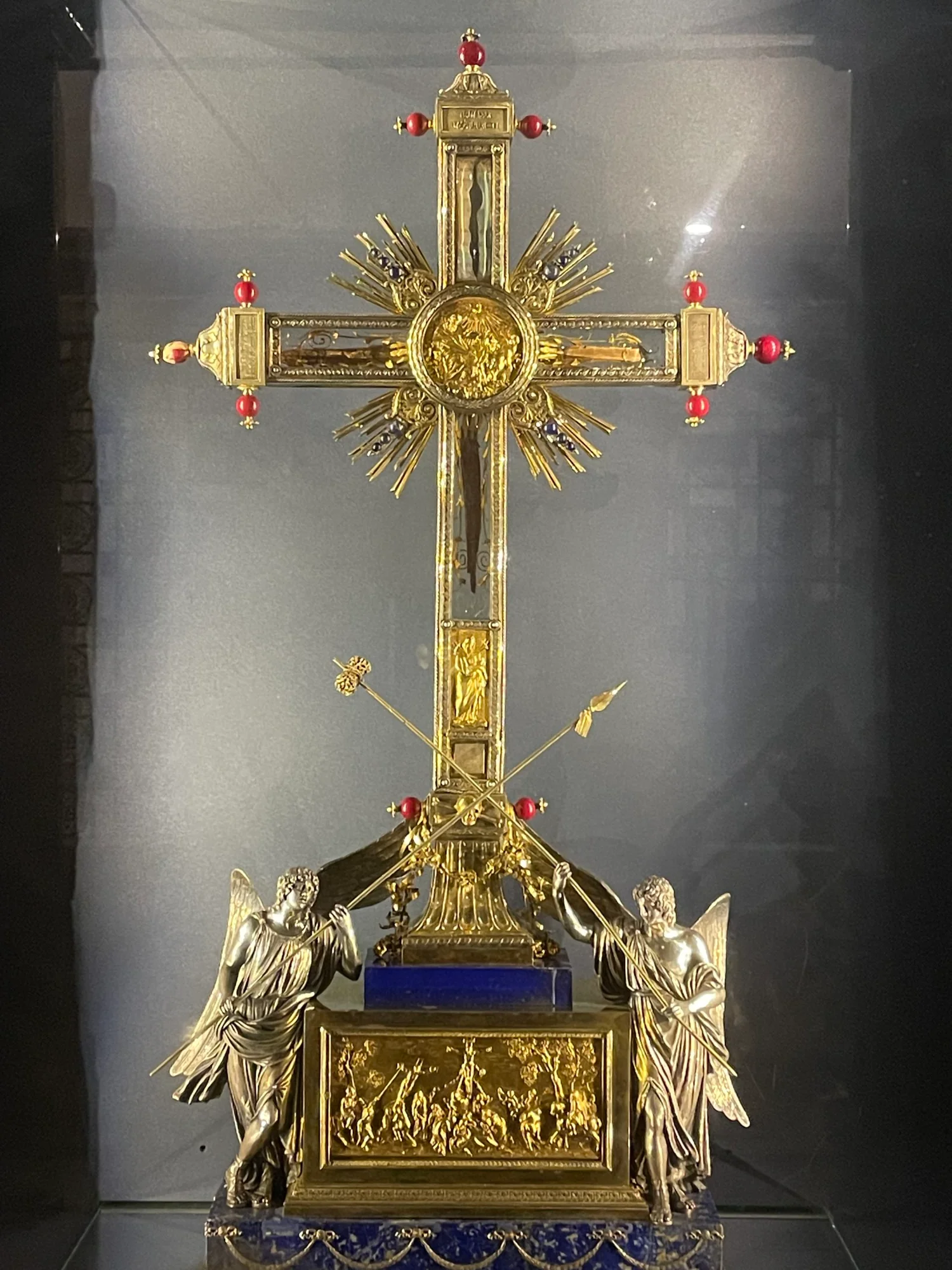
Relics of the True Cross are preserved principally at the Basilica of Santa Croce in Gerusalemme and St Peter’s Basilica. Their Roman history is closely connected with St Helena, the mother of Constantine, and with the transformation of Rome from an imperial capital into a Christian centre of pilgrimage.
What is the True Cross?
The True Cross is the name given in Catholic tradition to the cross upon which Jesus Christ was crucified. The Gospels describe the Crucifixion but do not record what immediately happened to the wood afterwards.
Ancient Christian writers record the recovery of the Cross in Jerusalem during the fourth century by St Helena, who journeyed to the Holy Land after her son Constantine had granted legal toleration to Christianity.
St Helena and the discovery of the Cross
St Helena’s pilgrimage took place in a period when the sites of Christ’s death and Resurrection were being identified and monumentalised. The Church of the Holy Sepulchre was built in Jerusalem under Constantine, creating a permanent focus for Christian pilgrimage.
Fourth- and fifth-century Christian writers preserved the account of St Helena’s discovery for the universal Church. Catholic devotion receives this sacred history as testimony to the real wood upon which Christ accomplished the salvation of the world.
What the tradition expresses with unmistakable force is the early Christian conviction that the Incarnation and Passion occurred in real history—and that the physical places and objects connected with Christ mattered.
Santa Croce in Gerusalemme
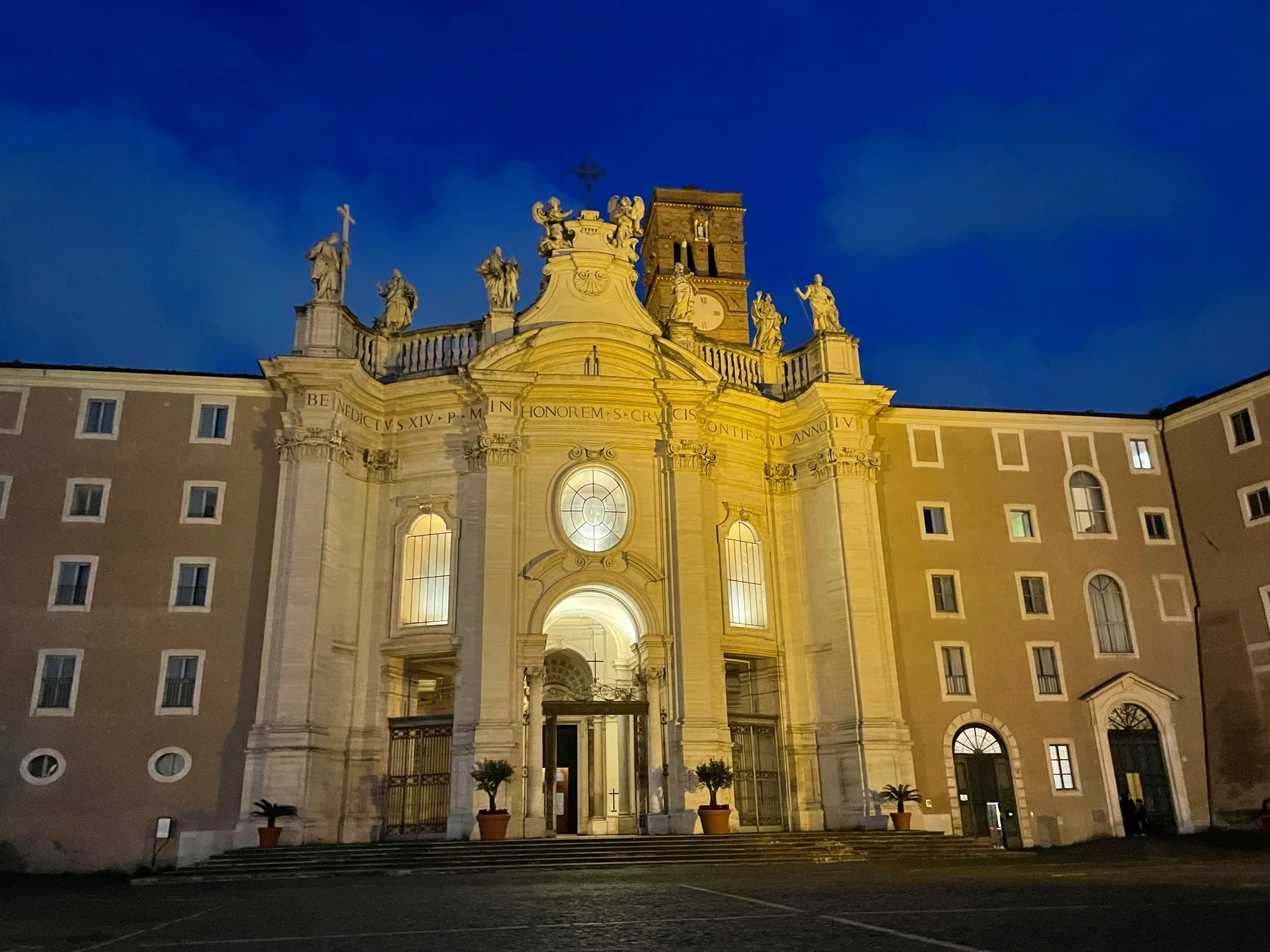
Santa Croce in Gerusalemme became the great Roman sanctuary of the Cross. The basilica arose within an imperial complex associated with Helena and was traditionally linked with earth brought from Jerusalem.
Its Chapel of the Relics preserves small pieces venerated as Wood of the True Cross. The same chapel contains other objects traditionally associated with the Passion, including a Holy Nail of the Crucifixion, 2 Thorns from the Crown of Thorns and the Titulus—the inscription placed above Christ at the Crucifixion.
The relics can be listed in a few lines, but the basilica’s real importance is not conveyed by a checklist. Its setting, art and devotional history reveal why generations of pilgrims have approached the Cross as the sign through which apparent defeat became victory.
Crucis explores this meaning on the Holy Cross Santa Croce Pilgrim Church Tour.
The True Cross at St Peter’s Basilica
A fragment associated with the True Cross was transferred from Santa Croce to St Peter’s Basilica during the seventeenth century. Within St Peter’s, the tradition is represented by the colossal statue of St Helena beneath the dome.
The relic itself is safeguarded above, rather than displayed as part of an ordinary sightseeing route. It belongs to a group of Passion relics whose presence shaped the design and spiritual symbolism of the crossing.
On the St Peter’s Basilica Catholic Tour, the art and architecture are read as Catholic theology in stone rather than as decoration alone.
How were fragments of the True Cross preserved?
Fragments of the True Cross were entrusted to churches, bishops, emperors and religious communities throughout Christendom. Ecclesiastical seals, ancient reliquaries and continuous veneration preserved their identity across the centuries.
The Church venerates the relics because honour shown to the saving Cross passes to Christ Himself. The sacred wood calls the pilgrim to contemplate the sacrifice of Calvary and the victory of the Resurrection.
Why Catholics venerate the Cross
Christians do not honour the Cross because suffering is good in itself. They honour it because Christ freely transformed an instrument of execution into the sign of divine love and redemption. It was by the Cross that Jesus saved us and it is therefore an instrument of our salvation. It has become a new Jackob’s Ladder into heaven and is the Tree of Life.
Rome’s relic traditions make this theology physical. Stone, wood, architecture and pilgrimage remind the faithful that Christianity is founded upon events claimed to have occurred in a particular body, city and moment of history.
Visit the True Cross relics in Rome
The most direct place to encounter the Roman tradition of the True Cross is Santa Croce in Gerusalemme. It can be visited on its own or as the culmination of the Via Crucis – Relics of Christ Tour, which places the Cross within the wider story of the Passion.
A practising Catholic guide brings history, sacred tradition and devotion together, preserving the mystery that has drawn pilgrims to Santa Croce for centuries.