

Updated 20 August 2026
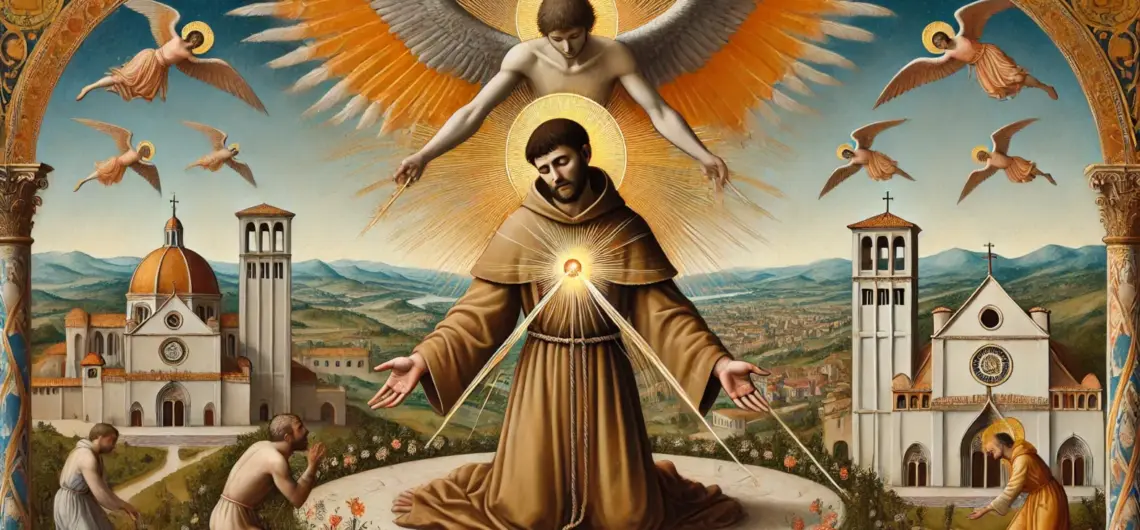
A Catholic pilgrimage to Assisi brings pilgrims into the city shaped by St Francis, St Clare and centuries of Franciscan prayer. The basilicas, medieval streets, convents and sacred places are not simply reminders of two admired historical figures. They bear witness to lives transformed by Jesus Christ and to a Catholic vocation of poverty, penance, charity and fidelity to the Gospel.
Assisi can be encountered in one focused hour, several hours or a full day. The right choice depends upon whether the principal desire is to pray at the tomb of St Francis, understand the city connected with Francis and Clare, or make a fuller Catholic pilgrimage through the places that formed their lives.
Why make a Catholic pilgrimage to Assisi?
St Francis remains one of the most beloved saints in the Catholic Church, but the spiritual force of Assisi begins with Christ rather than with a romantic picture of medieval simplicity. Francis’s conversion led him away from wealth, status and self-will towards radical obedience to the Gospel. His life became a summons to penance, peace, humility and love of the Crucified Lord.
St Clare received that same call within her own vocation. She left behind the expectations of her family and founded the community that became the Poor Clares. Her life of prayer, poverty and perseverance shows that the Franciscan renewal was never merely the story of one charismatic man. It became a living Catholic family of friars, sisters and laypeople serving the Church.
A pilgrimage to Assisi therefore offers more than beautiful views and medieval architecture. It asks what conversion requires, how possessions should serve rather than master us, and how a Christian vocation can place an entire life at the service of Christ.
Compare the full range of Catholic tours in Assisi offered by Crucis Tours.
The Basilica and tomb of St Francis
The Basilica of St Francis is the natural centre of a Catholic pilgrimage to Assisi. Built after the saint’s death, the complex contains the Upper Basilica, the Lower Basilica and the crypt in which St Francis is buried. Each level contributes to the pilgrim’s understanding of his life, the growth of the Franciscan family and the Catholic faith expressed through sacred art.
The celebrated fresco cycles are not simply decoration. They taught biblical history, proclaimed the mysteries of Christ and preserved the memory of Francis for generations of pilgrims. The descent to the tomb changes the mood from artistic splendour to prayerful encounter. Here Catholics come before the earthly remains of the saint and ask his intercession.
Pilgrims with limited time can choose the Basilica of St Francis of Assisi Tour, a focused one-hour Catholic introduction to the exterior, Upper and Lower Basilicas, sacred frescoes and the saint’s tomb.
St Clare and the Catholic vocation of Assisi
Assisi cannot be understood through St Francis alone. St Clare’s courageous response to Christ gave the Franciscan movement its contemplative feminine expression. Her incorrupt body rests in the Basilica of St Clare, where pilgrims also venerate the San Damiano Cross before which Christ spoke to Francis.
Clare’s fidelity was tested through illness, responsibility for her community and long years of hidden prayer. Her life prevents the Franciscan vocation from being reduced to wandering through nature or admiring poverty from a safe distance. She shows poverty embraced as freedom for Christ and enclosure embraced as a place of spiritual fruitfulness for the Church.
Sacred places connected with St Francis and St Clare
Assisi and its surroundings preserve many places connected with the saints. Their significance becomes clearer when seen as parts of one Catholic story rather than unrelated attractions.
- The Basilica of St Francis contains the saint’s tomb and the great visual proclamation of his life and Catholic faith.
- The Basilica of St Clare preserves the saint’s body and the San Damiano Cross.
- San Damiano recalls the Crucifix’s command to Francis to rebuild the Church and the later life of Clare’s community.
- Santa Maria degli Angeli and the Porziuncola preserve the little chapel at the heart of the early Franciscan family.
- Chiesa Nuova stands upon the traditional site of Francis’s family home.
- The Eremo delle Carceri recalls Francis’s withdrawal into prayer in the hills above Assisi.
This public overview deliberately leaves the deeper relationships, sacred art and interpretative narrative to the guide and the booked pilgrimage.
Which Crucis tour of Assisi should you choose?
| Experience | Approximate duration | Best for |
|---|---|---|
| Basilica of St Francis of Assisi Tour | One hour | Pilgrims with limited time who want a focused visit to the Basilica and tomb |
| Assisi City Walking Tour | Two hours | Visitors wanting the medieval city, historic squares and principal Franciscan associations |
| St Francis of Assisi Pilgrim Tour | Three hours | Catholic pilgrims seeking the principal sites of St Francis and St Clare in one coherent pilgrimage |
| Assisi Day Tour For Pilgrims | Full day | Pilgrims wanting greater breadth, depth and time across Assisi’s sacred landscape |
A focused basilica visit or a wider Assisi pilgrimage?
Choose the Basilica tour when time is short or when the tomb of St Francis is the clear priority. The City Walking Tour is suitable for visitors interested in the relationship between Franciscan memory, Assisi’s streets, its Roman inheritance and its medieval civic life.
The three-hour St Francis Pilgrim Tour is the principal Catholic choice for those wanting the Basilica, St Clare and the city’s Franciscan vocation to form one connected experience. The full-day tour allows Assisi to be treated as the centre of the day rather than an addition squeezed between other travel plans.
Those combining Assisi with Rome can use the Crucis guide to planning a Catholic pilgrimage to Rome in one, two, three or four days and then decide how Assisi should extend that pilgrimage.
The St Francis Jubilee 2026–2027
The special St Francis Jubilee continues until 10 January 2027, marking the eighth centenary of the saint’s death, traditionally called his Transitus. It offers Catholics a particular opportunity for pilgrimage, conversion, prayer and the indulgence granted for the Jubilee.
The Jubilee is time-limited, but the Catholic call of Assisi is permanent. Read the current St Francis Jubilee 2026–2027 pilgrim’s guide for the event’s meaning, eligibility and verified dates.
Preparing spiritually for Assisi
- Bring a clear pilgrimage intention rather than approaching Assisi only as a list of places to photograph.
- Read a Gospel passage central to Franciscan spirituality, especially Christ’s call to conversion, poverty, trust and discipleship.
- Allow time for prayer at the tombs of St Francis and St Clare.
- Consider Mass, Confession or silent prayer as part of the day where the current liturgical schedule permits.
- Ask what attachments, fears or ambitions may prevent a fuller response to Christ.
Practical considerations for a pilgrimage to Assisi
Assisi is built upon a hill. Streets can be steep, surfaces uneven and distances more demanding than they appear on a map. Pilgrims should wear supportive shoes and choose a duration appropriate to the least mobile person in their party.
- Church clothing should cover shoulders and knees.
- The basilicas are active places of worship; liturgies and religious needs take priority.
- Access arrangements and opening times can change.
- Tell Crucis Tours about mobility, accessibility or group needs before booking.
- Leave space for prayer, meals and rest rather than filling every minute of the day.
Frequently asked questions
How much time do you need for a Catholic pilgrimage to Assisi?
One hour is enough for a focused introduction to the Basilica and tomb of St Francis. Two or three hours allow a wider encounter with the city and its saints. A full day is best for pilgrims who want Assisi itself to be the centre of the experience.
Is Assisi suitable for pilgrims with limited mobility?
The hills, steps and historic surfaces can be demanding. Some focused experiences may still be suitable, but mobility needs should be discussed with Crucis Tours before booking so that the most appropriate option can be identified.
Is Assisi only for followers of St Francis?
No. Francis and Clare stand at the centre of the city’s Catholic identity, but their witness directs every pilgrim towards Jesus Christ, the Gospel, conversion, prayer and the communion of the Church.
Plan your Catholic pilgrimage to Assisi
Assisi rewards the pilgrim who allows its beauty to lead beyond admiration towards conversion. The city preserves the memory of saints who surrendered security, wealth and reputation because Christ had become the centre of their lives.
Compare all Crucis Catholic tours in Assisi, from the one-hour Basilica tour to the full-day pilgrimage experience.