Prepare for Santa Maria Greca and a confirmed Association visit in Corato, with practical advice and a careful explanation of Luisa Piccarreta’s ecclesial status.
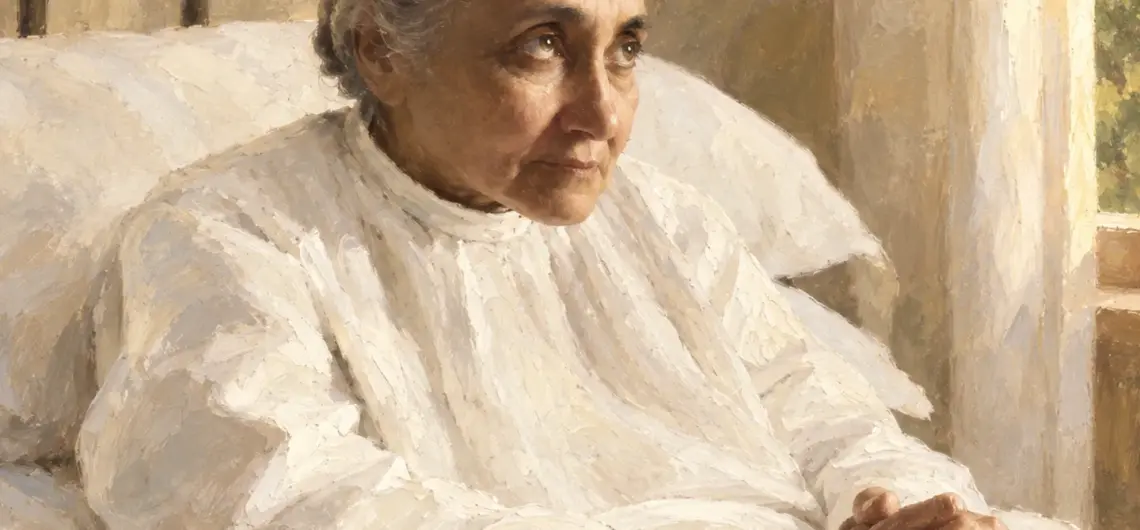
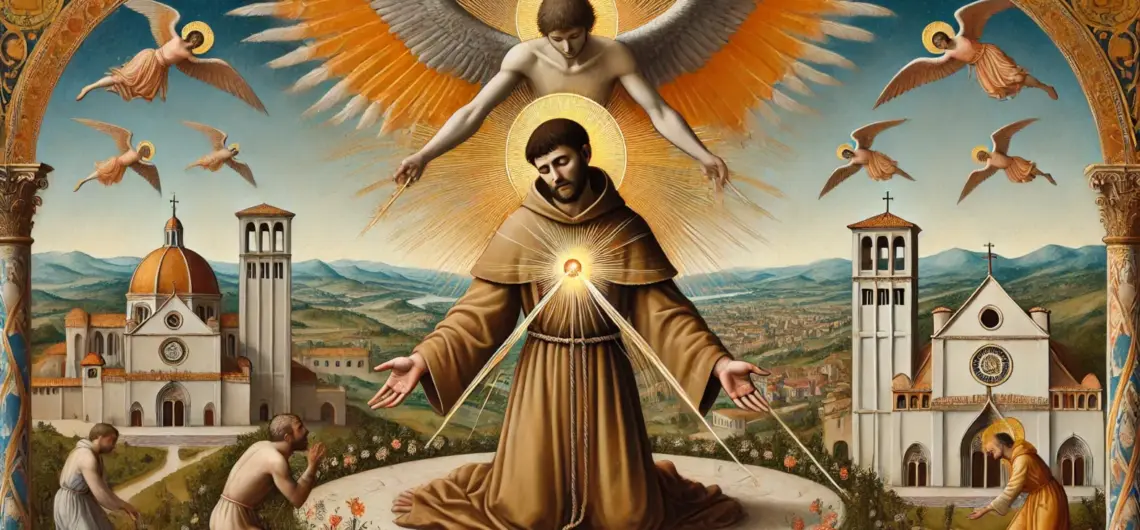
Featured image: AI-generated illustration of Servant of God Luisa Piccarreta.
To visit Luisa Piccarreta’s Corato, plan time for Santa Maria Greca, where her remains rest, and contact the Luisa Piccarreta Association in advance about a guided Casa Museo visit. Allowing a morning gives space for historical context, prayer and questions rather than a brief stop at a doorway. Keep any museum appointment separate from general church access, and describe Luisa accurately as a Servant of God whose cause remains in progress.
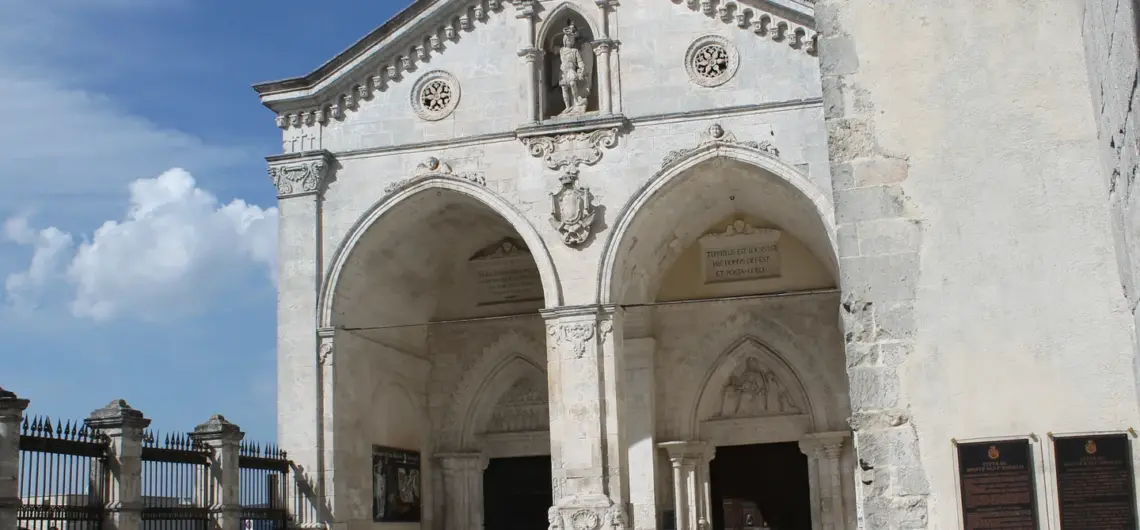
Plan the practical side of a pilgrimage through Monte Sant’Angelo, San Giovanni Rotondo and Corato: route order, venue appointments, travel and overnight arrangements.
Featured photograph: Patrick Nouhailler, CC BY-SA 3.0. Cropped, resized and converted to WebP; the adapted photograph is shared under the same licence.
A Puglia pilgrimage linking St Michael’s sanctuary, Padre Pio and Luisa Piccarreta’s Corato works well over two days when travel is arranged in advance: Monte Sant’Angelo in the first morning, San Giovanni Rotondo that afternoon, and Corato the following morning. Allow an additional arrival night if you cannot comfortably reach the first meeting point. This guide explains the planning decisions behind that sequence, including worship, appointments and the journeys between towns.
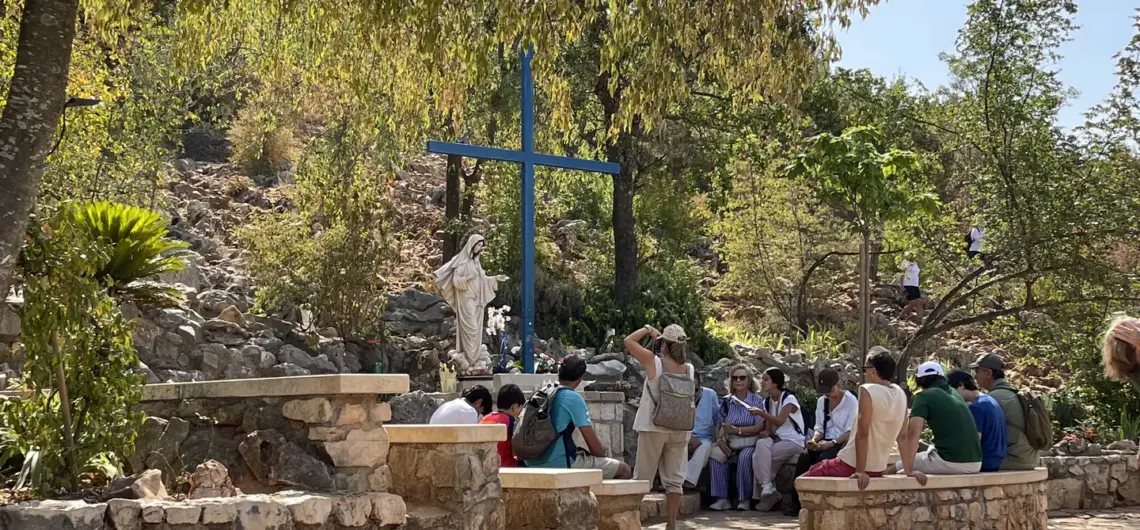
Prepare for Apparition Hill in Medjugorje and the Blue Crosses with a Catholic guide to the Rosary, walking conditions and respectful visiting.
Apparition Hill in Medjugorje, also called Podbrdo, is a place of Rosary prayer, with the Blue Cross prayer area near its foot. Visit with time for reflection and footwear suited to steep, uneven ground. The hill, the Blue Crosses and Cross Mountain are not interchangeable names: understanding the different places will help you choose a visit that matches your intentions and walking ability.
A practical Catholic guide to your first pilgrimage to Medjugorje: preparing spiritually, allowing time for prayer, choosing suitable walks and arranging guided visits.
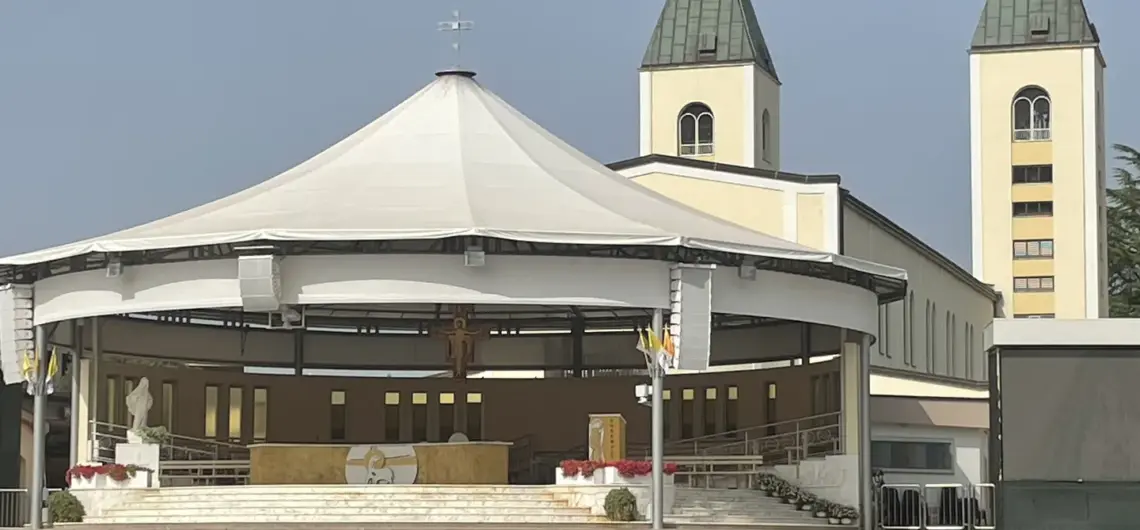
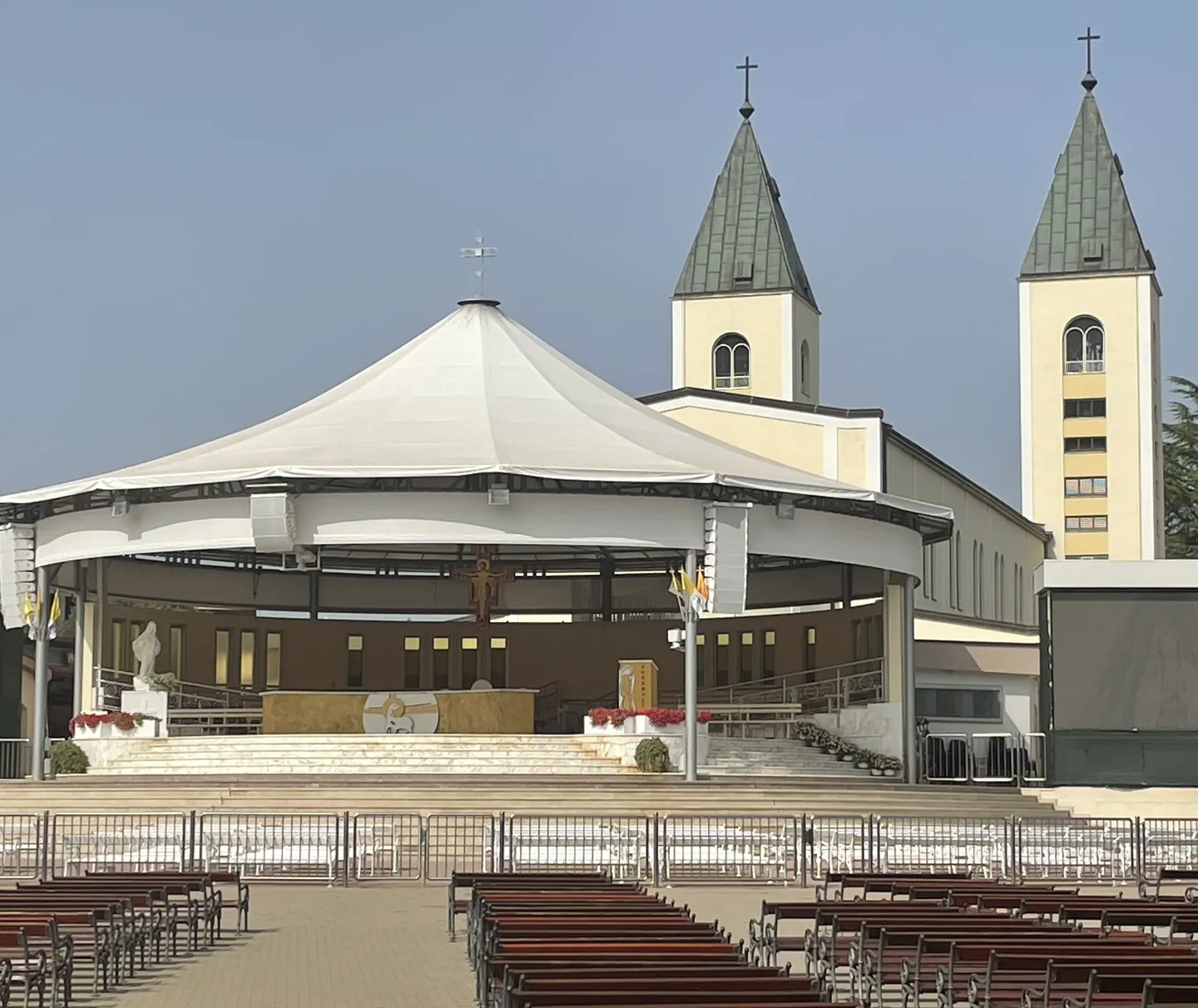
Outdoor altar and church towers of St James’s Church, Medjugorje.
Plan your first pilgrimage to Medjugorje around prayer, realistic walking and enough unhurried time. Begin with the parish of St James, leave room for Mass and personal reflection, and choose hill visits that suit your abilities. Three days provide a useful framework for combining an orientation, Apparition Hill and a visit to Široki Brijeg, with travel days and accommodation arranged around them.
Where are the popes buried? Explore St Peter’s, St John Lateran, St Mary Major, San Clemente, St Sebastian, St Lawrence and Rome’s catacombs in this authoritative Catholic guide.
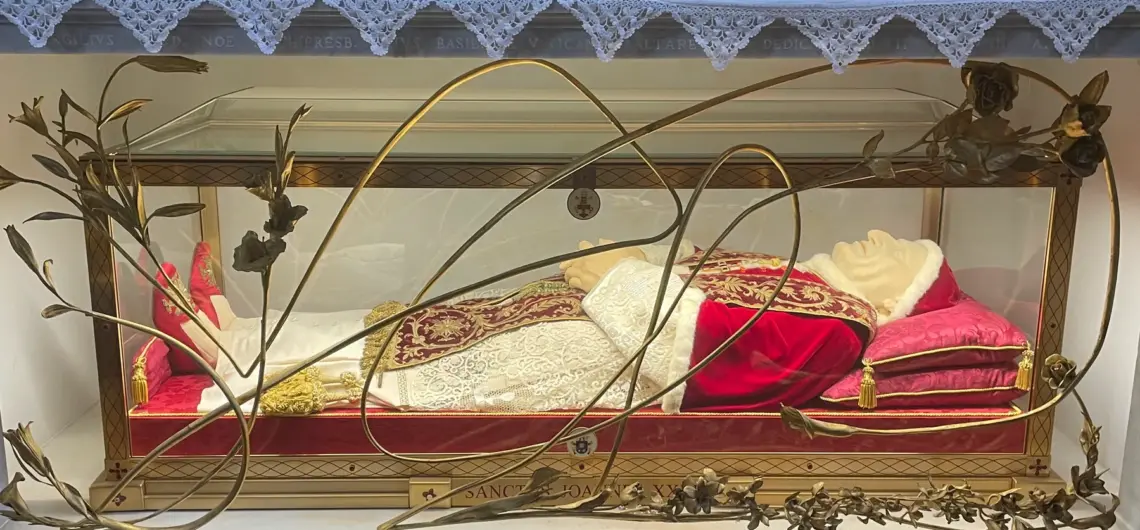
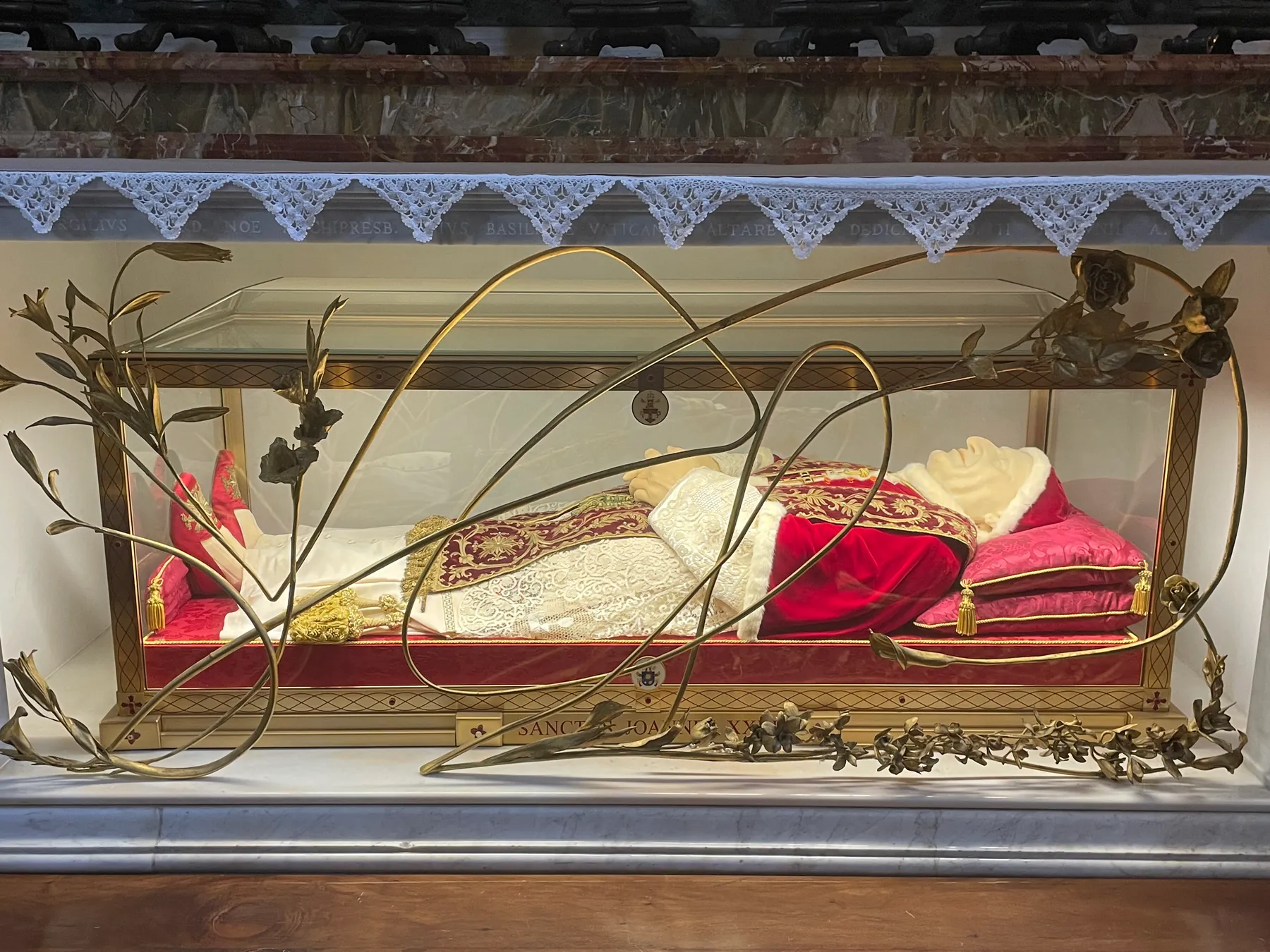
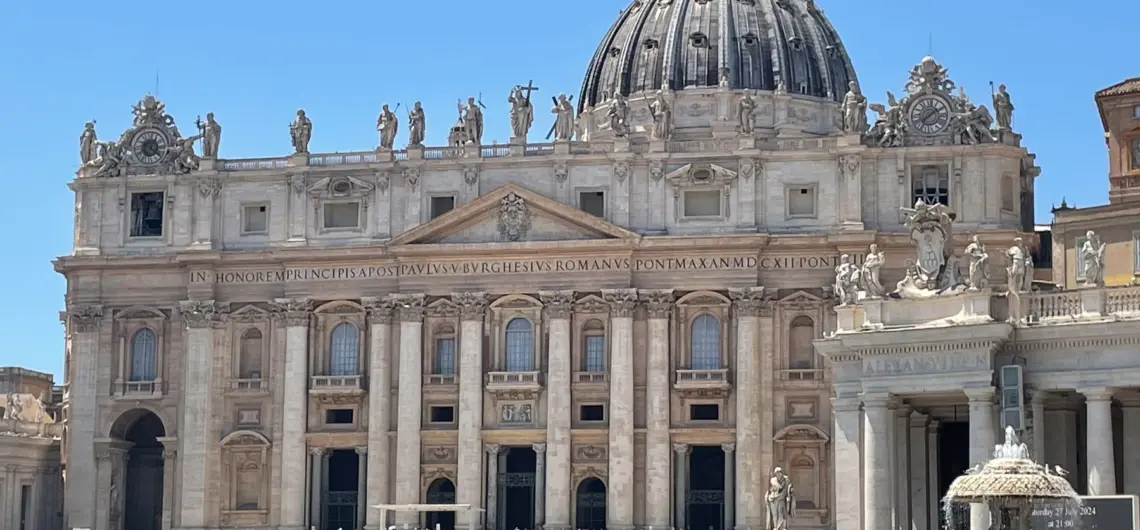
Tomb of Pope Saint John XXIII in St Peter’s Basilica, Vatican City.
Where are the popes buried? Most of the surviving papal tombs are in Rome, above all in St Peter’s Basilica. Yet the burial places of the successors of St Peter form a sacred map extending across the Eternal City—from the Vatican Grottoes to St John Lateran, St Mary Major, St Lawrence Outside the Walls, San Clemente and the ancient catacombs.
Plan a Catholic pilgrimage to Assisi with this guide to St Francis, St Clare, the principal sacred places and the four Crucis Tours experiences.
Updated 20 August 2026
A Catholic pilgrimage to Assisi brings pilgrims into the city shaped by St Francis, St Clare and centuries of Franciscan prayer. The basilicas, medieval streets, convents and sacred places are not simply reminders of two admired historical figures. They bear witness to lives transformed by Jesus Christ and to a Catholic vocation of poverty, penance, charity and fidelity to the Gospel.
Assisi can be encountered in one focused hour, several hours or a full day. The right choice depends upon whether the principal desire is to pray at the tomb of St Francis, understand the city connected with Francis and Clare, or make a fuller Catholic pilgrimage through the places that formed their lives.
Discover the four Major Basilicas of Rome—St Peter’s, St John Lateran, St Mary Major and St Paul Outside the Walls—and learn how to visit them as a Catholic pilgrim.
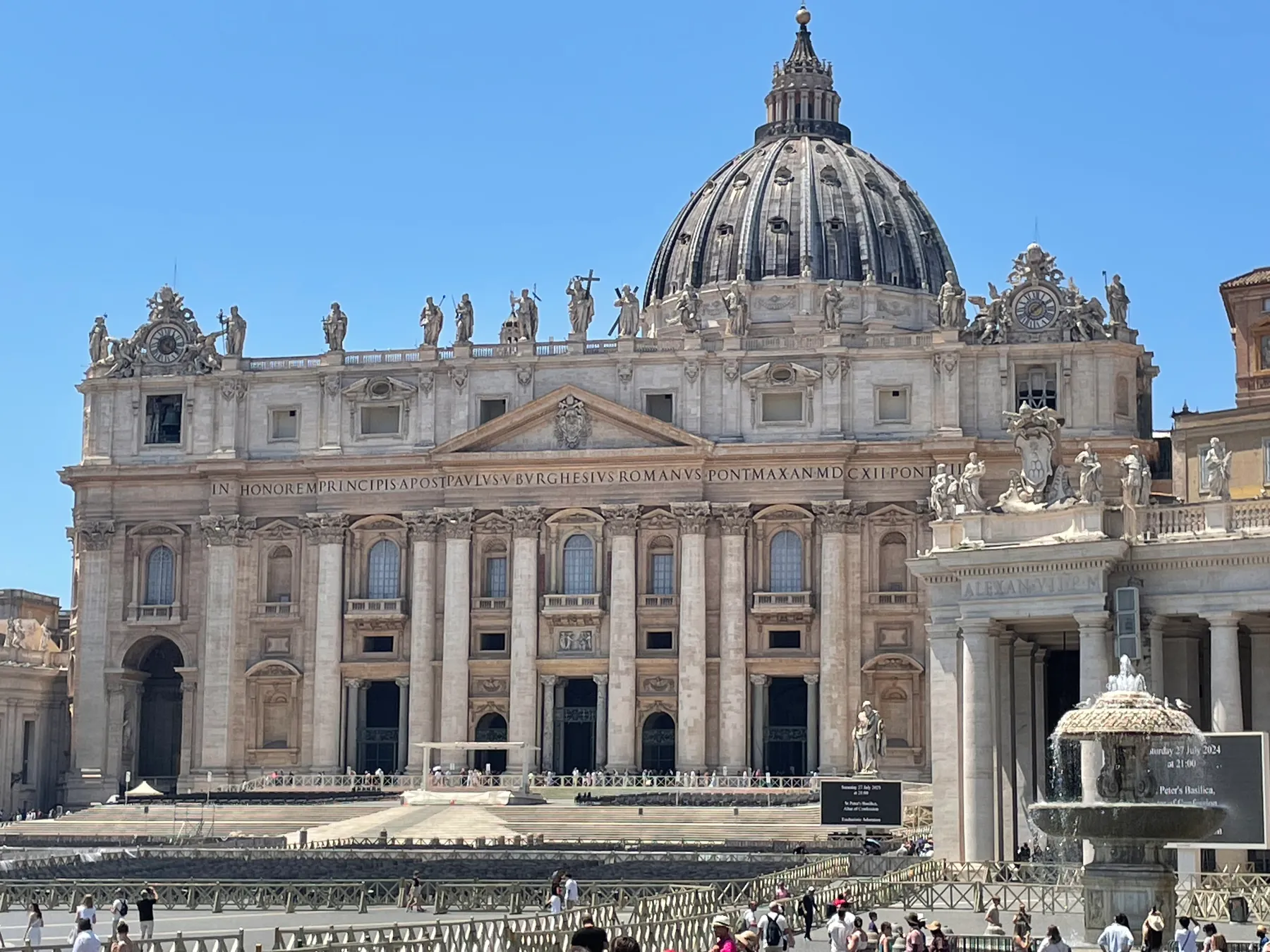
Facade and dome of St Peter’s Basilica seen from St Peter’s Square, Vatican City.
Updated 20 August 2026
The four Major Basilicas of Rome are St Peter’s Basilica, the Archbasilica of St John Lateran, St Mary Major and St Paul Outside the Walls. Together they stand at the heart of Catholic Rome, joining the tombs of the Apostles, the Cathedral of the Pope, the Church’s devotion to Our Lady and the living pilgrimage tradition of the Eternal City.
For Catholic pilgrims, these are not simply four famous churches to place on a sightseeing list. Each basilica expresses a distinct part of the Church’s history and identity. Visiting all four creates a coherent pilgrimage through apostolic memory, sacred relics, Catholic worship, mosaics, architecture and the continuity of the Church in Rome.
Updated 20 August 2026 San Clemente in Rome is one of the clearest places in the city to encounter the continuity of Catholic history. Near the Colosseum, a twelfth-century basilica stands above a fourth-century church and first-century Roman buildings. Descending through the complex is therefore not simply an archaeological experience: it is a journey from imperial Rome, through the age of the early Church, into the public and enduring worship of Catholic Rome. The Basilica of St Clement matters because its layers bring together apostolic memory, persecution, pagan Rome, Christian freedom, sacred art and the veneration of saints. Few churches allow pilgrims to see so vividly how the Catholic faith took root in Rome and remained present through the centuries. Explore San Clemente with an expert Catholic guide on the St Clement’s Basilica Underground Tour. San Clemente Rome: key facts QuestionAnswerWhere is San Clemente?About five minutes on foot from the Colosseum, on the road towards St John LateranWho is the basilica dedicated to?Pope St Clement I, an early successor of St PeterWhat are its principal levels?The present twelfth-century basilica, a fourth-century basilica and first-century Roman buildingsWhy is it important to Catholic history?It preserves evidence of Christian worship, sacred art and devotion across many centuriesWhich saints are especially connected with it?St Clement, St Ignatius of Antioch and St CyrilWho rediscovered the buried basilica?The Irish Dominican Fr Joseph Mullooly began the excavations in 1857 Who was Pope St Clement? The basilica takes its name from Pope St Clement I, traditionally counted among the earliest successors of St Peter. He lived close to the Apostolic Age and is remembered as one of the Apostolic Fathers: Christian writers whose lives and teaching form a bridge between the Apostles and the generations that followed them. That connection gives San Clemente a significance deeper than its
Updated 20 August 2026
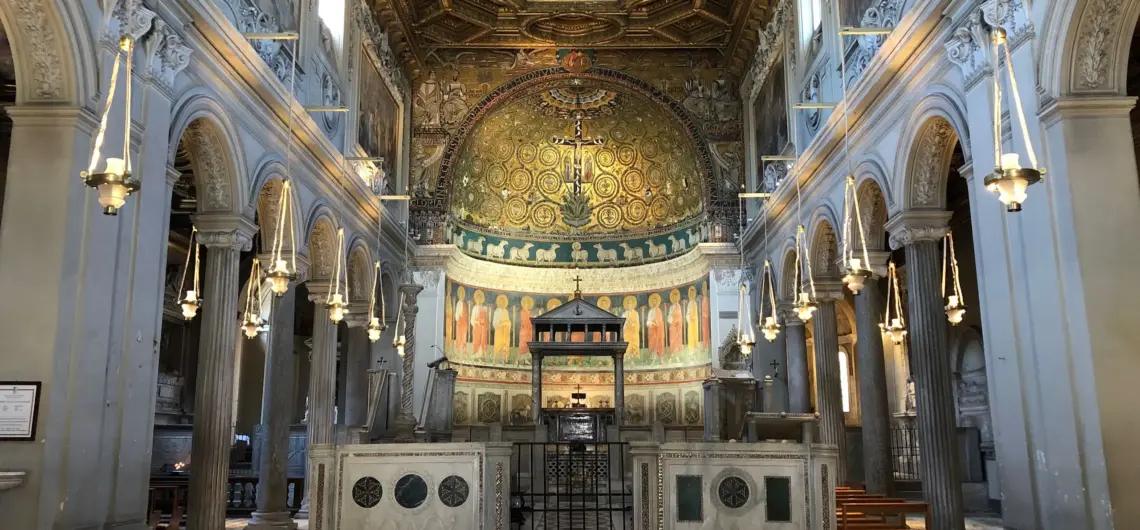
San Clemente in Rome is one of the clearest places in the city to encounter the continuity of Catholic history. Near the Colosseum, a twelfth-century basilica stands above a fourth-century church and first-century Roman buildings. Descending through the complex is therefore not simply an archaeological experience: it is a journey from imperial Rome, through the age of the early Church, into the public and enduring worship of Catholic Rome.
The Basilica of St Clement matters because its layers bring together apostolic memory, persecution, pagan Rome, Christian freedom, sacred art and the veneration of saints. Few churches allow pilgrims to see so vividly how the Catholic faith took root in Rome and remained present through the centuries.
Find traditional Latin Mass in Rome, where the Church was built with the blood of the early martyrs.
Looking for a Traditional Latin Mass in Rome? Start with Santissima Trinità dei Pellegrini, served by the Priestly Fraternity of St Peter, and the Institute of Christ the King’s Rome apostolate, whose published services are currently at the Immacolata dei Miracoli. The SSPX also publishes a timetable for its chapel in Via Urbana. At Sant’Anna al Laterano, Crucis Tours has locally confirmed Sunday Mass at 16:00. Other churches often included in Rome Latin Mass lists need a fresh check before you plan around them.
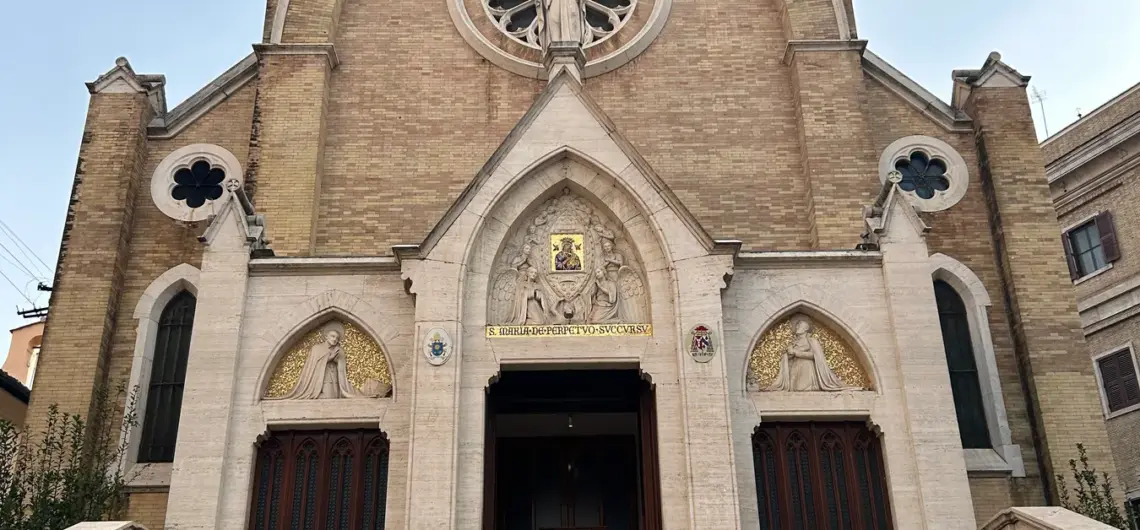
Looking for Mass in English in Rome? St Patrick’s, San Silvestro in Capite, Santo Spirito in Sassia and several other churches publish regular English-language services. Some options are seasonal, while the English Mass near St Peter’s tomb is monthly. Start with the timetable below, then check the church’s own notices for your travel date. Sources checked: 10 September 2026. All times are local to Rome. These are the schedules published by the churches and communities, rather than a guarantee that every future celebration will take place unchanged. Holy Week, Christmas, summer breaks and special events can affect arrangements. English Mass in Rome: quick timetable The nine places below currently publish an English Mass schedule. Term-time and summer exceptions are part of the timetable. San Clemente and the Gesù are discussed separately because we could not verify the regular English services previously listed here. Published English Mass times — Rome local time ChurchDays and timesCheck before visiting St Peter’s BasilicaFirst Saturday of the month, 07:15Monthly arrangement; check the dated list Santo Spirito in SassiaSundays and religious holidays, 09:00Special celebration notices Sant’Anna in VaticanoSunday/festive schedule, 15:30Suspended in July and August AngelicumMonday, Tuesday, Thursday and Friday, 12:25Only when classes are in session Domus AustraliaMonday–Friday and Sunday, 18:00Saturday Mass is in Italian St Patrick’sMonday–Friday and Saturday vigil, 18:00; Sunday, 09:00 and 10:30Holy-day times are announced separately San Silvestro in CapiteMonday–Saturday, 12:00; Sunday, 10:00 and 17:30Saturday evening vigil is in Italian Venerable English CollegeUsually Sunday, 10:00, and Wednesday, 18:30Term-time only; confirm the particular date St Alphonsus de LiguoriSundays/religious holidays, 15:30; Thursday, 17:00Check seasonal shrine notices Sant Alfonso is one of the churches discussed in this guide; the photograph shows its exterior, not a Mass in progress. Churches with published English Mass schedules St Peter’s Basilica: monthly English Mass The Pontifical North American College’s Visitors’ Office
Looking for Mass in English in Rome? St Patrick’s, San Silvestro in Capite, Santo Spirito in Sassia and several other churches publish regular English-language services. Some options are seasonal, while the English Mass near St Peter’s tomb is monthly. Start with the timetable below, then check the church’s own notices for your travel date.
Facade and dome of St Peter’s Basilica seen from St Peter’s Square, Vatican City. Holy Door status checked 25 August 2026. The Holy Doors at St John Lateran, St Mary Major and St Paul Outside the Walls closed on 28 December 2025. St Peter's Holy Door closed on 6 January 2026. The doors remain visible, but pilgrims cannot currently pass through them. The next anticipated Jubilee of the Redemption is in 2033. “Upon this rock I will build my Church.” Matthew 16:18 Where should Catholics visit in Rome? As bucket-list destinations go, this ancient and magnificent city is in many people’s top ten, but for Catholic pilgrims its not about la cucina italiana and the Colosseum at dusk. The centre of the known world at the time of the early Church, Christians were persecuted here for their faith until the legalisation of Christianity in 313. 13 years later St Helena, mother of emperor Constantine, organised the safe transit of the most sacred relics of the faith from Jerusalem to the heart of the empire - Rome. Long before that however, Rome was the place where many of the earliest martyrs were born, lived and died, and as the seat of the Pope, it is one of the two great holy cities of the world alongside Jerusalem. For Catholics, a pilgrimage to Rome is a spiritual odyssey. Many will come with plans to see St Peter’s and the other Major Basilicas, many will come to walk in the footsteps of Saints Peter and Paul, the Pillars of the Church. Some may even seek to attend mass and catch a glimpse of the Pope himself, but none are prepared for the impact that this mind-blowing city has on their lives. So where exactly should Catholics visit in Rome? We’ve curated the following
Facade and dome of St Peter’s Basilica seen from St Peter’s Square, Vatican City.
Holy Door status checked 25 August 2026. The Holy Doors at St John Lateran, St Mary Major and St Paul Outside the Walls closed on 28 December 2025. St Peter’s Holy Door closed on 6 January 2026. The doors remain visible, but pilgrims cannot currently pass through them. The next anticipated Jubilee of the Redemption is in 2033.
“Upon this rock I will build my Church.” Matthew 16:18
Where should Catholics visit in Rome? As bucket-list destinations go, this ancient and magnificent city is in many people’s top ten, but for Catholic pilgrims its not about la cucina italiana and the Colosseum at dusk. The centre of the known world at the time of the early Church, Christians were persecuted here for their faith until the legalisation of Christianity in 313. 13 years later St Helena, mother of emperor Constantine, organised the safe transit of the most sacred relics of the faith from Jerusalem to the heart of the empire – Rome.
Long before that however, Rome was the place where many of the earliest martyrs were born, lived and died, and as the seat of the Pope, it is one of the two great holy cities of the world alongside Jerusalem.
For Catholics, a pilgrimage to Rome is a spiritual odyssey. Many will come with plans to see St Peter’s and the other Major Basilicas, many will come to walk in the footsteps of Saints Peter and Paul, the Pillars of the Church. Some may even seek to attend mass and catch a glimpse of the Pope himself, but none are prepared for the impact that this mind-blowing city has on their lives.
So where exactly should Catholics visit in Rome? We’ve curated the following list, in no particular order, of places that will stir the faith of those who have it buried deep in their heart and will inspire those who already feel close to the Lord.