

Updated 20 August 2026
The four Major Basilicas of Rome are St Peter’s Basilica, the Archbasilica of St John Lateran, St Mary Major and St Paul Outside the Walls. Together they stand at the heart of Catholic Rome, joining the tombs of the Apostles, the Cathedral of the Pope, the Church’s devotion to Our Lady and the living pilgrimage tradition of the Eternal City.
For Catholic pilgrims, these are not simply four famous churches to place on a sightseeing list. Each basilica expresses a distinct part of the Church’s history and identity. Visiting all four creates a coherent pilgrimage through apostolic memory, sacred relics, Catholic worship, mosaics, architecture and the continuity of the Church in Rome.
What are the four Major Basilicas of Rome?
| Basilica | Catholic significance | Principal pilgrimage focus |
|---|---|---|
| St John Lateran | The Cathedral of Rome and the highest-ranking church in the Catholic world | The Pope as Bishop of Rome, the Apostles and the Lateran’s place in Church history |
| St Peter’s Basilica | Built over the tomb of St Peter | St Peter, the papacy, the Passion relics and the great Catholic art of the Vatican Basilica |
| St Paul Outside the Walls | Built over the tomb of St Paul | The Apostle to the Gentiles, his martyrdom, mission and the universality of the Gospel |
| St Mary Major | Rome’s great Major Basilica dedicated to the Blessed Virgin Mary | The Holy Crib, the icon painted by St Luke, early Christian mosaics and Marian devotion |
Explore all four with a practising Catholic guide on the 4 Major Basilicas Tour Rome in One Day.
Why are they called Major Basilicas?
The title “Major Basilica” is reserved to these four churches in Rome. Many important Catholic churches throughout the world hold the dignity of a minor basilica, but only these four are Major Basilicas. They are also known as the Papal Basilicas because of their particular connection with the Pope and the pilgrimage life of the Roman Church.
Their importance is not measured principally by size. It arises from their unique place in Catholic worship and history: the cathedral of the Bishop of Rome, the tombs of St Peter and St Paul, and Rome’s principal Marian basilica. Each also possesses a papal altar and a Holy Door associated with the Church’s Jubilee tradition.
St John Lateran: the Cathedral of Rome
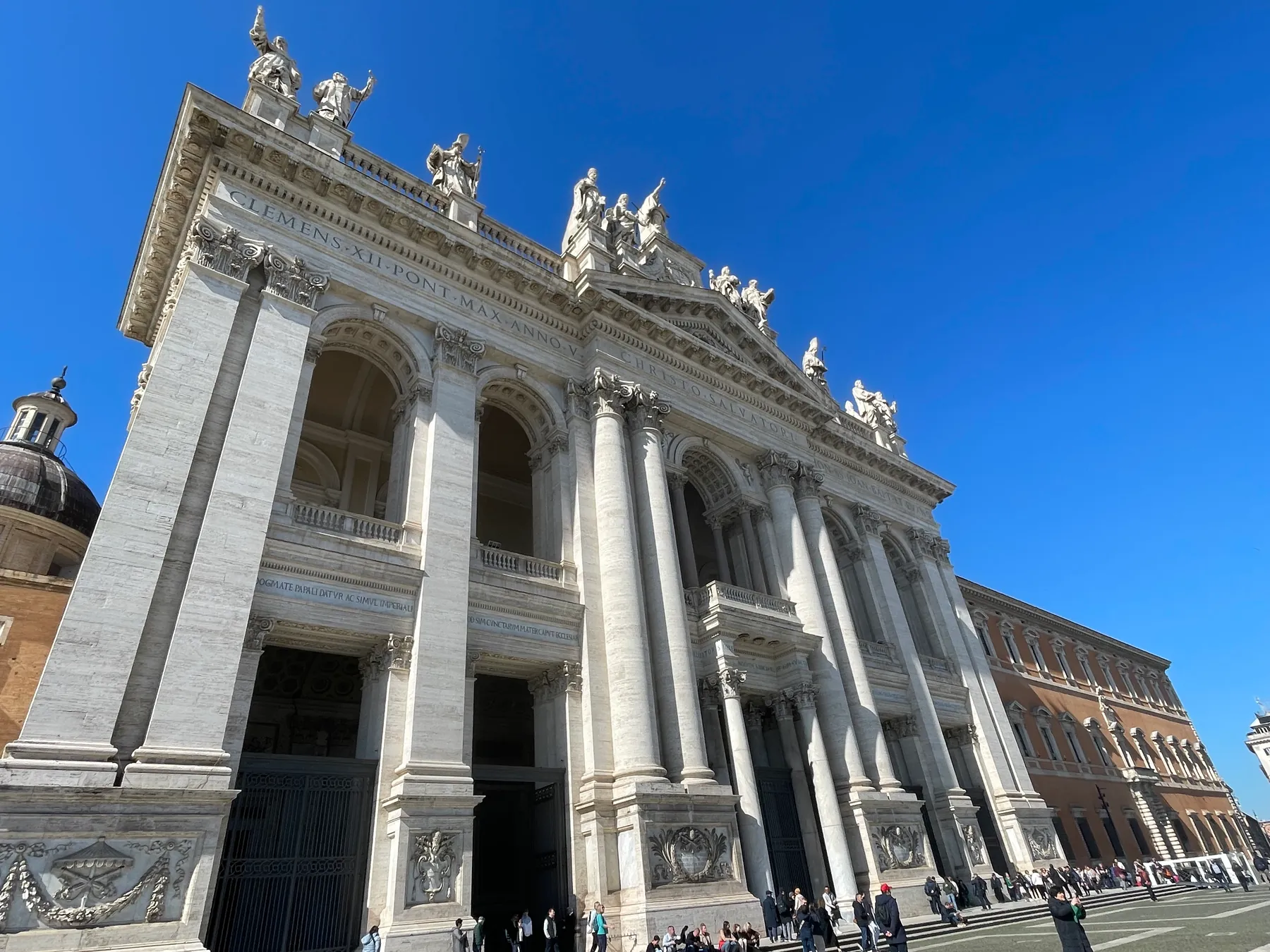
The Archbasilica of St John Lateran is the oldest and highest-ranking of the four Major Basilicas. It is the Cathedral of Rome and therefore the cathedral church of the Pope in his office as Bishop of Rome. Its full title proclaims its unique dignity as the mother and head of all the churches of the city and the world.
The Lateran directs the pilgrim towards the visible continuity of the Catholic Church in Rome. The great reliquaries above the papal altar contain the heads of St Peter and St Paul. The ancient papal altar preserves the wooden altar upon which St Peter celebrated Mass, and the basilica’s history is bound to councils, popes, saints and the public emergence of Christian worship after the age of persecution.
Across the road stands the Pontifical Sanctuary of the Holy Stairs. Pilgrims wishing to explore both sacred places in greater depth can choose the St John Lateran & Holy Stairs Tour and read the Crucis guide to the history and Catholic meaning of the Holy Stairs.
St Peter’s Basilica: the tomb of the Prince of the Apostles
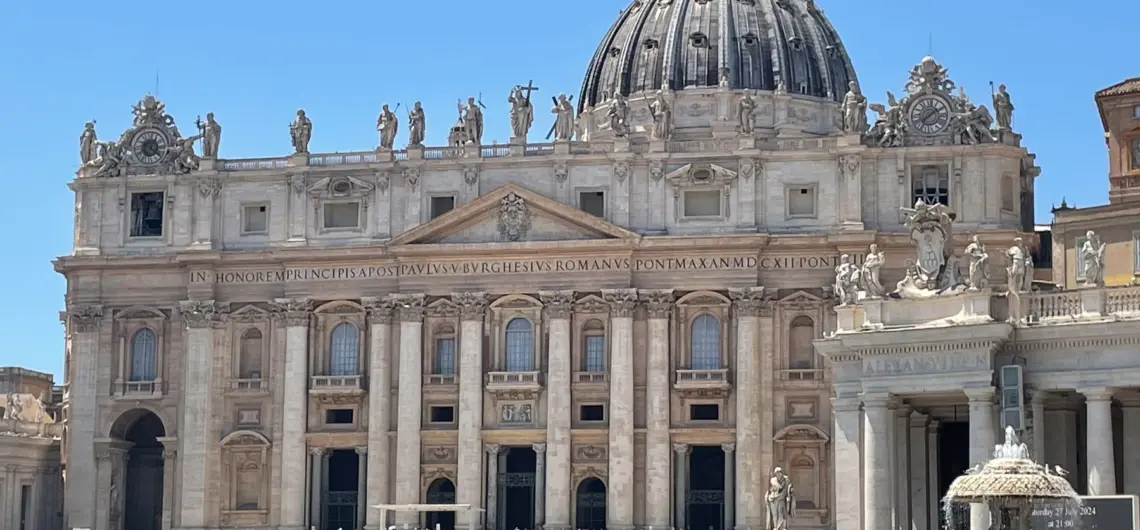
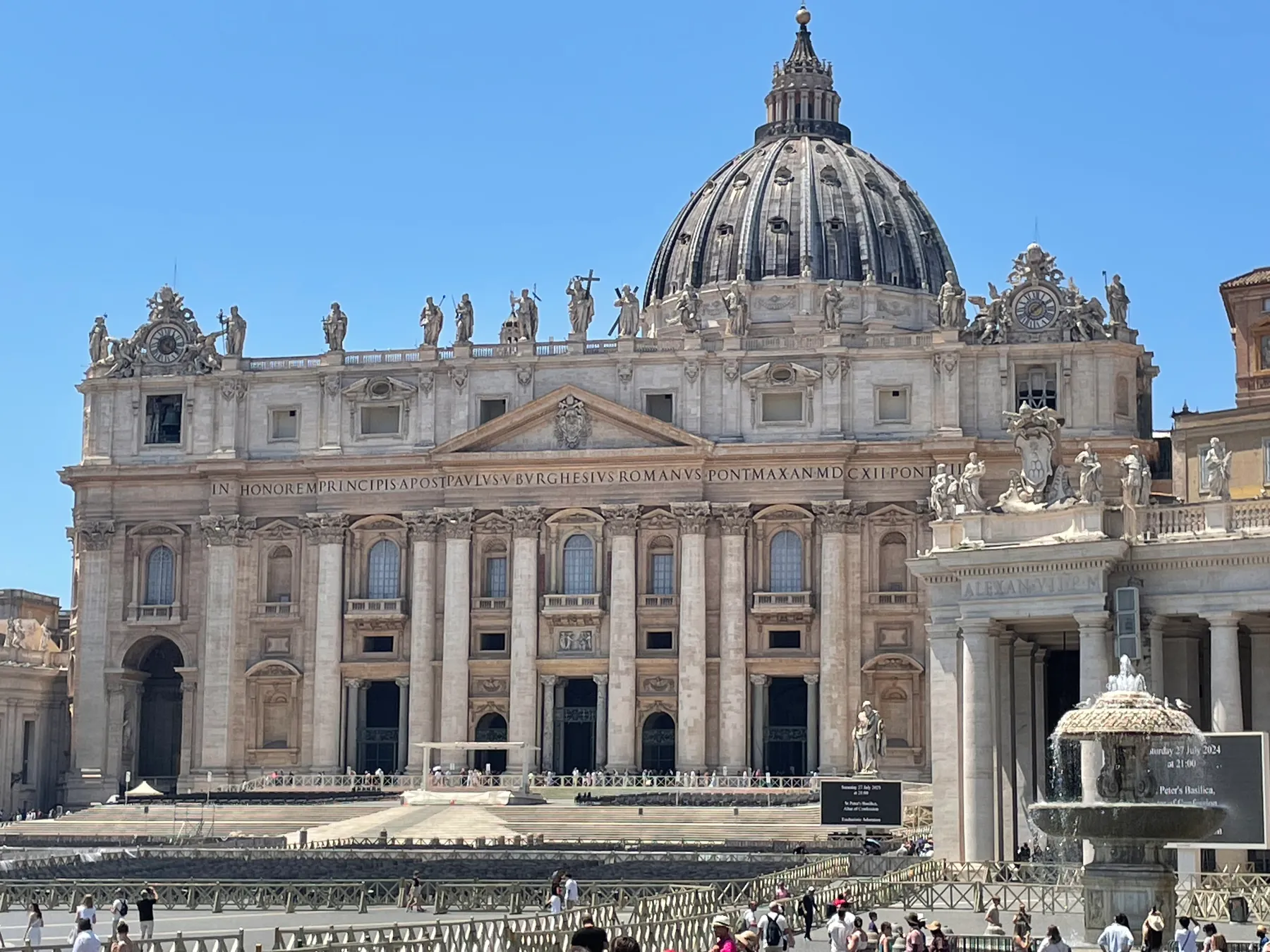
St Peter’s Basilica stands over the tomb of St Peter, the Apostle to whom Christ entrusted the keys of the Kingdom. The location of that tomb explains why the basilica was built upon Vatican Hill and why generations of pilgrims have come here to pray close to the first Bishop of Rome.
The basilica also brings together some of the greatest works of Catholic art and architecture. Michelangelo’s Pietà, Bernini’s baldachin and the immense crossing beneath the dome all serve the sacred purpose of the church. The four colossal statues beneath the dome correspond to relic traditions associated with St Longinus, St Veronica, St Helena and St Andrew.
Crucis explores the Apostle’s tomb, the basilica’s art and its Catholic meaning on the St Peter’s Basilica Catholic Tour. Pilgrims can also read our Catholic guide to the relics in St Peter’s Basilica.
St Paul Outside the Walls: the tomb of the Apostle to the Gentiles
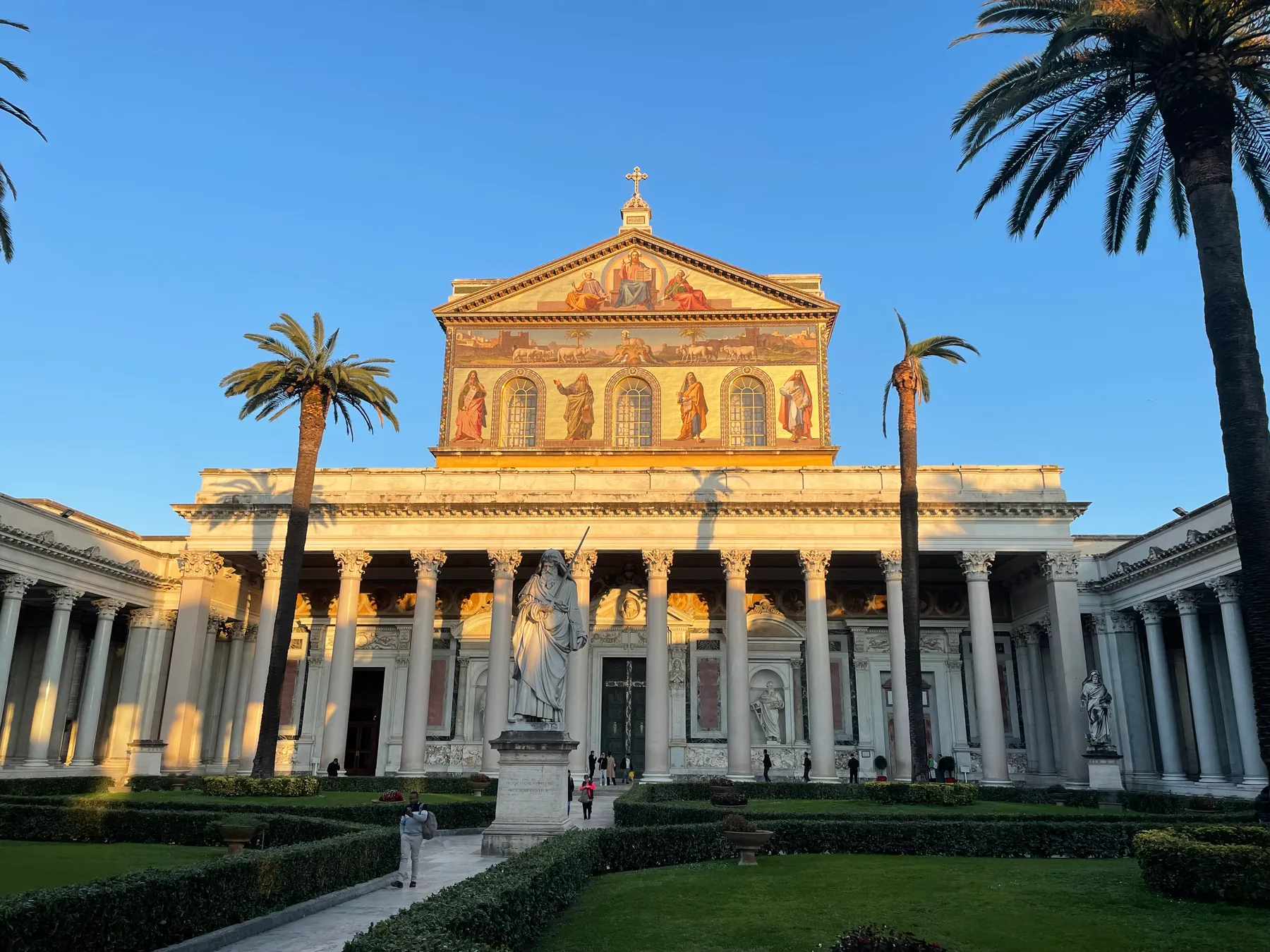
St Paul Outside the Walls was built over the burial place of St Paul, who was martyred in Rome after carrying the Gospel across the Mediterranean world. The basilica stands beyond the ancient city walls, close to the road leading towards the traditional place of his martyrdom.
The confessio allows pilgrims to pray before the Apostle’s tomb. The basilica’s long nave, triumphal arch, mosaics and papal portraits place St Paul’s missionary life within the wider history of the Church. His conversion, preaching, suffering and martyrdom remain a summons to Catholics to confess Christ without fear.
The St Paul’s Tomb Tour offers a focused Catholic visit to the basilica and the sacred history preserved there.
St Mary Major: the Holy Crib and Rome’s Marian basilica
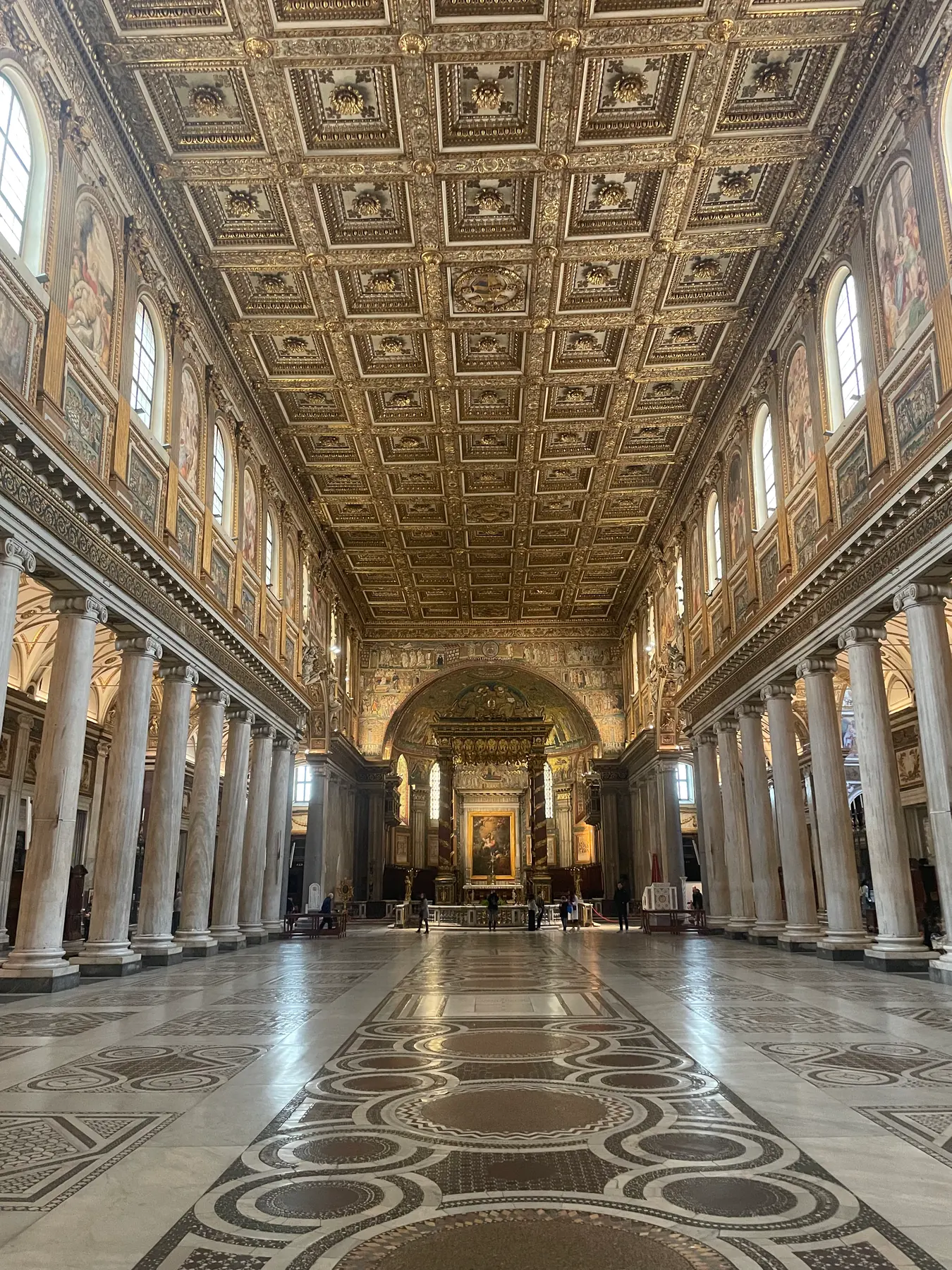
St Mary Major is Rome’s principal Major Basilica dedicated to the Blessed Virgin Mary. Its fifth-century mosaics proclaim the identity of Christ and the dignity of His Mother, while its long liturgical history made the basilica one of the great centres of Catholic devotion in the city.
Beneath the papal altar pilgrims venerate the Holy Crib, the wood of the manger in which the infant Jesus was laid at Bethlehem. The basilica also preserves the Salus Populi Romani, the revered icon painted by St Luke the Evangelist. Popes and the faithful of Rome have turned to this image of Our Lady in prayer for centuries.
Discover the basilica’s relics, mosaics and Marian history on the St Mary Major Basilica Tour, and read more about the Holy Crib at St Mary Major.
How should a Catholic pilgrim visit the four basilicas?
The right choice depends upon the time available and the depth sought. A one-day pilgrimage gives a coherent encounter with all four basilicas. Individual tours allow closer attention to one church. Multi-day packages create more space for prayer, sacred art, relics and other Catholic sites without reducing the pilgrimage to a race between monuments.
| Time available | Best Crucis option | Best for |
|---|---|---|
| One focused day | 4 Major Basilicas in 1 Day | Pilgrims wanting all four churches in one coherent Catholic experience |
| Two days | 4 Major Basilicas – 2 Day Rome Pilgrimage | A slower pace with more time inside the basilicas |
| Two days with the relics of Christ | 4 Major Basilicas + Relics | Pilgrims drawn to both the papal basilicas and the Passion relics |
| Three or four days | Three-day package or Seven Pilgrim Churches pilgrimage | A fuller Catholic pilgrimage through Rome |
Practical considerations for visiting the Major Basilicas
- The basilicas are active places of Catholic worship. Mass, Confession, prayer and liturgical events take priority over tourism.
- Clothing should cover shoulders and knees.
- Security and access arrangements can change, especially around papal or liturgical events.
- A one-day visit requires sustained walking and standing even when private transport is included between the basilicas.
- Pilgrims with mobility concerns should contact Crucis Tours before booking so that the most suitable experience can be identified.
Frequently asked questions
Which of the four Major Basilicas is the most important?
St John Lateran is the highest-ranking because it is the Cathedral of Rome and the cathedral church of the Pope as Bishop of Rome. St Peter’s is more famous internationally, but it is not the cathedral of Rome.
Can you visit all four Major Basilicas in one day?
Yes. A well-organised private pilgrimage with transport can visit all four in approximately four-and-a-half to five hours. Those wanting more time for prayer and detailed interpretation may prefer the two-day pilgrimage or individual basilica tours.
Are the Major Basilicas free to enter?
Ordinary entrance to the basilicas is normally free, although security procedures apply and particular areas or experiences may have separate arrangements. A guided pilgrimage pays for the guide’s expertise, organisation and, where specified, private transport or included entrance arrangements.
Visit the four Major Basilicas with Crucis Tours
The four Major Basilicas reveal Catholic Rome as one living whole: apostolic, papal, Marian, sacramental and missionary. Their art and architecture are magnificent, but their deepest meaning belongs to the faith for which they were built.
Check dates and availability for the 4 Major Basilicas Tour Rome in One Day, or compare the full range of Major Basilicas tours and pilgrimage packages.