Find traditional Latin Mass in Rome, where the Church was built with the blood of the early martyrs.
Looking for a Traditional Latin Mass in Rome? Start with Santissima Trinità dei Pellegrini, served by the Priestly Fraternity of St Peter, and the Institute of Christ the King’s Rome apostolate, whose published services are currently at the Immacolata dei Miracoli. The SSPX also publishes a timetable for its chapel in Via Urbana. At Sant’Anna al Laterano, Crucis Tours has locally confirmed Sunday Mass at 16:00. Other churches often included in Rome Latin Mass lists need a fresh check before you plan around them.
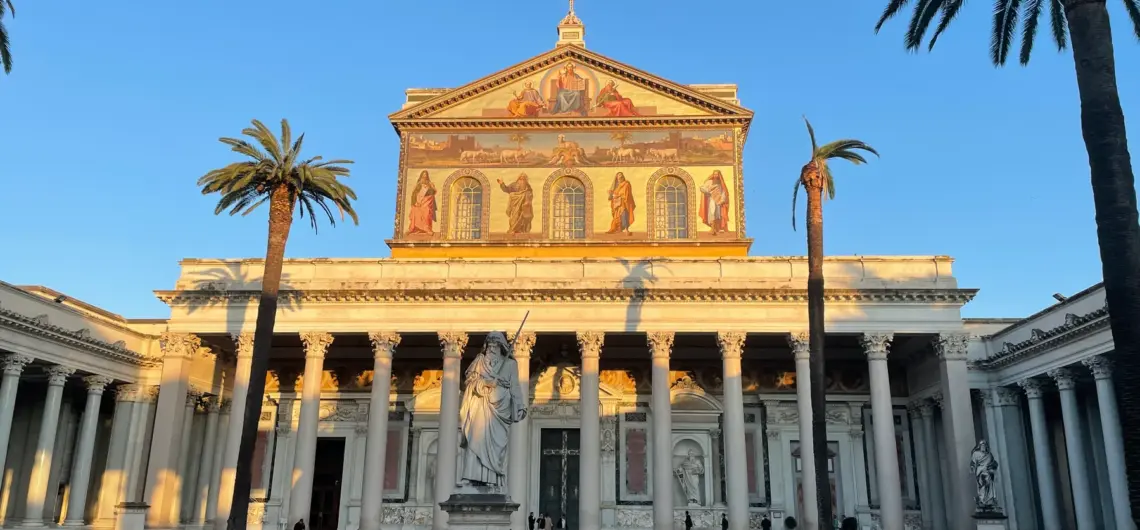
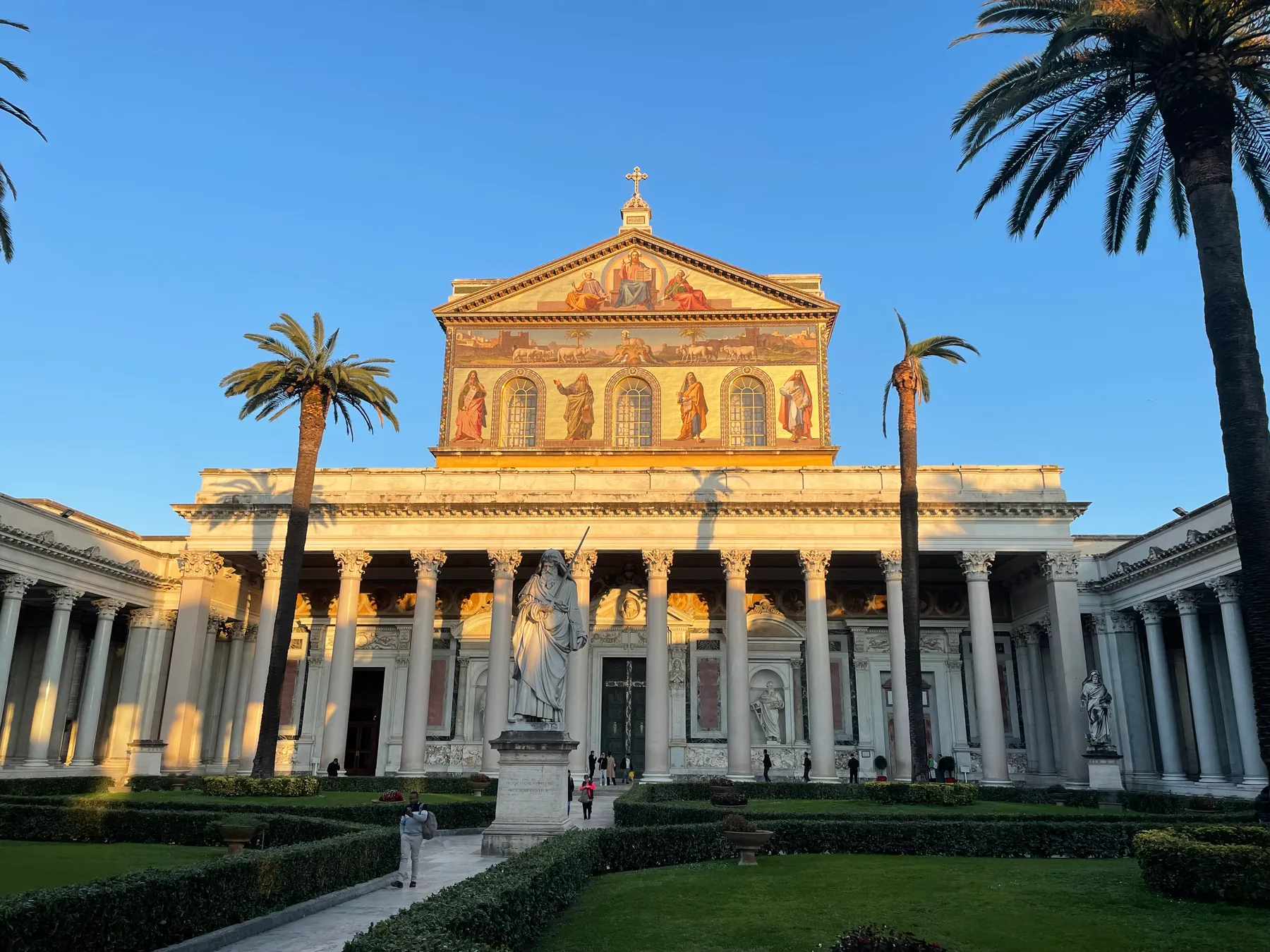
Courtyard and sunlit facade of St Paul Outside the Walls, Rome. Rome, often called the Eternal City, has long been a destination for Christian pilgrims seeking spiritual renewal and a connection to the faith’s earliest roots. One of the most historically significant pilgrimage traditions in Rome is the 7 Pilgrim Churches route, popularized in the 16th century by St. Philip Neri. This sacred journey involves visiting seven of the city’s most important churches, each holding deep religious and historical significance. In this article, we’ll explore the origins of the 7 Pilgrim Churches of Rome pilgrimage, the life of St. Philip Neri, the churches included in the tradition, and how the practice has evolved in modern times. The Origins of the 7 Pilgrim Churches of Rome Pilgrimage Pilgrimage has been an essential part of Christian spirituality for centuries, with Rome being a prime destination due to its status as the heart of the Catholic Church and the burial site of many apostles and saints. The 7 Pilgrim Churches of Rome pilgrimage traces its origins to the early Christian practice of visiting the city’s 4 major basilicas, especially during the Jubilee Years established by Pope Boniface VIII in 1300. By the 16th century, pilgrimage had become more structured, and it was St. Philip Neri who revitalized and popularized the devotion as a way to deepen faith, foster community, and encourage spiritual renewal. The Life and Mission of St. Philip Neri A Saint of Joy and Devotion St. Philip Neri (1515-1595) was an Italian priest known for his deep spirituality, joyful personality, and commitment to serving the poor. Born in Florence, he moved to Rome in 1533, where he dedicated himself to prayer, study, and works of charity. His charismatic nature and ability to connect with people earned him the nickname “Apostle of
Courtyard and sunlit facade of St Paul Outside the Walls, Rome.
Rome, often called the Eternal City, has long been a destination for Christian pilgrims seeking spiritual renewal and a connection to the faith’s earliest roots. One of the most historically significant pilgrimage traditions in Rome is the 7 Pilgrim Churches route, popularized in the 16th century by St. Philip Neri. This sacred journey involves visiting seven of the city’s most important churches, each holding deep religious and historical significance.
In this article, we’ll explore the origins of the 7 Pilgrim Churches of Rome pilgrimage, the life of St. Philip Neri, the churches included in the tradition, and how the practice has evolved in modern times.