

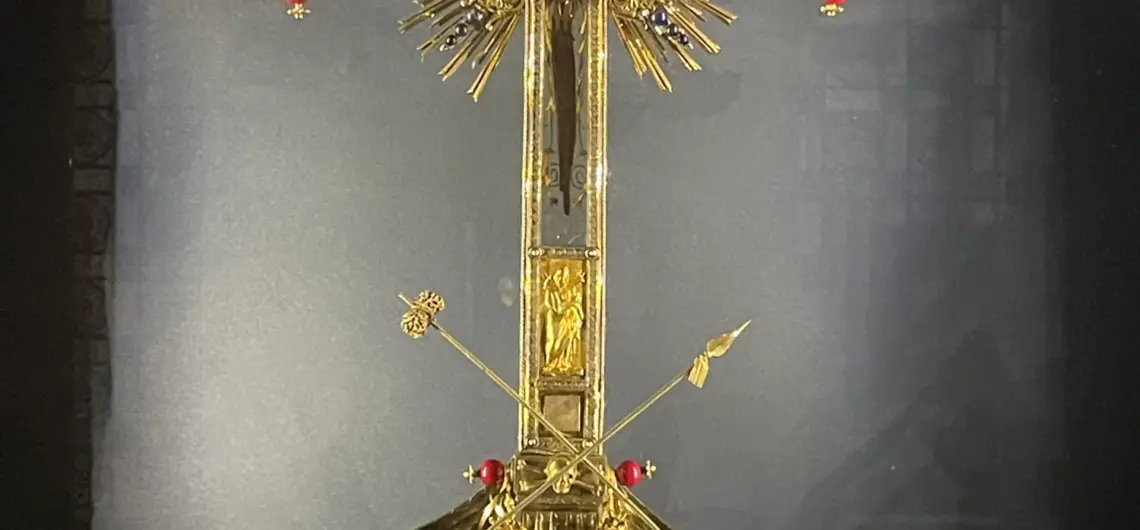
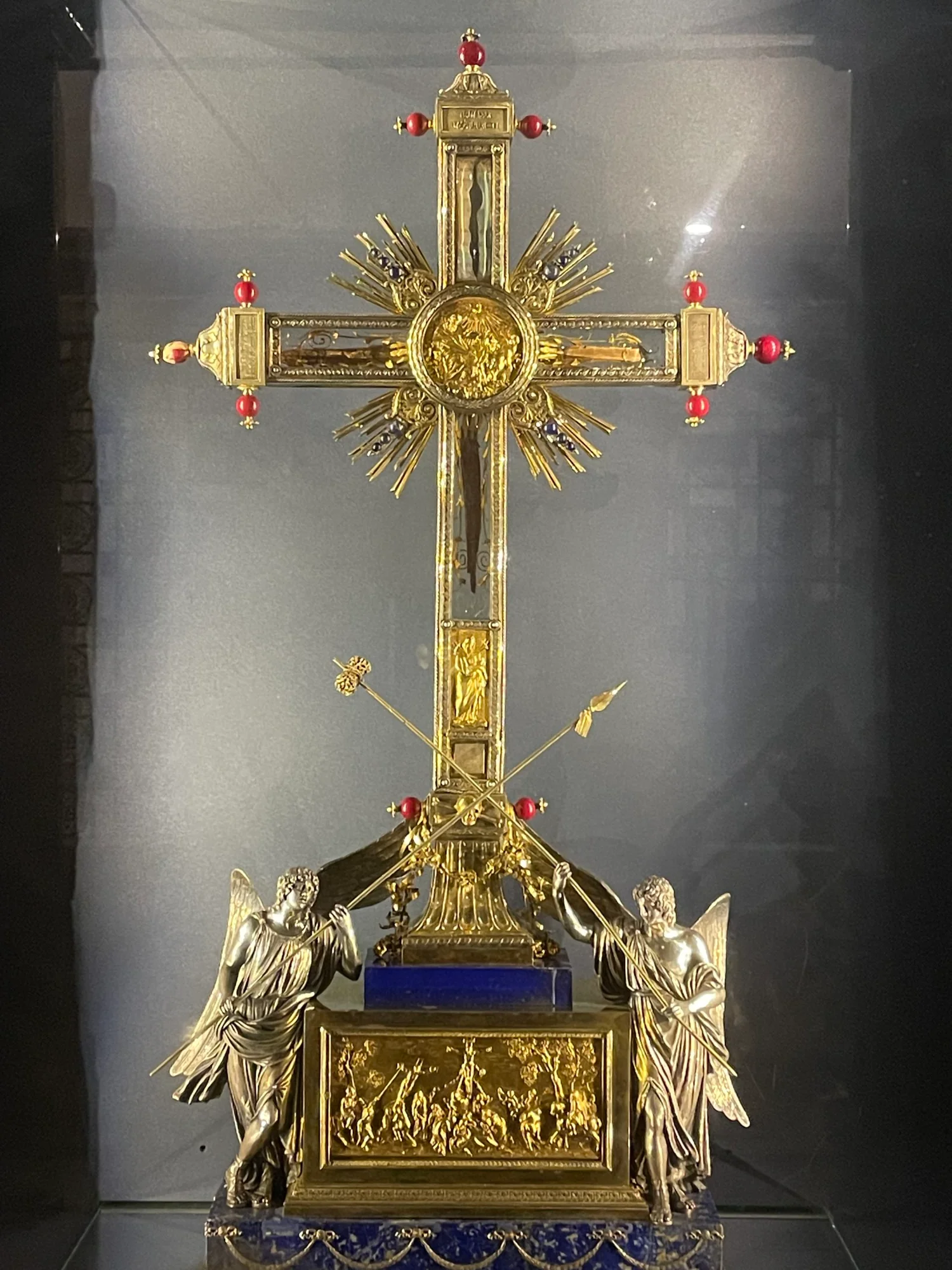
Rome preserves an extraordinary collection of relics associated with the earthly life, Passion and Resurrection of Jesus Christ. According to Catholic tradition, these include wood from the Holy Crib, the Column of the Scourging, the Holy Stairs, fragments of the True Cross, a Holy Nail of the Crucifixion, 2 Thorns from the Crown of Thorns, the Holy Sponge and the footprints connected with Christ’s appearance to St Peter on the Appian Way.
These sacred objects are found across several of Rome’s most important basilicas. They are not merely historical curiosities. For Catholic pilgrims, they offer tangible points of meditation upon the Incarnation, Passion and victory of Christ.
Which relics of Jesus Christ are in Rome?
| Relic | Church in Rome | Moment in Christ’s life |
|---|---|---|
| Wood of the Holy Crib | St Mary Major | The Nativity |
| Column traditionally associated with the Flagellation of Christ | Santa Prassede | The Passion |
| The Holy Stairs | Pontifical Sanctuary of the Holy Stairs | Christ judged by Pontius Pilate |
| True Cross fragments, a Holy Nail of the Crucifixion, Thorns of the Crown of Thorns and the Titulus | Santa Croce in Gerusalemme | The Crucifixion |
| Relics of the Holy Lance that pierced His Sacred Heart, Veronica’s Veil and pieces of the True Cross | St Peter’s Basilica | The Way of the Cross and Crucifixion |
| A fragment of the Holy Sponge | Santa Maria in Trastevere | The Crucifixion |
| The original slab associated with the “Quo Vadis” footprints | St Sebastian Outside the Walls | An apparition of the risen Christ to St Peter |
This list gives the principal locations, but each church has a much richer story. The historical setting, Catholic devotion and relationship between the relics become clearer when explored with a guide who understands the Church’s sacred tradition and their spiritual significance.
Explore the principal sites with a practising Catholic guide on the Via Crucis – Relics of Christ Tour.
Why are so many relics of Christ in Rome?
Jerusalem was the setting of Christ’s Passion, but Rome became the centre of the Catholic Church and one of Christianity’s great pilgrimage destinations. Sacred objects were brought to the city at different periods for veneration and, at times, for protection.
St Helena and the discovery of the True Cross are traditionally associated with the translation of several relics from the Holy Land during the fourth century. Later popes, emperors and pilgrims also played a part in the history of the relics now venerated in Rome.
The result is not a single museum-like collection. The relics remain within living churches, surrounded by the liturgy, sacred art and prayer for which those churches were built.
The Column of the Scourging at Santa Prassede
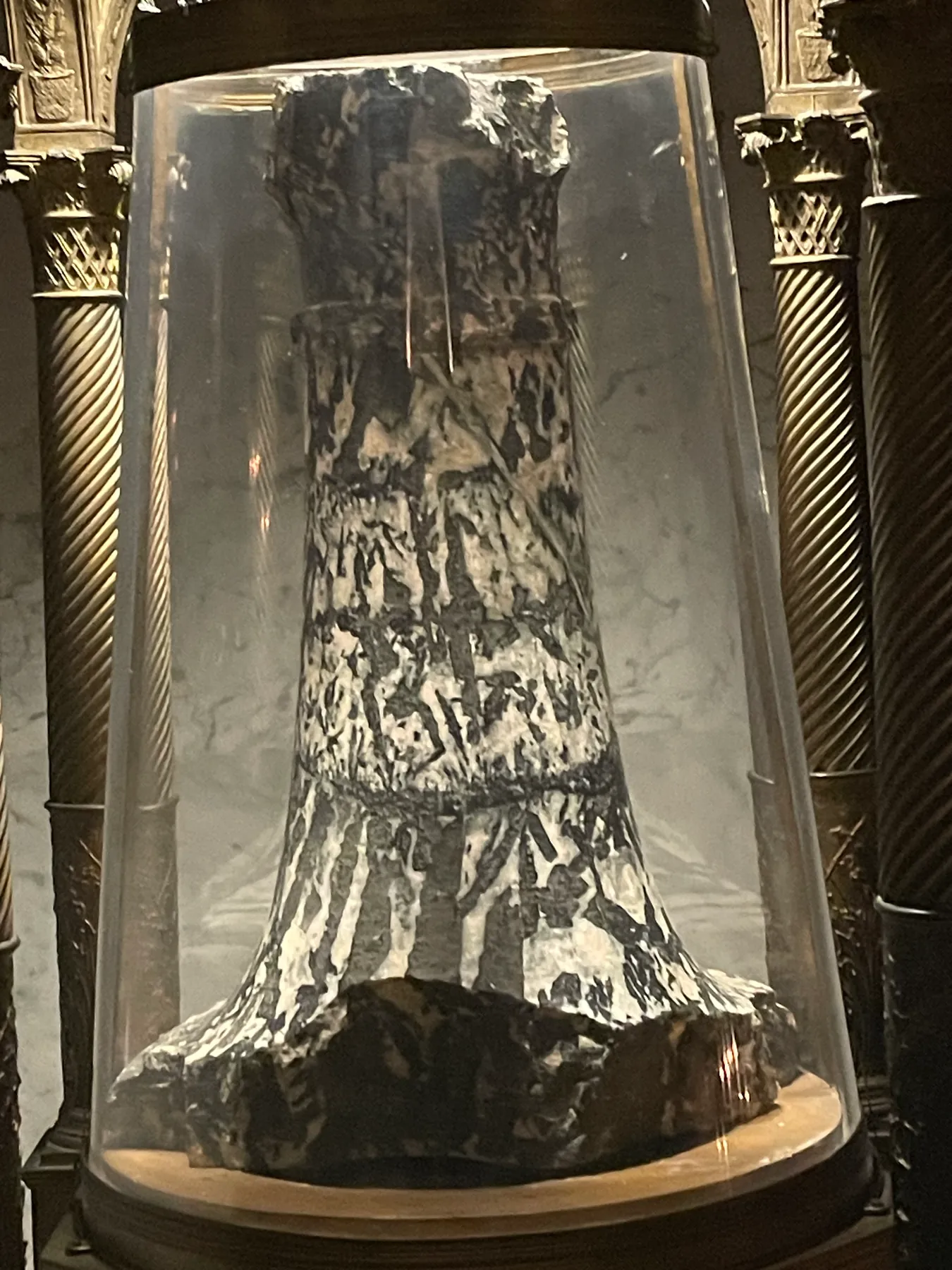
The Basilica of Santa Prassede preserves a small column traditionally associated with the Flagellation of Christ. Venerated in a side chapel, it directs the pilgrim’s attention to the humiliation and suffering endured by Jesus before the Crucifixion recalling the prophecy of Isiah – “by his stripes we are healed”.
The relic can be overshadowed by the basilica’s celebrated mosaics. Yet its modest setting makes it one of Rome’s most moving devotional links with the Passion. As with the other relics, its importance lies in the mystery it recalls and in the prayer it inspires, in addition to it’s sacred nature given its role in salvation.
Santa Croce in Gerusalemme: the relics of the Passion
The Basilica of Santa Croce in Gerusalemme is the principal Roman shrine associated with the relics of the Passion. Its name means the Holy Cross “in Jerusalem”, reflecting the ancient tradition that earth from Calvary in the Holy Land was brought to the site.
Its Chapel of the Relics contains fragments of the True Cross, part of the inscription placed above Christ on the Cross, a Holy Nail of the Crucifixion, thorns from the Crown of Thorns and a fragment associated with the cross of the Good Thief.
The Church presents these for veneration, and their importance lies not in sensational claims but in the mystery towards which they direct the pilgrim: the sacrificial death and Resurrection of Christ.
Those who wish to concentrate on this basilica can join the Holy Cross Santa Croce Pilgrim Church Tour.
The Holy Stairs and the trial of Christ
Across from St John Lateran stands the Pontifical Sanctuary of the Holy Stairs. According to Catholic tradition, its 28 marble steps came from the praetorium of Pontius Pilate in Jerusalem and were ascended by Christ during His Passion.
Pilgrims who undertake the traditional devotion ascend the central staircase on their knees while meditating upon the Passion. Parallel staircases allow other visitors to reach the upper level without making that devotion.
The sanctuary is not simply an archaeological feature. It remains a place where generations of Catholics have united physical effort, repentance and prayer with the suffering of Christ. The St John Lateran Cathedral and Holy Steps Tour introduces the sanctuary alongside the cathedral church of Rome and also includes an icon attributed to St Luke.
Relics of the Passion in St Peter’s Basilica
Beneath the great dome of St Peter’s Basilica, monumental statues mark the traditions of four precious relics. Three are directly associated with Christ’s Passion: the lance of the soldier St Longinus which pierced the Sacred Heart of Jesus on the Cross, the veil of St Veronica that wiped his bloodied face and a fragment of the True Cross associated with St Helena.
These relics are safeguarded within the basilica and are not part of the ordinary visitor route. Their presence nevertheless shaped the art and devotional meaning of one of the world’s most important churches.
A St Peter’s Basilica Catholic Tour reveals the theological and historical meaning behind features that most visitors pass without understanding.
The Holy Crib at St Mary Major
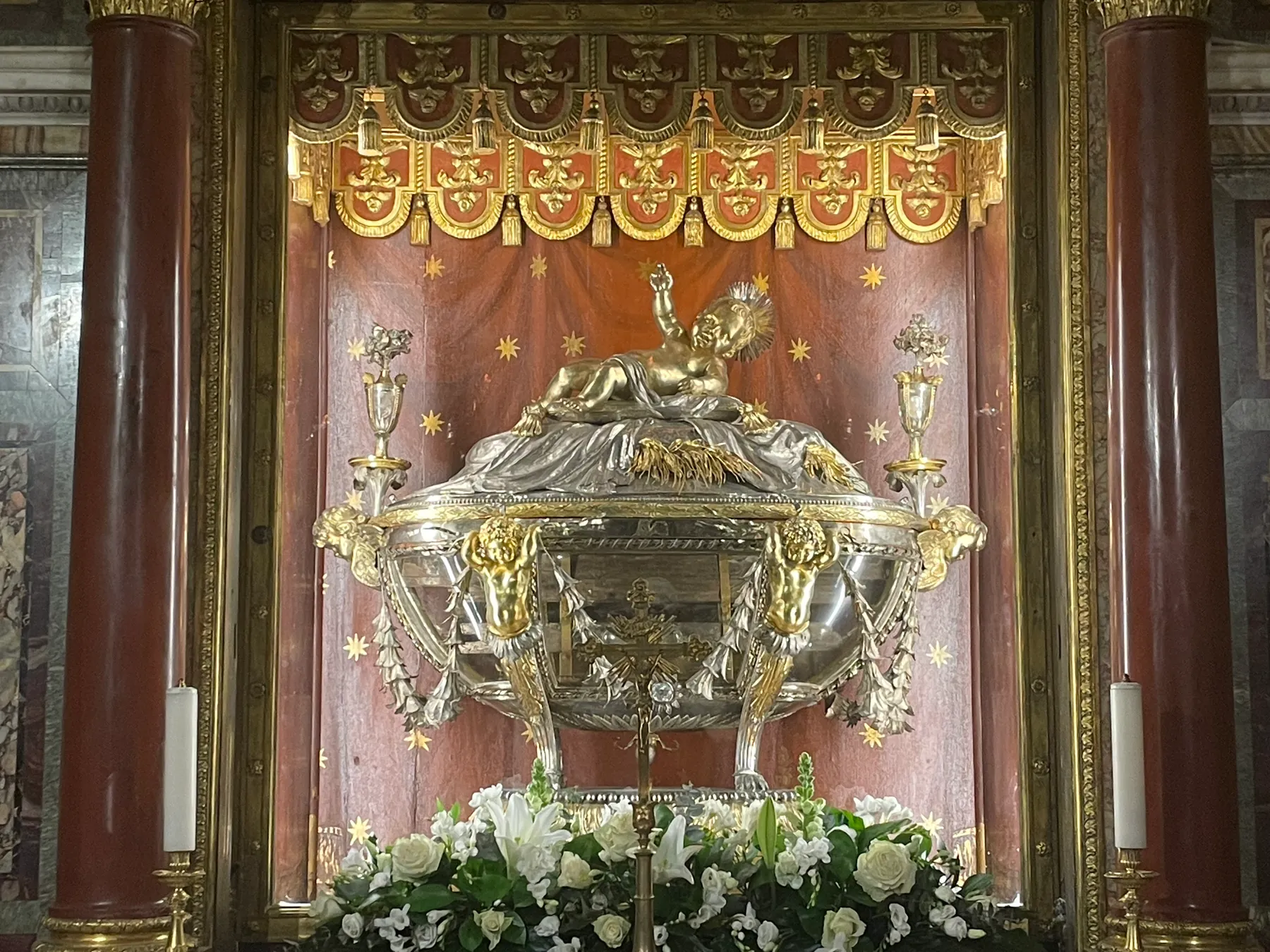
The relics of Christ in Rome do not begin with the Passion. Beneath the high altar of St Mary Major, pieces of wood are venerated as remains of the crib in which the infant Jesus was laid at Bethlehem.
This tradition helped give the basilica its ancient association with the crib and with Bethlehem. It also reminds pilgrims that the Cross cannot be separated from the Incarnation: the same Christ who accepted the poverty of the manger later accepted the sacrifice of Calvary.
Discover the basilica’s Marian, papal and Christological treasures on the St Mary Major Basilica Tour.
The Holy Sponge in Santa Maria in Trastevere
St John’s Gospel records that a sponge soaked in sour wine was raised to Christ’s lips during the Crucifixion. This act was the culmination of the Passover ritual sacrifice – the fourth cup of consummation indicating that the Passover Sacrifice of the Lamb of God was complete. A fragment of the Holy Sponge is preserved at Santa Maria in Trastevere, one of Rome’s most beautiful and ancient Marian churches.
The relic is easily overshadowed by the basilica’s glittering mosaics. Yet its presence connects this peaceful church with one of the final moments of the Passion. Crucis explores the basilica within its wider religious setting on the Medieval Rome Walking Tour – Religious Life & Vocation.
The “Quo Vadis” footprints at St Sebastian
According to an ancient Christian tradition, St Peter encountered the risen Christ while fleeing persecution in Rome. Peter asked, “Domine, quo vadis?”—“Lord, where are you going?” Christ’s answer turned the Apostle back towards Rome and martyrdom.
A marble slab of Christ’s footprints is preserved at the Basilica of St Sebastian Outside the Walls; a copy is displayed in the small Domine Quo Vadis church on the Appian Way. The story is not another episode of the earthly ministry of Jesus but a tradition of His risen presence strengthening Peter for sacrifice.
The basilica, footprints, martyrdom traditions and catacombs can be explored on the St Sebastian Basilica with Catacombs Tour.
How has the Church preserved the relics of Christ?
The Church has preserved the relics of Christ through ancient basilicas, ecclesiastical custody, reliquaries, liturgy and the continuous veneration of generations of pilgrims. Historical records and modern scientific methods support many of these sacred traditions. Each relic directs the heart and mind towards the mysteries of the Incarnation, Passion and Resurrection.
Catholic veneration is ultimately directed towards Christ, not towards wood, stone or metal considered in isolation. Sacred relics serve as physical manifestations of the Incarnation and of a faith rooted in real people, places and events.
How should a pilgrim visit the relics?
Visitors should remember that these are active churches rather than conventional attractions. Modest dress, silence and respect for the sacred are essential. Opening arrangements and access to individual chapels can change, especially during major celebrations and liturgies.
It is possible to visit many of the churches independently. A knowledgeable Catholic guide, however, can bring sacred tradition, history and art together and place each relic within the wider story of salvation—without reducing a pilgrimage to a checklist.
Book a Catholic relics tour in Rome
Taken together, Rome’s relics of Christ lead the pilgrim through the mysteries of salvation—from the poverty of the Nativity to the suffering of the Passion and the victory of the Resurrection. They are best approached not as a checklist of unusual objects, but as invitations to encounter Christ through Scripture, Catholic tradition, sacred art and prayer.
The Via Crucis – Relics of Christ Tour in Rome brings the principal relic traditions together within a coherent Catholic pilgrimage. A knowledgeable, practising Catholic guide provides the historical and spiritual context while preserving the prayerful character of the churches.
For a deeper visit to a particular basilica, choose a standalone tour of Santa Croce, St Peter’s Basilica, St Mary Major or St Sebastian. You can also browse all Catholic tours in Rome or compare our Rome pilgrimage packages.
Crucis Tours is a specialist Catholic tour and pilgrimage company. Our guides bring Rome’s churches, relics, saints, sacred art and Christian history to life while keeping Christ—not tourism alone—at the centre of the experience.
Related Catholic guides to the relics of Christ
- The Instruments of the Passion of Christ
- Where are the relics of Jesus Christ?
- Are Catholic relics authentic?
- St Helena and the discovery of the True Cross
- The Holy Sponge in Santa Maria in Trastevere
- Quo Vadis and the footprints of Christ in Rome
- The Holy Crib in St Mary Major
- Relics in St Peter’s Basilica
- The Holy Stairs in Rome
- The True Cross in Rome